
A logistics company piloted an agentic workflow for invoice exceptions that cut handling time 40% but needs funding to expand. Leadership wants evidence of workflow impact and business value beyond engineering anecdotes. Which assessment approach should the business analyst use to quantify impact and value?
Select an answer to reveal the explanation.
Short Explanation
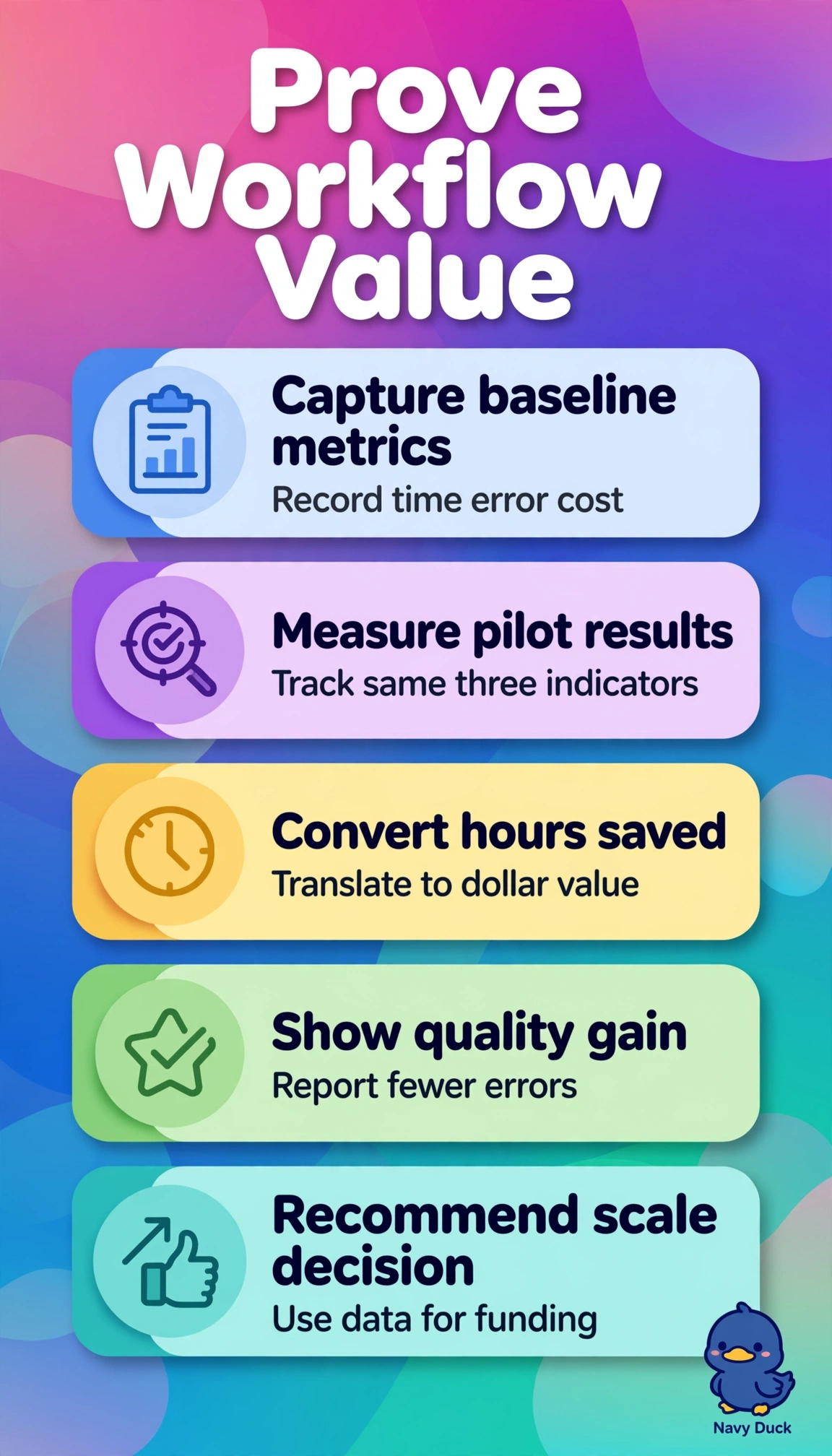
You've got a promising pilot and need funding proof. Comparing baseline metrics translates time and error improvements into dollars leaders trust.
Full Explanation
The correct approach is right because funding expansion requires both causal workflow evidence and monetized business value, which only a baseline-to-pilot comparison across speed, quality, and cost provides. Cycle time documents the claimed 40% handling improvement with before-and-after data, error rate proves the faster workflow did not degrade accuracy or create rework, and converting hours saved to cost with loaded labor rates translates operational gains into financial return leadership can act on. The baseline-to-pilot satisfaction assessment fails by concept because sentiment measures acceptance and perceived usability, not operational impact or financial value, so it cannot quantify improvement beyond anecdotes. The pilot-only summary fails by concept because reporting strong pilot numbers without pre-pilot baselines shows current performance but cannot attribute change to the agentic workflow or verify the claimed gain. The baseline-to-pilot throughput and cost assessment fails by concept because omitting error rate ignores quality risk, allowing faster cheaper handling to mask increased exceptions, rework, and downstream cost. An exam caveat is to select answers that combine a comparison point, operational metrics, and monetization when the stem asks for impact and value, resisting attractive single-dimension or sentiment-based answers. A practical check is to confirm baselines are locked, measurement windows match, and cost math uses finance-agreed rates before presenting savings to leadership.