
A retail ops team wants an agentic workflow that checks inventory data each weekday at 7am, writes only to issues, and posts a concise markdown table. Secrets must stay protected and over-permissioned writes must be avoided. Which schedule, permissions, and output configuration best meets these constraints?
Select an answer to reveal the explanation.
Short Explanation
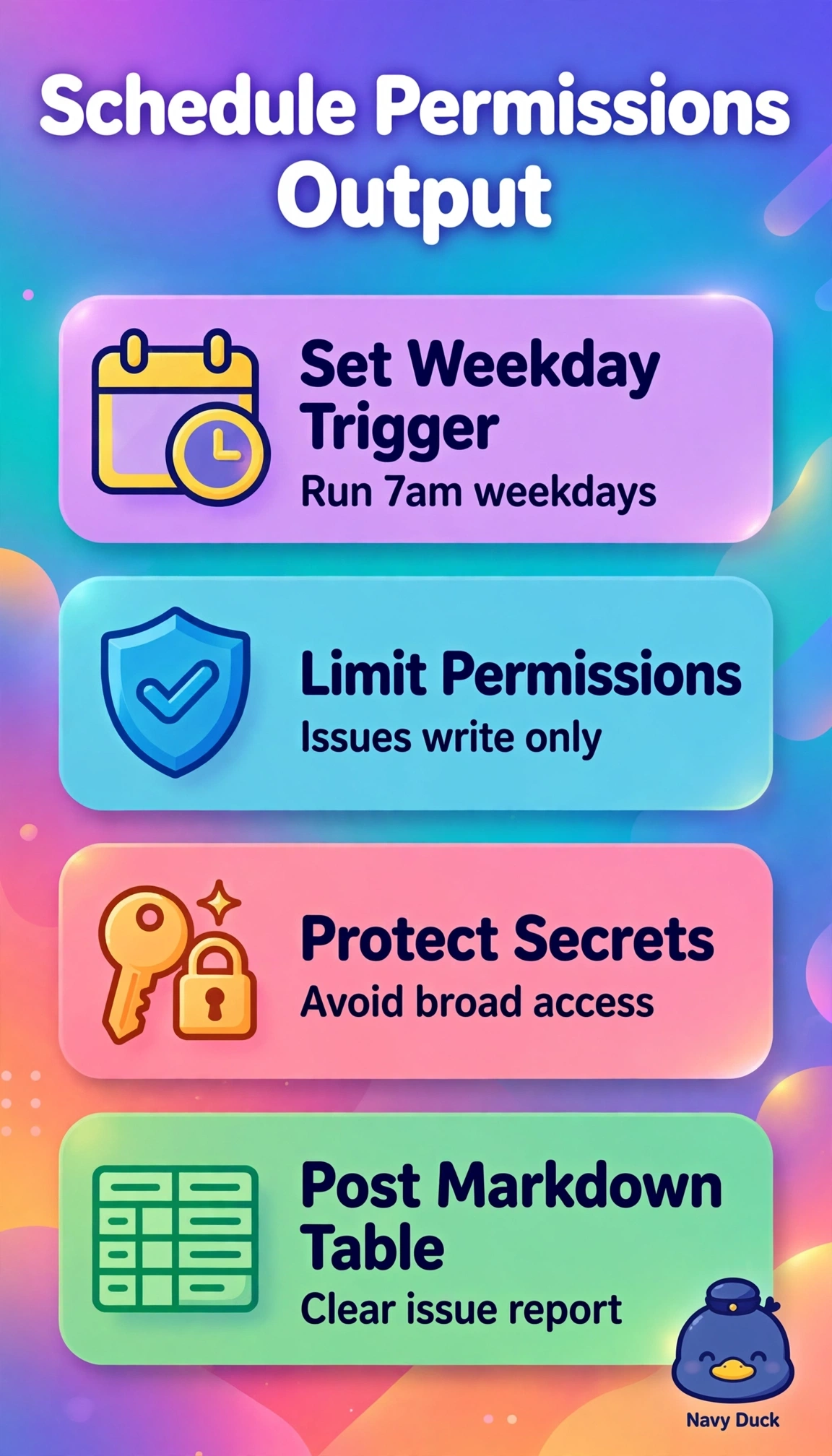
You can keep the workflow focused by scheduling it for weekday mornings and limiting writes to issues. That gives you guardrails for timely, readable updates without granting extra access.
Full Explanation
A weekday morning trigger, configured for 7am, matches the requested weekday cadence without weekend runs. Least-privilege issues write permission allows the agent to create or update findings while avoiding unnecessary repository write access, and markdown issue output presents the concise table where the team can review it. Uploading JSON artifacts may suit machine-readable audit trails, but it does not provide the required concise markdown table in an issue and adds a download-and-parse step. A daily 7am trigger is a plausible monitoring schedule, but it also runs on weekends, contrary to the weekday requirement and potentially increasing cost and alert fatigue. Granting both issues and contents write permission could support workflows that modify repository files, but contents write is unnecessary here and creates over-permissioned write access. The exam caveat is that a generally useful practice, such as daily monitoring or broader permissions for automated fixes, is wrong when it conflicts with an explicit frequency, scope, or output constraint. As a practical check, verify that the weekday schedule is set to 7am, the permissions block grants only issues write, and a dry-run produces the markdown table in an issue while secrets remain masked in logs.