
You are a technical project manager at a healthcare startup. Policy requires every content change to be reviewed, pass checks, and retain discussion history before updating the main documentation branch. You just edited discharge instructions on a feature branch. Which pull request practice should you use to propose the change for collaboration?
Select an answer to reveal the explanation.
Short Explanation
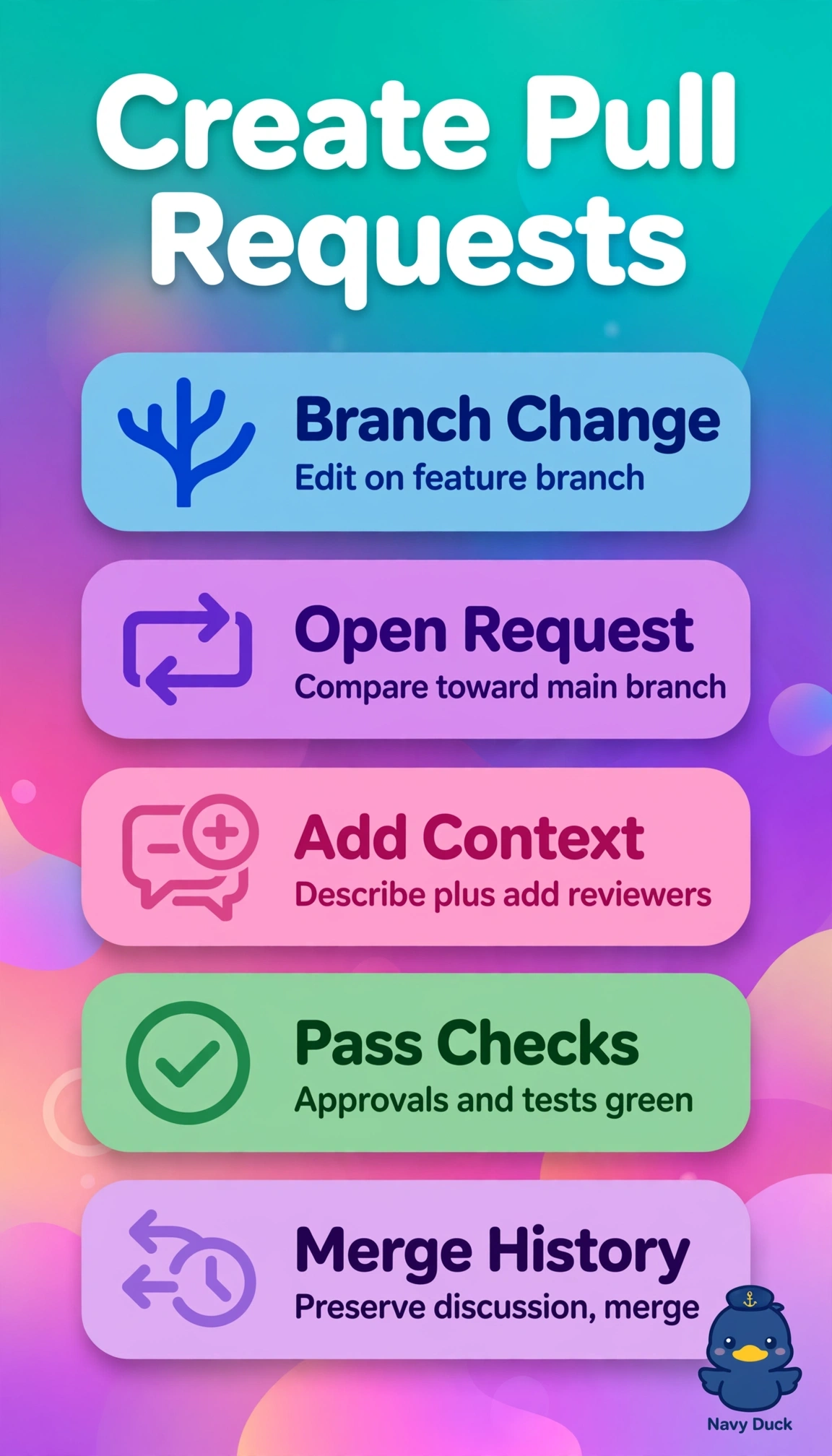
You can propose the discharge-instruction change through a pull request, with context and reviewers, then merge after approvals and checks. That review process supports collaboration while retaining the discussion history required by policy.
Full Explanation
Opening a pull request from the feature branch, adding context and reviewers, and merging only after approvals and checks gives the discharge-instruction change a collaborative review process before it reaches the main documentation branch. The pull request retains the discussion history needed for auditability in a regulated healthcare setting, while reviewer approvals provide human oversight and checks confirm validation. A workflow that adds detailed context and waits for checks but does not include reviewers or approvals fails the policy’s requirement for human review, even if it keeps history. A workflow that adds context and reviewers and merges after approvals while preserving history still fails because it bypasses the required checks. A workflow that includes context, reviewers, approvals, and checks but uses a squash commit fails the history requirement: squashing can obscure incremental changes in the commit history. An exam caveat is that plausible workflows may satisfy some controls while missing another, so verify review, checks, and history together. Before updating main, practically confirm that approvals are recorded, required checks are green, and the pull request discussion remains available.