
A financial services firm runs a monthly expense-audit agentic workflow used by five teams where a recent model update altered summaries, auditors cannot tell what changed, and failed runs cannot be restored quickly. Which versioning consideration should the owner apply to restore auditability and recovery for the workflow?
Select an answer to reveal the explanation.
Short Explanation
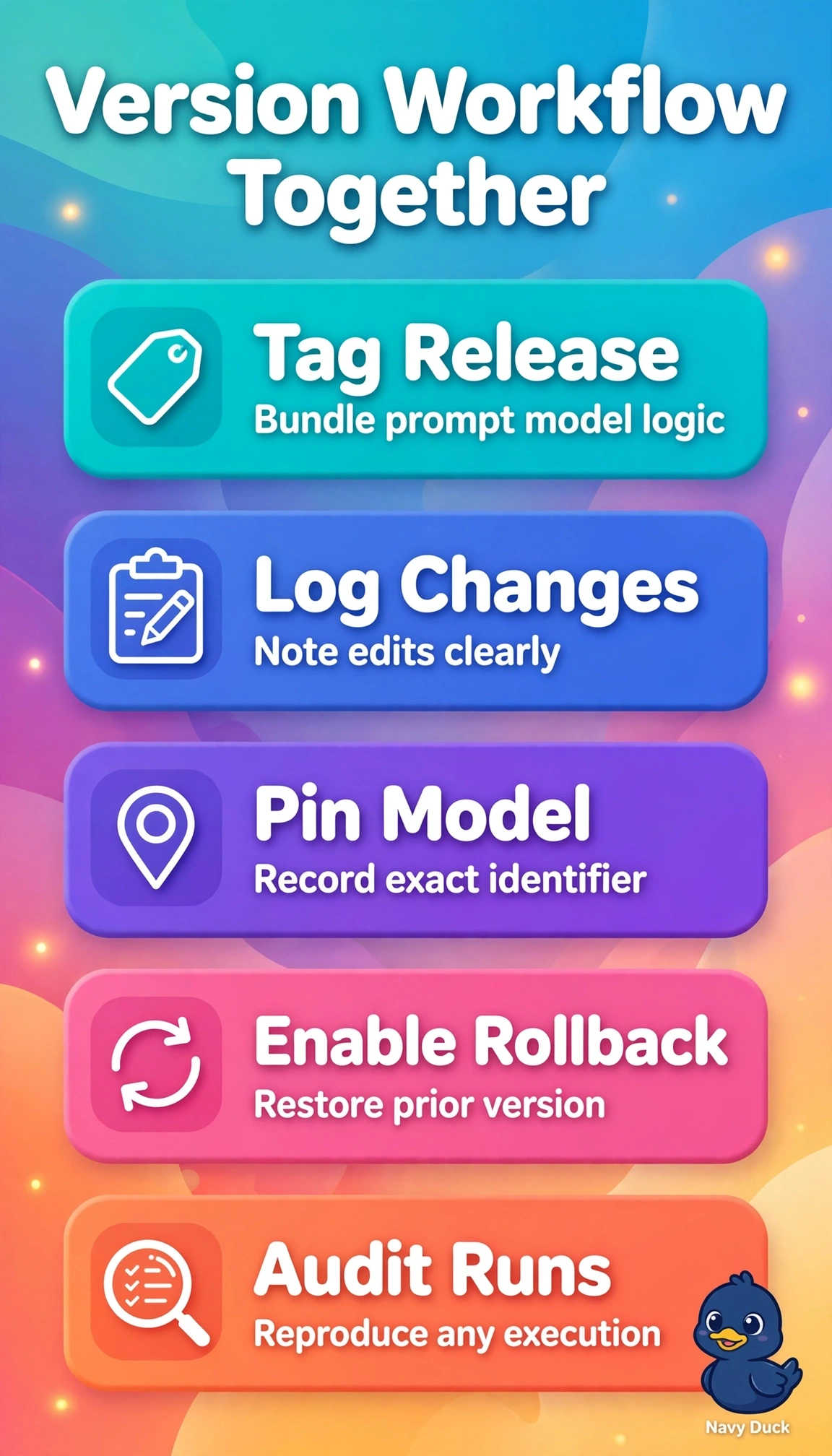
You need to show auditors exactly what ran and restore the workflow quickly if it fails. Versioning prompts, model identifiers, and workflow logic together with notes and rollback support gives you traceability and a reliable recovery path.
Full Explanation
The correct approach makes the monthly workflow auditable and recoverable by versioning prompts, exact model identifiers, and workflow logic together, with notes that explain changes and rollback support that restores a prior version. Versioning prompts and workflow logic with notes and rollback while tracking the latest model release may keep the system current, but without a pinned model identifier you cannot prove which model altered the summaries or reliably reproduce earlier results. Adding usage analytics to versions of prompts, model identifiers, and logic can help guide optimization, but analytics show performance trends rather than documenting what changed and why; without change notes, auditors lack that explanation. Detailed change notes and formal peer review approvals alongside versioned prompts, model identifiers, and logic strengthen governance, but without rollback support, approval records do not quickly restore a failed run. An exam caveat: an option can include several useful controls yet still miss the requirement, so check for versioned prompts, model identifiers, and logic, plus both notes and rollback. As a practical check, record a prompt hash, model ID, workflow commit, change note, and restorable snapshot for each release, then rehearse audit lookup and rollback.