
A finance analyst designs an agent to auto-approve software purchases under $200 from a backlog, considering budget remaining, approved vendor list, and duplicate licenses. Partners fear overspending and shadow IT. Which decision-making criteria should be specified for the agent?
Select an answer to reveal the explanation.
Short Explanation
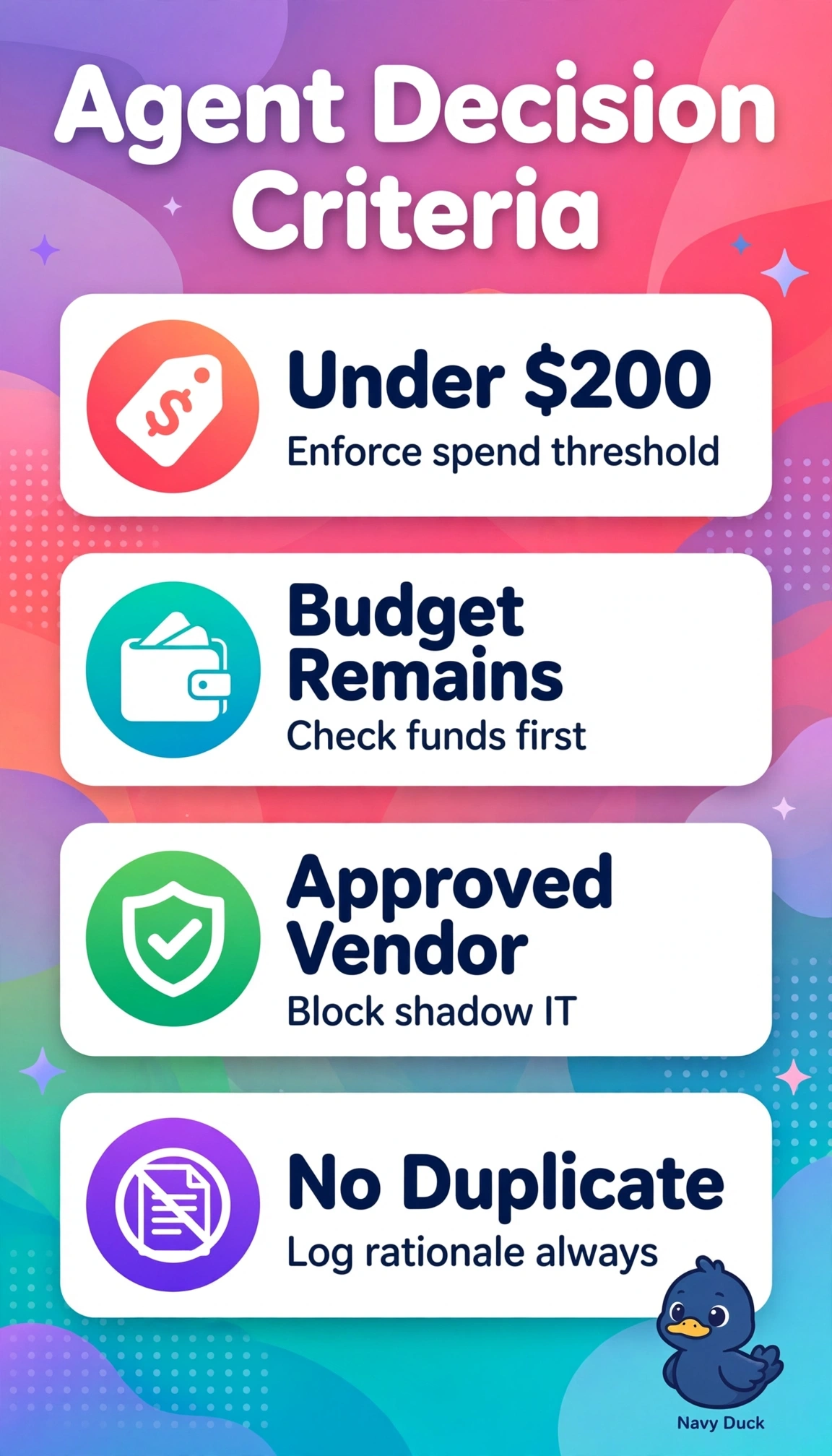
You want the agent to check remaining budget, approved-vendor status, duplicate licenses, and a logged rationale before approval. These explicit criteria help you control overspending and shadow IT.
Full Explanation
The decision logic is sound because backlog approvals need cumulative, compliance, and efficiency safeguards together: checking that budget remains helps prevent many individual purchases from exhausting the available funds; requiring an approved vendor helps prevent shadow IT and preserve security and supportability; checking for duplicate licenses avoids redundant spending; and logging the rationale provides auditability and supports partner trust. The rule requiring a cost under $200, an approved vendor, and no duplicate, with a logged rationale, fails on budget control: a per-purchase ceiling does not ensure affordability when multiple small purchases can exceed the remaining budget. The rule requiring remaining budget, a cost under $200, and no duplicate, with a logged rationale, fails on compliance control: financial and utilization checks do not replace sourcing controls, so an unvetted vendor could create shadow IT, data risk, and support gaps. The rule requiring remaining budget, an approved vendor, and a purchase under $200, with a logged rationale, fails on utilization control: without a duplicate check, it can approve wasteful redundant licenses. Exam caveat: do not choose a plausible triage rule just because it includes logging or a dollar limit; enforce every constraint in the stem unless it is explicitly superseded. Practical check: before approval executes, require structured fields for amount, budget balance after approval, evidence of a vendor-list match, duplicate-search evidence, and a rationale link.