
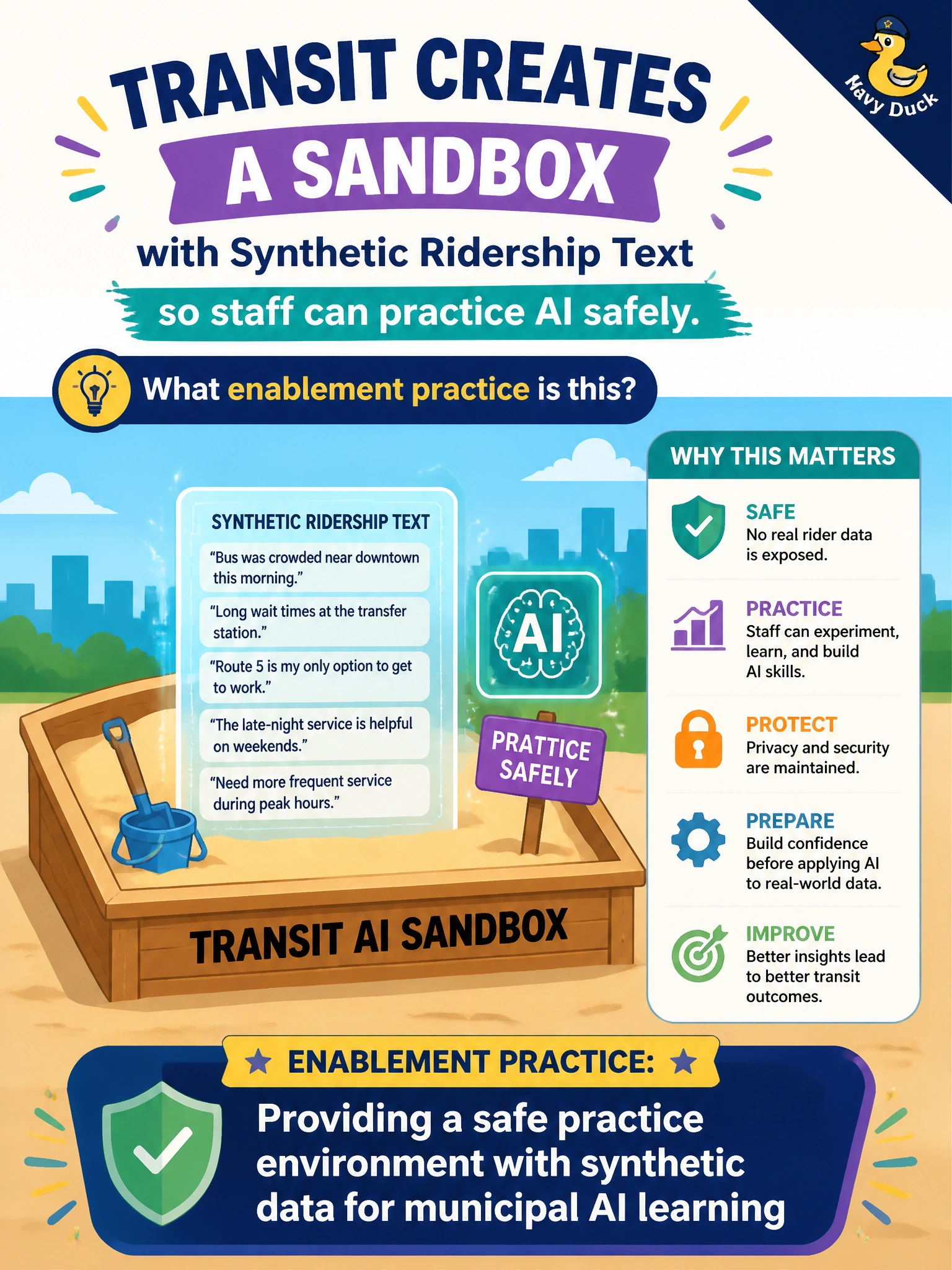
Transit creates a sandbox with synthetic ridership text so staff can practice AI safely. What enablement practice is this?
Select an answer to reveal the explanation.
Short Explanation
Practice on fake ridership text in a sandbox—like a flight simulator. Staff learn without crashing into real rider privacy.
Full Explanation
Safe practice environments are a core municipal AI enablement control. Transit creating a sandbox with synthetic ridership text so staff can practice AI safely provides learning without exposing live rider PII. That works because Ability develops through repetition, and production credentials or real ridership data turn training into a privacy and security incident waiting to happen. Synthetic sandboxes also allow deliberate edge-case drills (hostile prompts, ambiguous schedules, accessibility needs) without harming riders.
Forcing practice only on live rider PII with no sandbox fails by concept: it normalizes unnecessary processing of personal data for training. Banning practice environments so staff learn only during production incidents fails both learning science and risk management—incidents are the costliest classroom. Using production credentials in training demos without synthetic alternatives fails least-privilege and audit expectations.
Exam caveat: 'learn by doing in prod' is a distractor for civic AI. Prefer synthetic sandboxes. Operational check: provision a non-prod AI sandbox, load synthetic ridership corpora, block production data paths from training tenants, and require sandbox practice evidence before production access.