
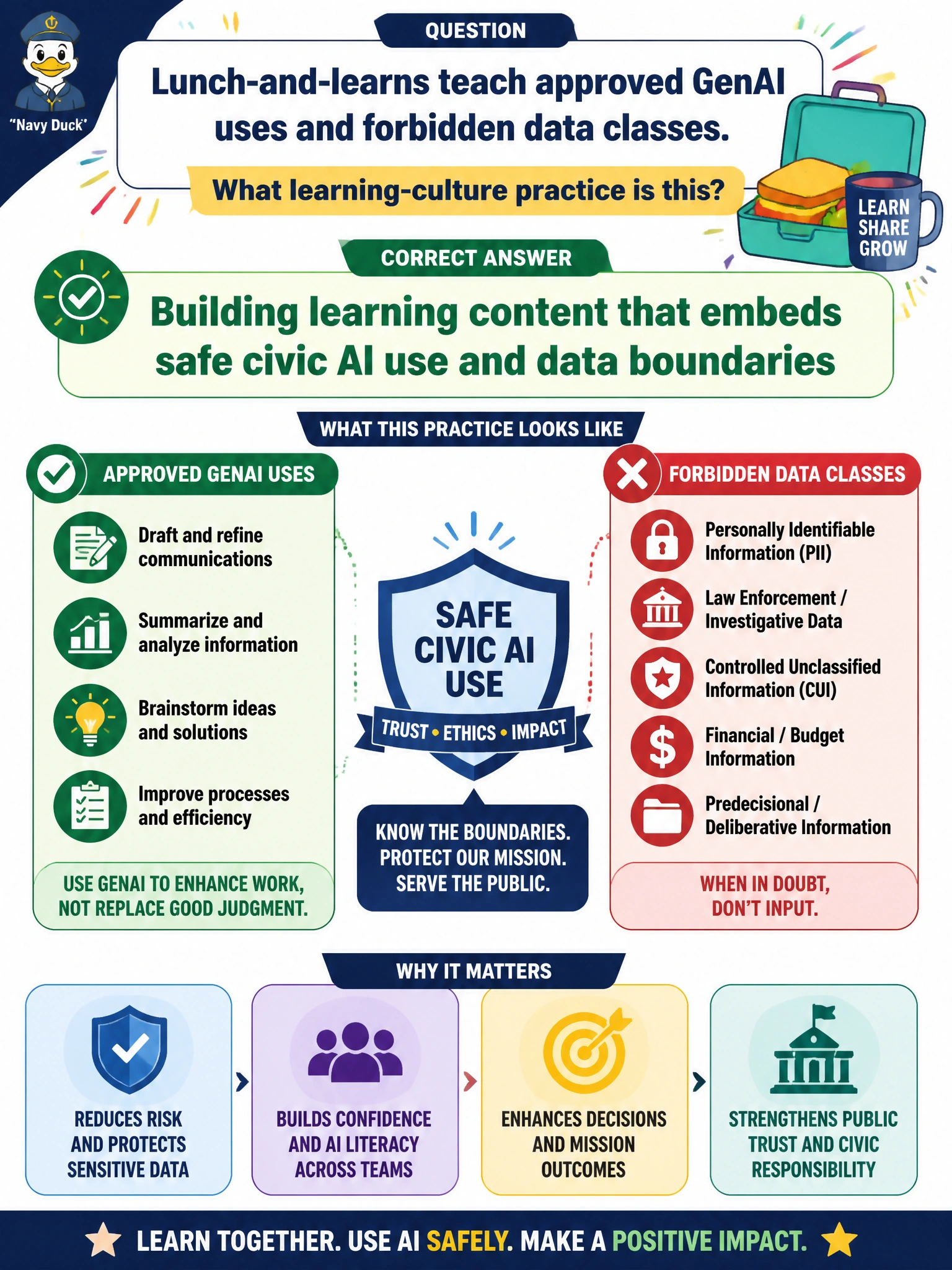
Lunch-and-learns teach approved GenAI uses and forbidden data classes. What learning-culture practice is this?
Select an answer to reveal the explanation.
Short Explanation
Brown-bag sessions that say what’s green-lighted and what’s never pasted into GenAI—that’s how a city builds a safe learning culture, not folklore.
Full Explanation
Learning culture for GenAI must teach boundaries as clearly as features. Lunch-and-learns that cover approved GenAI uses and forbidden data classes build learning content that embeds safe civic AI use and data boundaries. That practice works because municipal staff routinely handle resident PII, confidential case notes, and non-public enforcement data; without explicit forbidden classes, 'helpful' pasting into public tools becomes a breach pattern. Embedding rules in social learning formats increases retention beyond unread policy PDFs.
Teaching staff to paste any confidential resident file into public GenAI tools fails by concept: it trains a privacy incident. Omitting forbidden data classes because policy is assumed obvious fails adult-learning reality—assumptions are not skills. Running lunch-and-learns that only cover marketing slogans with no use rules fails enablement: slogans do not change risky behavior.
Exam caveat: awareness of GenAI is insufficient; safe-use content must include data classes and approved patterns. Operational check: include forbidden-data examples in every GenAI learning session, test recognition with scenarios, and sample helpdesk tickets for pasting incidents after training.