
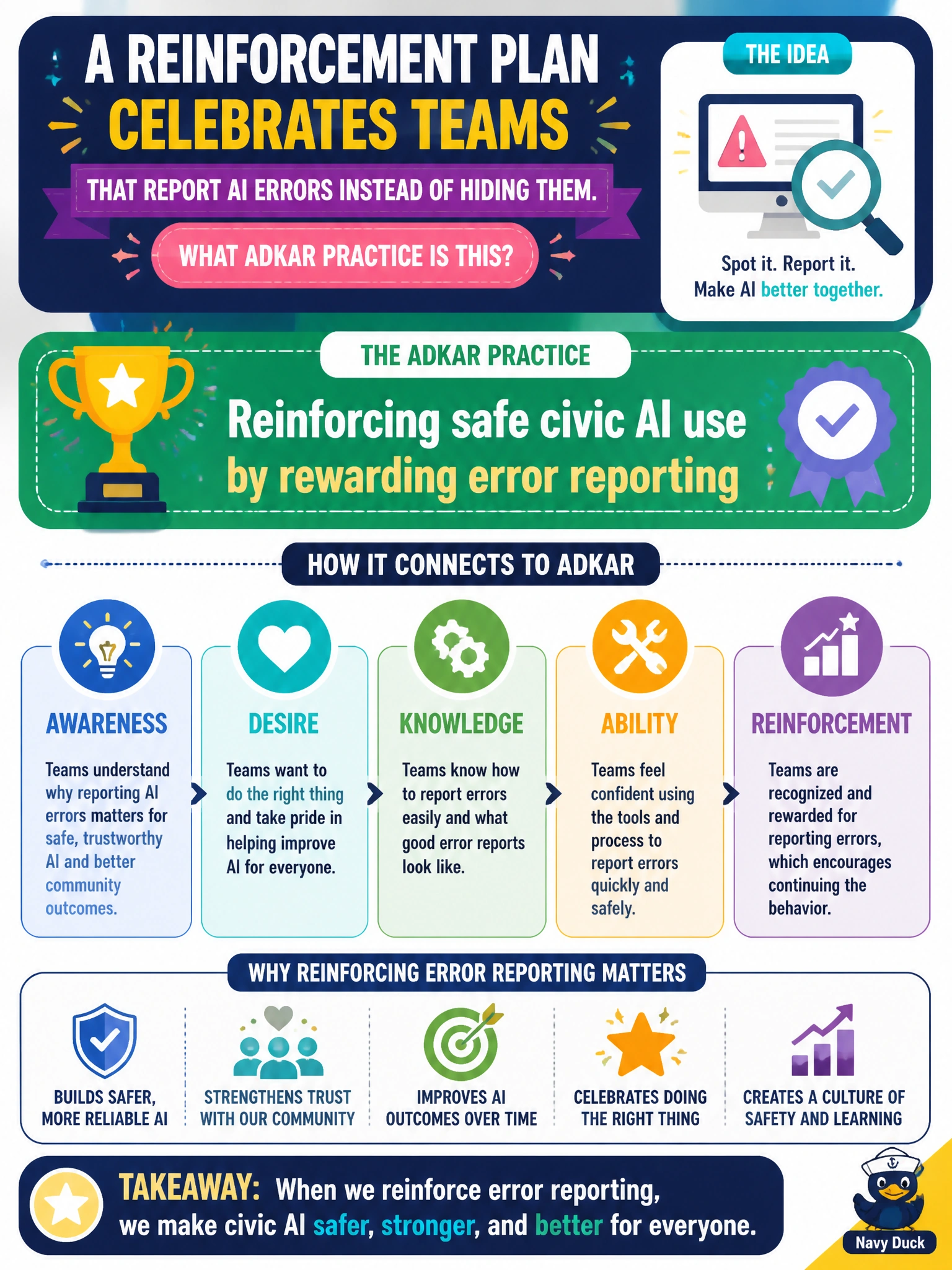
A Reinforcement plan celebrates teams that report AI errors instead of hiding them. What ADKAR practice is this?
Select an answer to reveal the explanation.
Short Explanation
When you reward teams for reporting AI errors, you reinforce safe civic AI use instead of punishing reports or rewarding silence. Keep that Reinforcement going beyond the pilot launch press release.
Full Explanation
ADKAR Reinforcement sustains behaviors after launch by rewarding the right habits. When you reward teams for reporting AI errors instead of hiding them, you reinforce safe civic AI use: psychological safety plus recognition makes detecting hallucinations, bias indicators, and workflow breaks a valued behavior. This matters because municipal AI risk is often silent—staff who fear blame may suppress incidents until residents or media force discovery. Positive Reinforcement aligns incentives with learning and control effectiveness. Punishing teams that report AI errors to protect program optics trains concealment and destroys the sensing system. Ending Reinforcement once the pilot launch press release is done fails to sustain behavior: Reinforcement is continuous, not a go-live party. Rewarding only silent usage even when outputs are wrong values throughput over correctness and safety. Exam caveat: Reinforcement is not swag for logging in; it is recognition of durable safe behaviors, including error reporting. Practical check: create a blameless AI error-reporting channel, spotlight fixes sourced from reports in leadership forums, and track report volume and quality (actionable findings) rather than punishing reporters.