
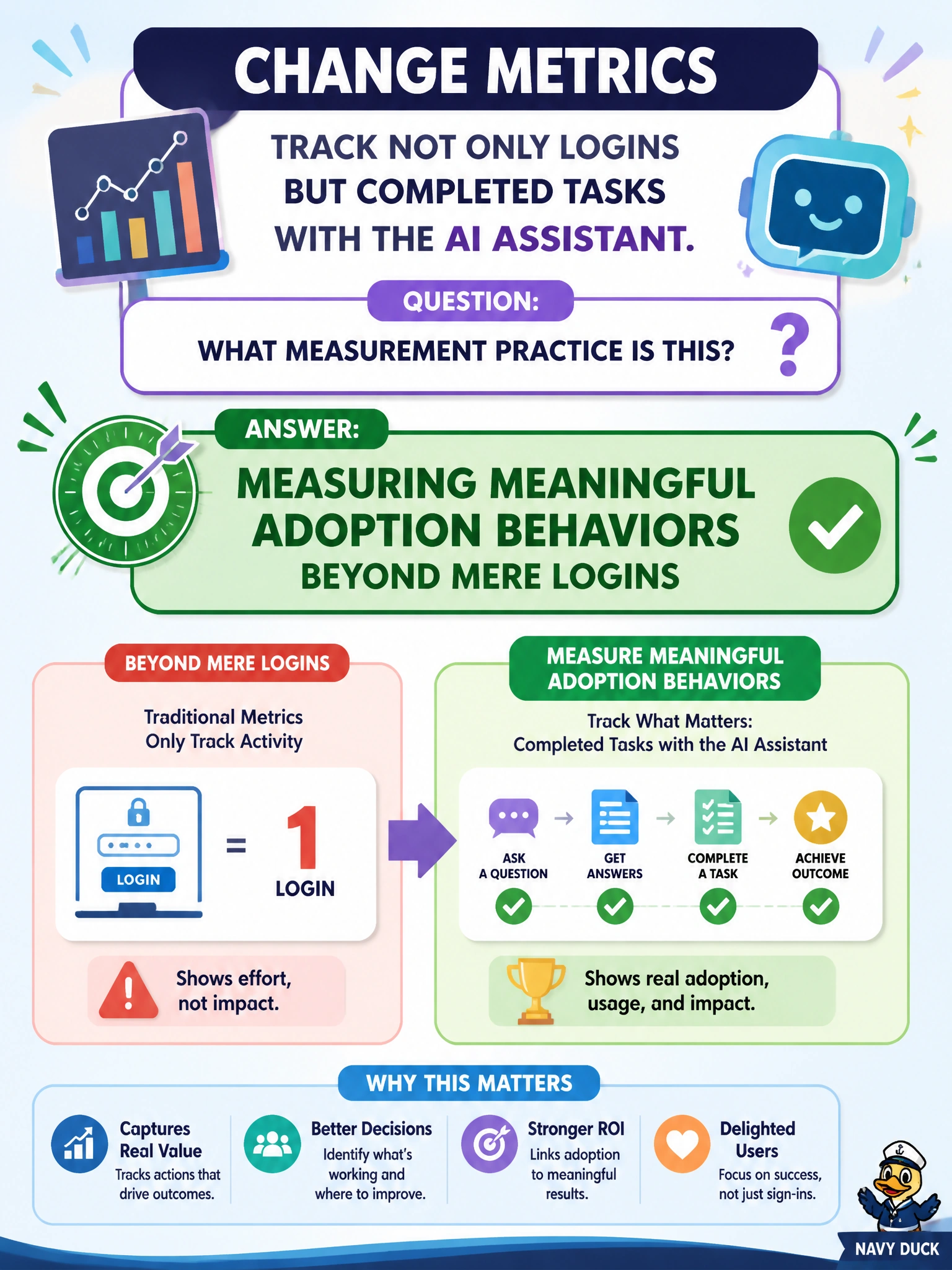
Change metrics track not only logins but completed tasks with the AI assistant. What measurement practice is this?
Select an answer to reveal the explanation.
Short Explanation
Logins are just showing up at the gym. Track whether folks finish real tasks with the assistant—that’s the workout that counts.
Full Explanation
Adoption metrics must measure work done, not mere presence. Tracking completed tasks with the AI assistant—not only logins—is the practice of measuring meaningful adoption behaviors beyond authentication events. Logins prove access; completed drafting, triage, or knowledge tasks prove the assistant is embedded in municipal workflows. That measurement design works because vanity access metrics can look healthy while staff abandon the tool after the splash screen, leaving leaders blind to Ability gaps, poor UX, or distrust.
Counting only password resets as proof of AI transformation fails by concept: identity friction is not outcome adoption. Tracking logins alone and ignoring whether work actually gets done with AI fails the same way—presence without performance. Declaring success based solely on vendor marketing dashboards fails because vendor metrics optimize for license utilization narratives, not civic task completion, quality, or policy compliance.
Exam caveat: distinguish leading activity metrics from meaningful behavioral outcomes. Municipal programs should instrument task completion, escalation rates, and error reports alongside access. Operational check: define a small set of role-relevant completed-task metrics, validate them with department product owners, and review them in steering meetings instead of login counts alone.