
Housing caseworkers get early demos so an AI assistant fits real interview workflows. What change practice is this?
Select an answer to reveal the explanation.
Short Explanation
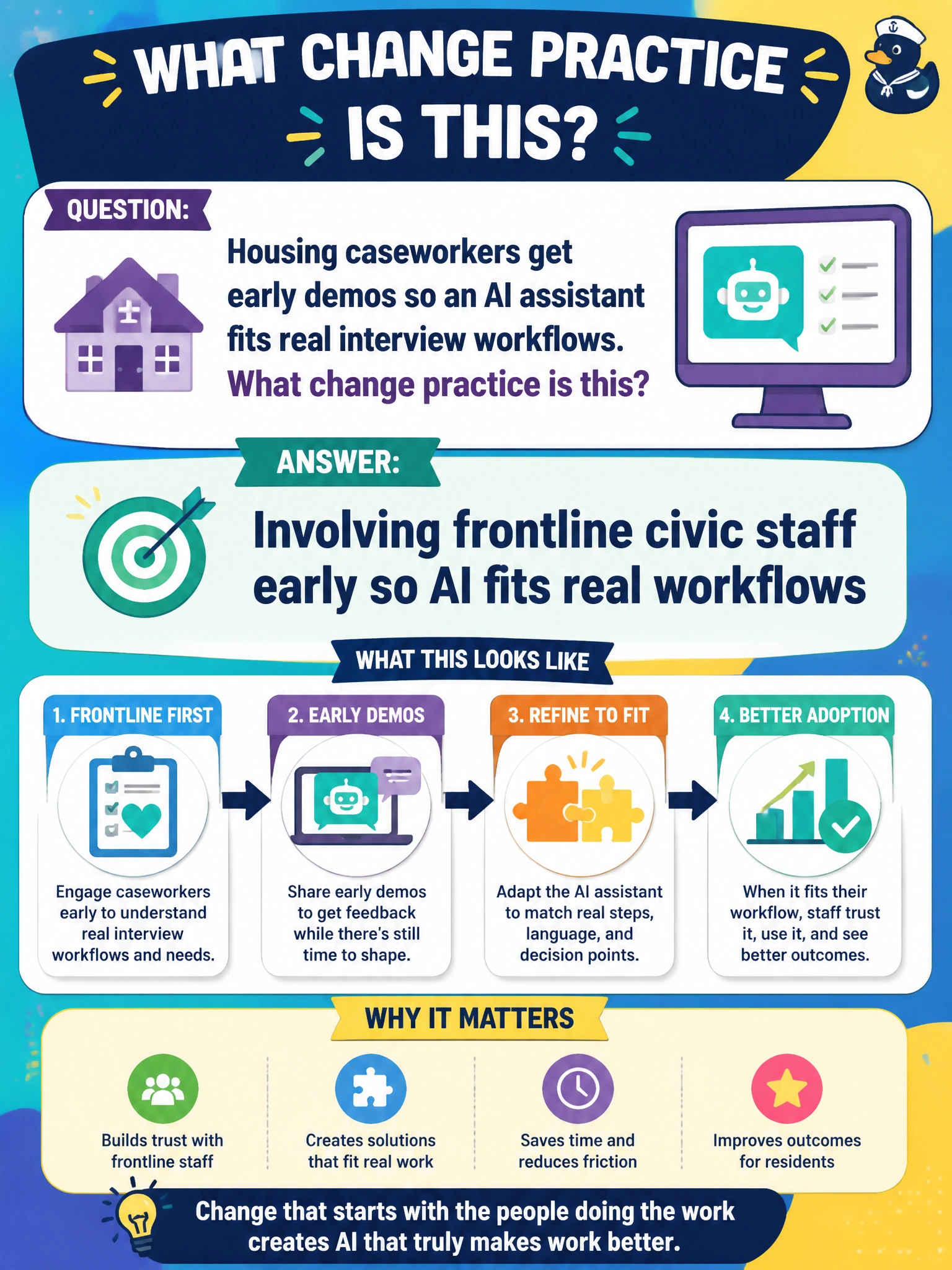
Show the tool to the people who run the interviews before you carve it in stone. Early demos keep AI glued to real housing workflows, not slide-deck fantasy.
Full Explanation
Fit-to-workflow is a change and product practice, not a late training afterthought. Giving housing caseworkers early demos so an AI assistant matches real interview workflows illustrates involving frontline civic staff early. Caseworkers know intake scripts, documentation norms, trauma-informed pacing, and system-of-record constraints; early demos expose where the assistant helps, where it invents, and where it breaks interview rhythm. That reduces redesign cost and raises Desire and Ability because the tool reflects their work instead of a vendor persona of their work.
Designing the assistant in isolation and unveiling it only at go-live fails by concept: big-bang unveilings lock in workflow mismatch and breed rejection. Excluding caseworkers because they might slow the vendor timeline fails the municipal purpose test—timeline optics over resident-service fit produces unused software. Waiting until after citywide scale to gather frontline workflow input fails because scaling multiplies a bad fit; discovery belongs in pilot design, not postmortem.
Exam caveat: vendor speed is not a valid reason to exclude frontline civic users on CAIPM-style items. Keep housing/casework framing. Operational check: schedule early demo sessions with caseworkers, capture workflow fit findings in the backlog before scale gates, and require product-owner sign-off that interview-critical steps were observed with the assistant in realistic scenarios.