
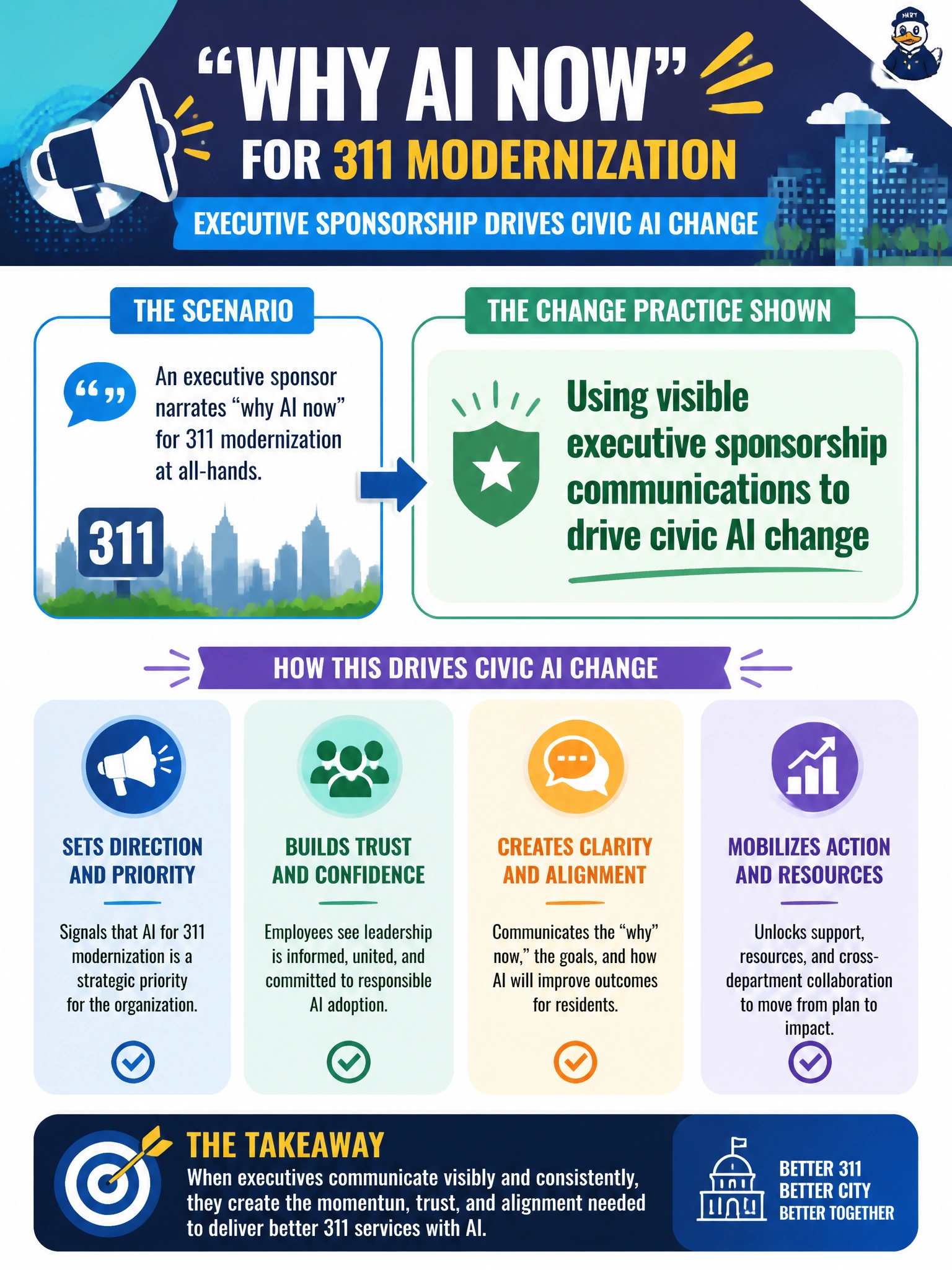
An executive sponsor narrates 'why AI now' for 311 modernization at all-hands. What change practice does this show?
Select an answer to reveal the explanation.
Short Explanation
When the boss stands up and explains why 311 needs AI now, the room stops guessing. Visible sponsorship beats mystery memos every time.
Full Explanation
Visible executive sponsorship is a core municipal change lever. When an executive sponsor narrates 'why AI now' for 311 modernization at all-hands, the organization receives an authoritative case for change: the service problem, the timing, the expected resident benefit, and the boundaries of the initiative. That practice—using visible executive sponsorship communications to drive civic AI change—works because staff calibrate priority from leaders’ public attention. Rumors shrink when sponsors repeatedly connect AI work to measurable 311 pain (wait times, inconsistent answers, after-hours coverage) rather than to fashion.
Leaving the 'why now' story only to anonymous intranet posts fails by concept: anonymous content lacks sponsorship weight and is easy to ignore. Avoiding executive visibility so staff invent their own rumors fails because information vacuums fill with threat narratives about jobs, surveillance, or reckless automation. Delegating sponsorship messaging exclusively to an external ad agency fails because outside marketing cannot substitute for internal authority and accountability; staff need to hear commitment from their own executives.
Exam caveat: sponsorship is not a logo on a slide—it is repeated, specific narrative from accountable leaders. Municipal stems about 311 or similar services reward visible civic sponsorship over vendor storytelling. Operational check: schedule sponsor all-hands or town halls, capture a consistent 'why now' message tied to service metrics, and verify managers can restate it—then watch rumor volume and enrollment in enablement activities.