
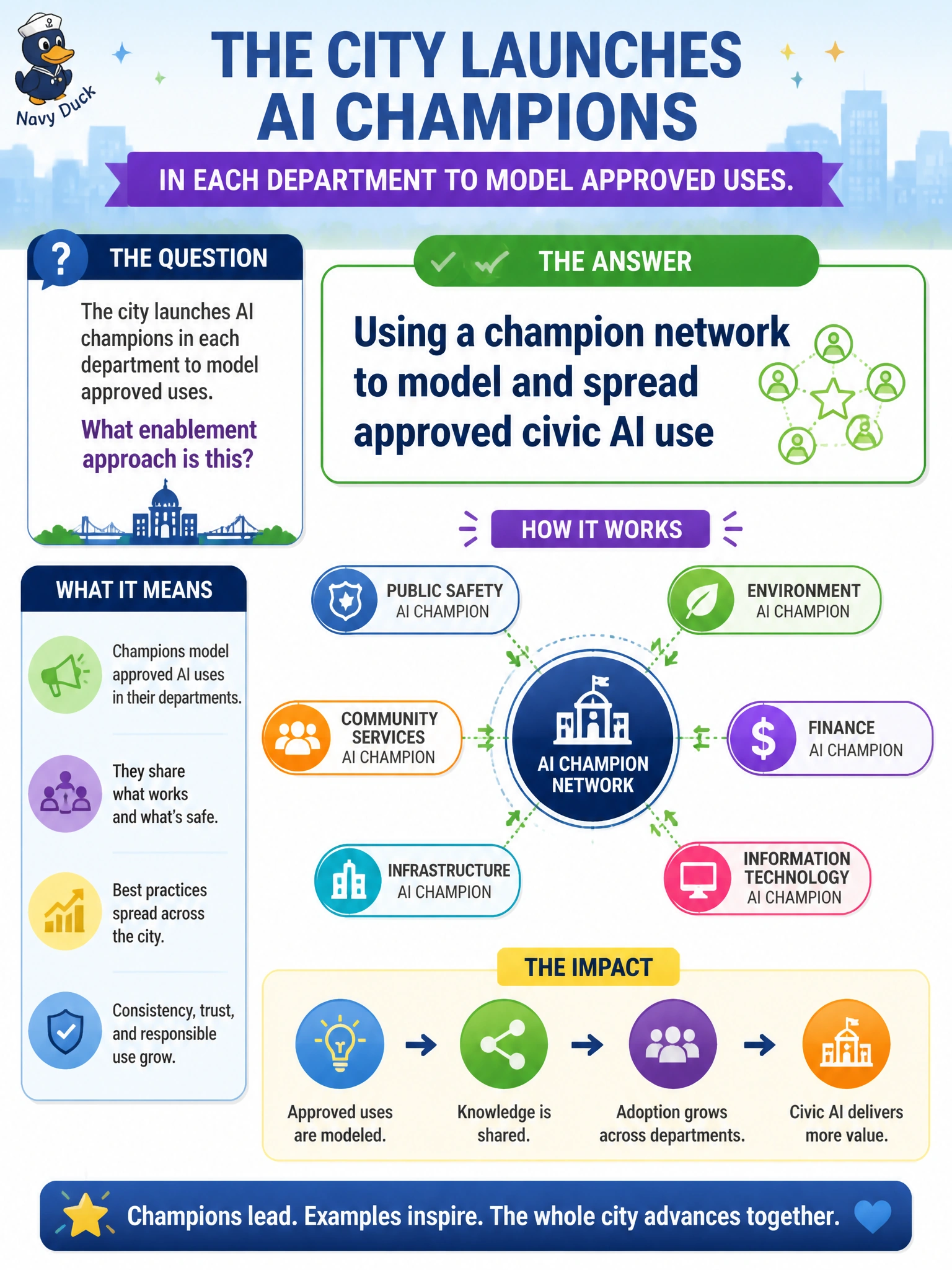
The city launches AI champions in each department to model approved uses. What enablement approach is this?
Select an answer to reveal the explanation.
Short Explanation
Champions are the trusted neighbors who show how the new tool actually works. Plant one in each department and approved AI use spreads by example, not memo.
Full Explanation
Enablement at city scale rarely travels by memo alone. Launching AI champions in each department to model approved uses is a champion-network approach: trusted peers demonstrate sanctioned patterns, coach colleagues, surface local friction, and translate central policy into day-to-day practice. That works in municipal settings because clerks, inspectors, and caseworkers adopt tools they see peers use safely more readily than tools announced only by central IT. Champions also create distributed sensing for misuse, shadow AI, and training gaps.
Banning peer modeling so only vendors may demonstrate tools fails by concept: vendor demos lack local credibility and often omit civic constraints; peers encode approved municipal patterns. Relying solely on a one-time email blast with no local champions fails because awareness without local modeling decays quickly and leaves departments without a human help path. Selecting champions who have never used the approved AI patterns fails the enablement logic—champions must be able to perform and explain the behaviors they are asked to spread.
Exam caveat: champions are not a substitute for policy or sponsorship; they amplify approved use. Do not pick answers that outsource culture change entirely to vendors. Operational check: name champions per department, brief them on approved and forbidden uses, give them office hours and feedback channels to the AI program, and measure whether championed units show higher safe-adoption behaviors than non-championed peers.