
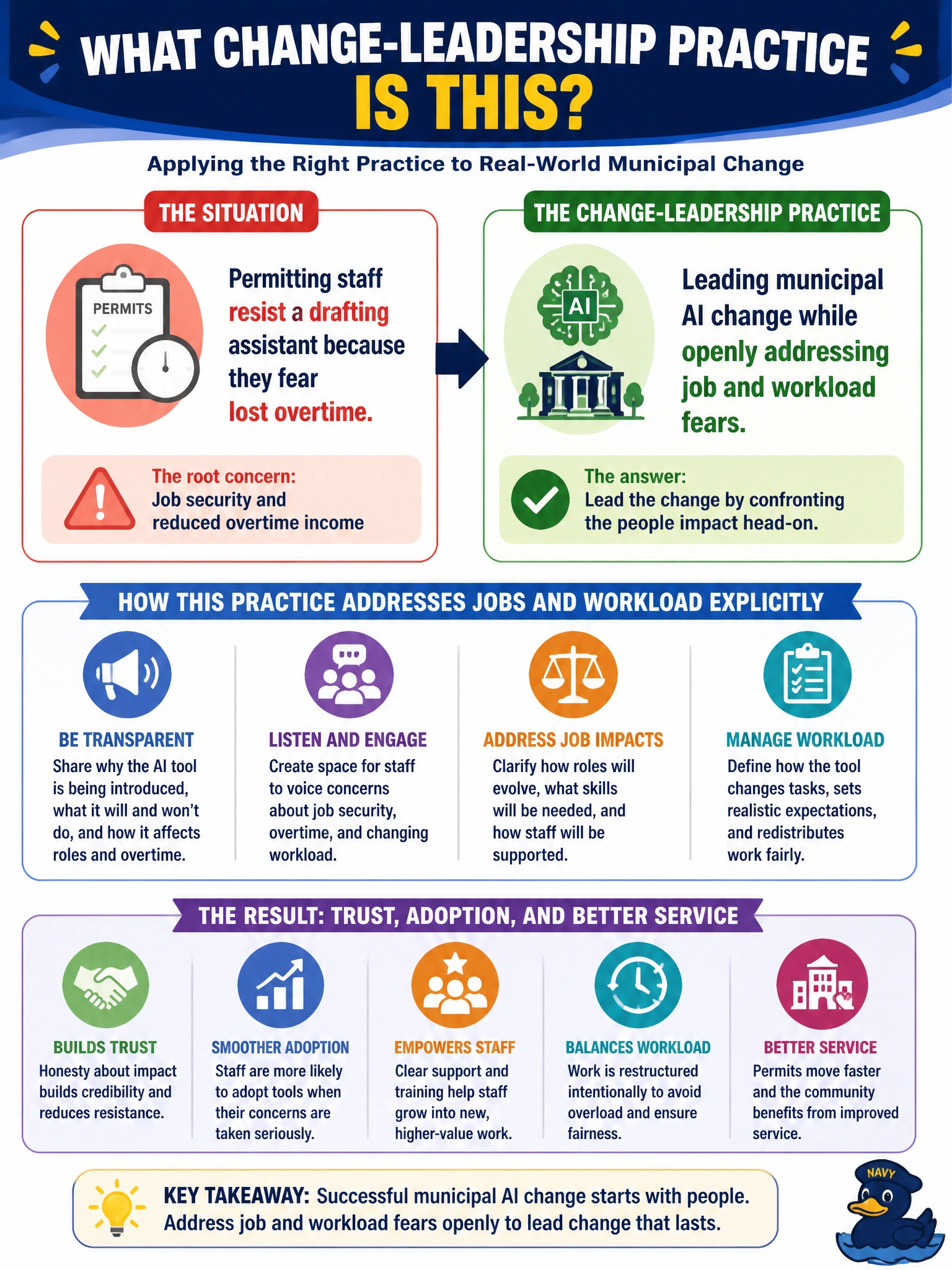
Permitting staff resist a drafting assistant because they fear lost overtime. The change plan addresses jobs and workload explicitly. What change-leadership practice is this?
Select an answer to reveal the explanation.
Short Explanation
Fear of lost overtime isn’t drama—it’s a real paycheck worry. Good change leaders put jobs and workload on the table instead of hoping silence equals buy-in.
Full Explanation
Municipal AI change fails when leaders treat workforce economics as noise. Permitting staff resisting a drafting assistant over feared lost overtime is a predictable Desire and WIIFM problem: overtime can be material household income, and AI that compresses drafting time threatens that income unless leaders address jobs, workload redistribution, and transition supports explicitly. The correct practice—leading municipal AI change while openly addressing job and workload fears—works because transparent dialogue, role redesign, and negotiated expectations reduce rumor, grievance risk, and quiet non-adoption.
Ignoring overtime and job fears while pushing the tool as inevitable fails by concept: inevitability messaging without economic honesty breeds resistance and shadow workarounds. Promising zero process change while secretly redesigning every role overnight fails because bait-and-switch destroys trust and often violates labor agreements. Punishing staff who raise workload concerns fails both ethically and practically—it suppresses early warning signals that would improve the change plan and invites formal labor conflict.
Exam caveat: 'strong leadership' distractors that silence fear are wrong; effective change leadership surfaces and manages job impact. Keep civic framing—permitting staff, municipal payroll realities, and public-service continuity. Operational check: include job/workload impact analysis in the change plan, engage HR and unions early, document how saved drafting time is reallocated (backlog, quality, resident contact), and track sentiment plus grievance indicators during rollout.