
A factory press emits a continuous vibration stream. Maintenance needs the timestamp when a bearing incident begins, the moment the stream breaks from its earlier behavior, not a portrait of the usual hum. Which method supplies that timestamp?
Select an answer to reveal the explanation.
Short Explanation
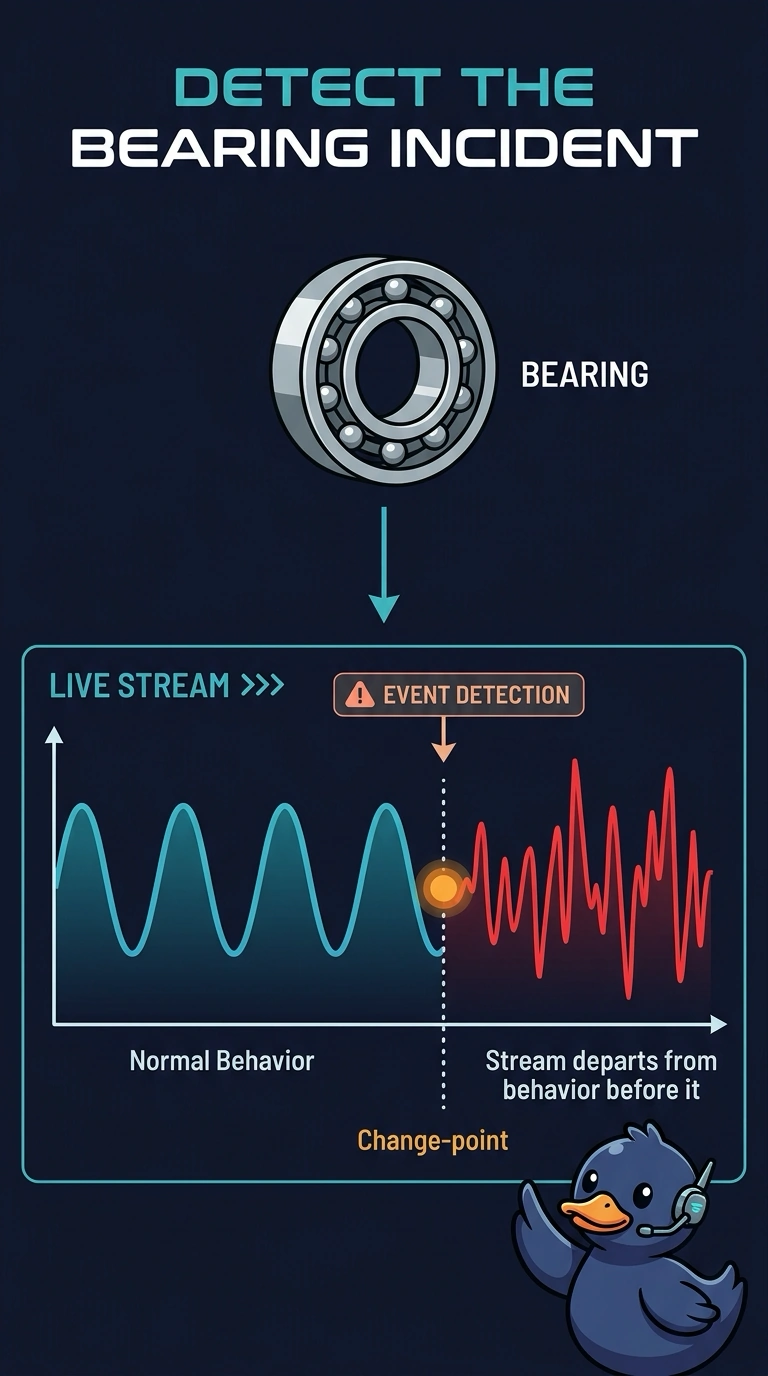
Maintenance needs a bookmark in the stream, the moment the press stops sounding like itself. You want event detection that marks that change-point, not a portrait of the usual hum. The trap is a frequency summary that never names when the incident started.
Full Explanation
Event detection watches the stream for a change-point, the time the vibration leaves the behavior that preceded it. That timestamp is what maintenance asked for when it distinguished an incident from a portrait of the usual hum. A frequency-domain summary of the whole shift can show which cycle rates repeat, and it collapses the shift into that description without naming when a bearing incident began. Reducing a model until it fits the controller's memory and power changes what the device can store and run, and it does not search the stream for a break. Clustering daily averages from past months summarizes history at a coarse grain and does not inspect the live stream for a newly started incident. Exam caveat: a frequency view can still help explain a fault after the time is known; it is the wrong tool when the missing piece is the timestamp itself. Operational check: replay a test stream with a bearing fault inserted at a known moment and confirm the detector stamps a time at that insertion rather than only returning a summary of cycle rates.