
A factory inspection cell points a camera and a ranging sensor at the same weld and wants one model that uses both measurements of that scene. Which approach is that?
Select an answer to reveal the explanation.
Short Explanation
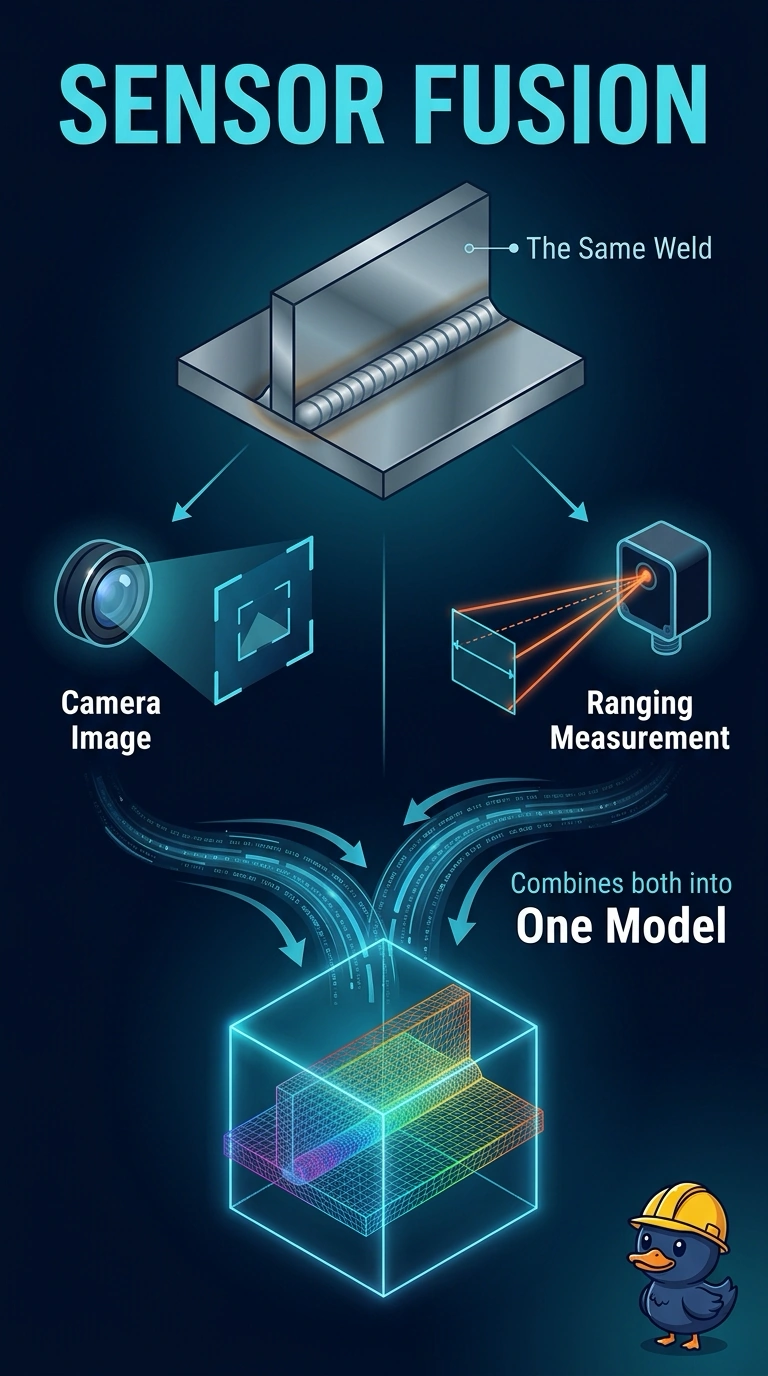
You have an eye and a tape measure on the same weld, and you want both stories. Sensor fusion combines the camera and the range reading of that scene. Hiding part of the photo, or following a tool across frames, does not bring the second sensor in.
Full Explanation
Sensor fusion uses more than one sensor that observes the same scene. Here the camera supplies appearance and the ranging sensor supplies distance, and one model is built on both measurements of that weld rather than on either feed alone. Occlusion augmentation edits the camera image by covering a region; it is a training perturbation of one sensor, not a second measurement. Object tracking links an item across frames in video and can be done with the camera alone, so it does not bring the range reading into the model. A camera-only score discards the ranging sensor and therefore fails the request to use both measurements. The camera frame and the range reading have to refer to the same weld at the same moment, or the model mixes a picture of one joint with a distance to another. Fusion is that paired use of both measurements. Exam caveat: fusion means the measurements are combined for the same weld; training two unrelated models on different days and different parts is not fusion of one scene. Operational check: confirm each training example pairs a camera frame with the range reading of that same weld, and that the model input includes both.