
A utility camera watches one maintenance truck cross a substation yard. A detector draws a box in each frame, but the safety log must keep a single vehicle identity instead of treating every frame as a new truck. Which task preserves that identity across frames?
Select an answer to reveal the explanation.
Short Explanation
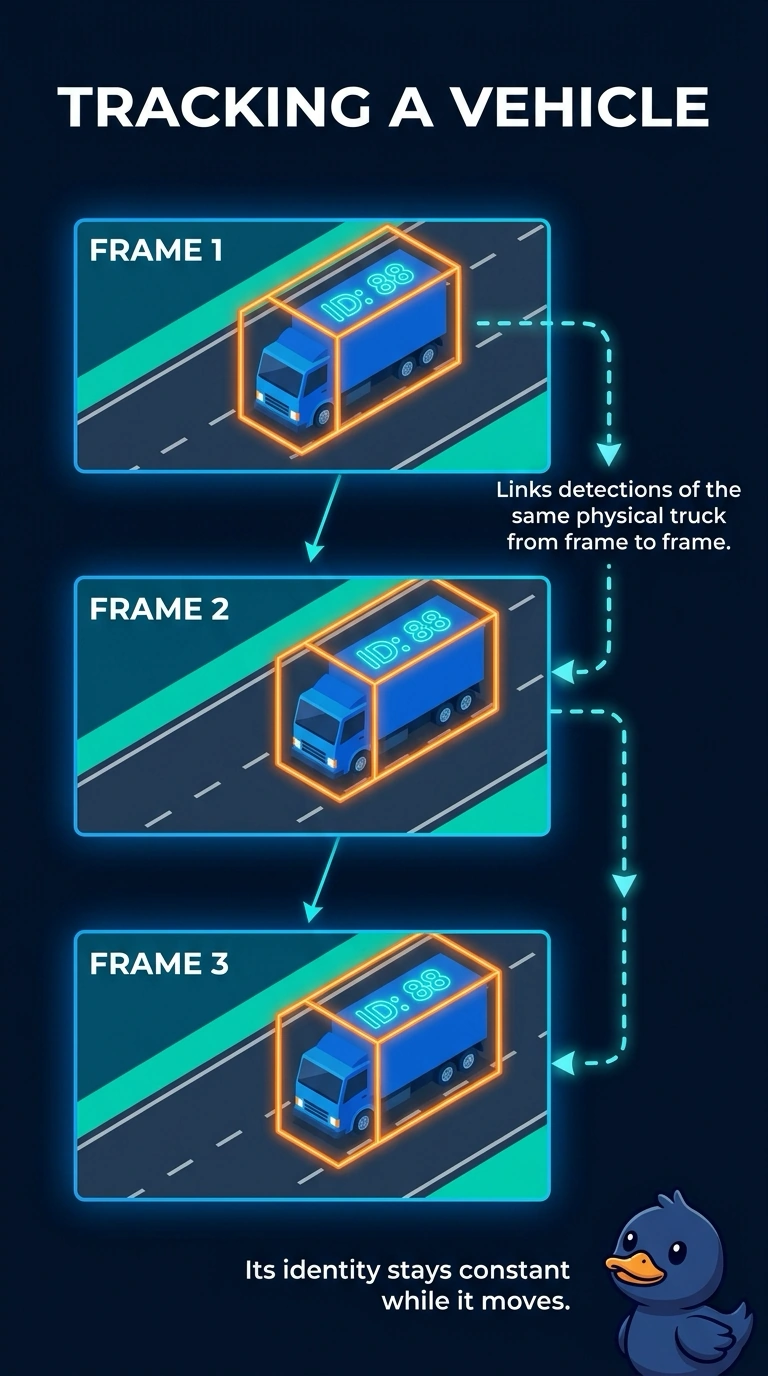
A detector is a camera shouting truck each time the shutter clicks. Tracking is the notebook that says it is the same truck you already saw, not a new one that appeared from nowhere. Classification, pixel labels, and text reading do not carry that identity forward.
Full Explanation
Tracking associates detections across time so one physical object keeps one identity while it moves. The detector can supply a box in each frame; the tracker decides which boxes are the same truck and writes one identity into the safety log. Image classification puts a label on a whole frame and does not follow an object into the next frame. Semantic segmentation assigns a class to pixels, such as truck or pavement, but class labels alone do not say that the truck pixels in this frame are the same vehicle as in the previous frame. Optical character recognition reads text in an image; it does not link a moving truck across the yard, even if a badge happens to be legible. Identity here means one track identifier carried forward, not the class label repeated on every frame. Exam caveat: a detector without an association step can look successful frame by frame and still inflate a count by starting a new identity every frame. Operational check: replay the yard sequence and confirm the log holds one track identity for that truck from the gate to the far fence.