
On a pharmaceutical packaging line, a drive that normally speaks only to its PLC opens a session toward an enterprise subnet. The cyclic PLC traffic is unchanged. Which issue is that?
Select an answer to reveal the explanation.
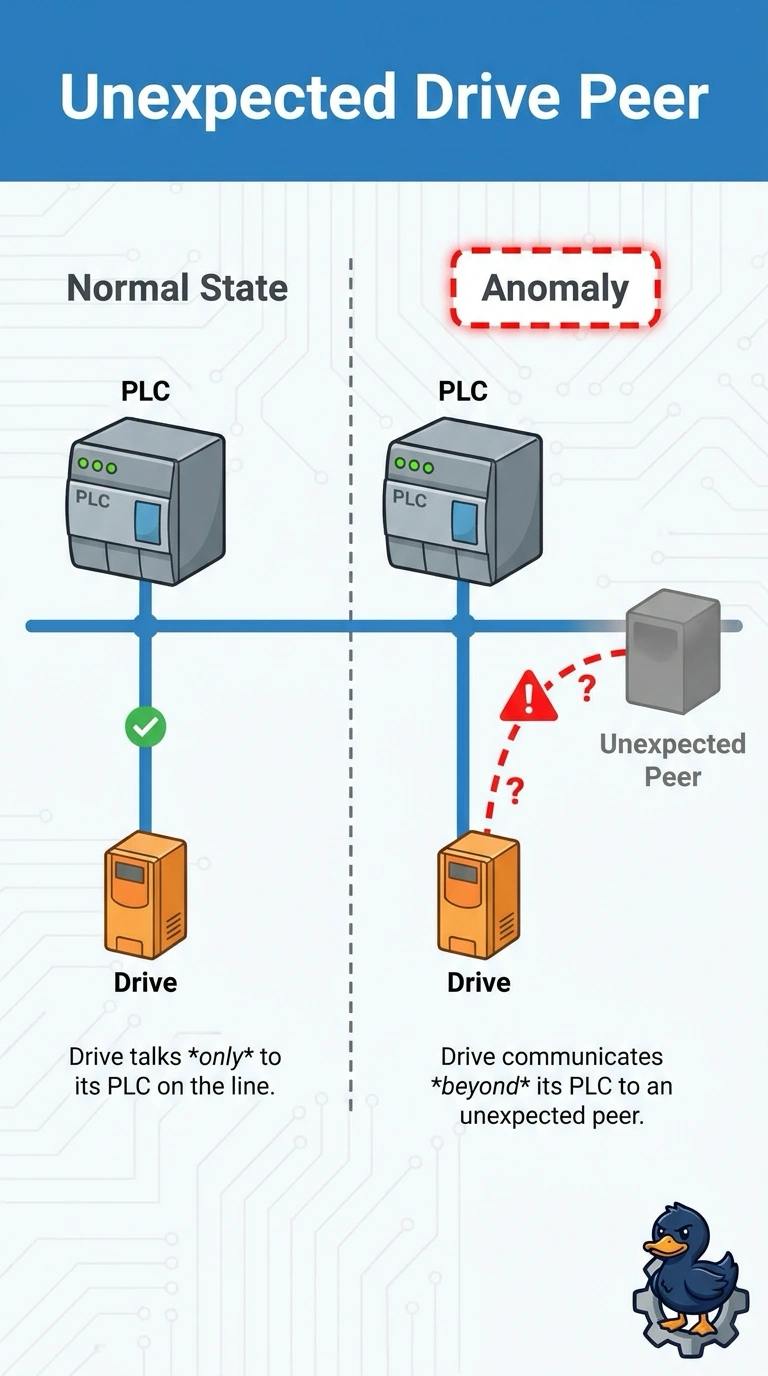
Short Explanation
You see this drive opening a session to an enterprise address even though it normally talks only to its PLC. Treat that unexpected peer as the issue, even while the usual cycle continues. A familiar conversation does not make an unfamiliar destination expected.
Full Explanation
An OT baseline includes who talks to whom. This packaging drive normally speaks only to its PLC, so a new session toward an enterprise subnet is an unexpected peer and is the issue, even though cyclic PLC traffic is unchanged. Calling it a normal cyclic exchange misreads the baseline: real-time I/O with the PLC can continue alongside a conversation that was not there before. A new destination is not the same flow with a new name. Loss of the batch-record archive is a file problem on the enterprise server; it does not describe the drive opening a session to an enterprise address. Wireless channel overlap can affect a radio link in the neighboring office building, but this report concerns a peer change, not a spectrum measurement. Exam caveat: a planned collector added under change control can be a legitimate new peer. The finding still means the peer was not in the prior baseline; it should be investigated rather than dismissed. Practical check: identify the enterprise address, confirm that no approved change introduced it, and block or remove the session if the packaging lead does not own it.