
A wastewater plant has two findings with the same critical label. One is unauthenticated Modbus on a skid with no uplink. The other is a domain-joined HMI that operators browse and that can reach many pump PLCs. Which risk reading is sound?
Select an answer to reveal the explanation.
Short Explanation
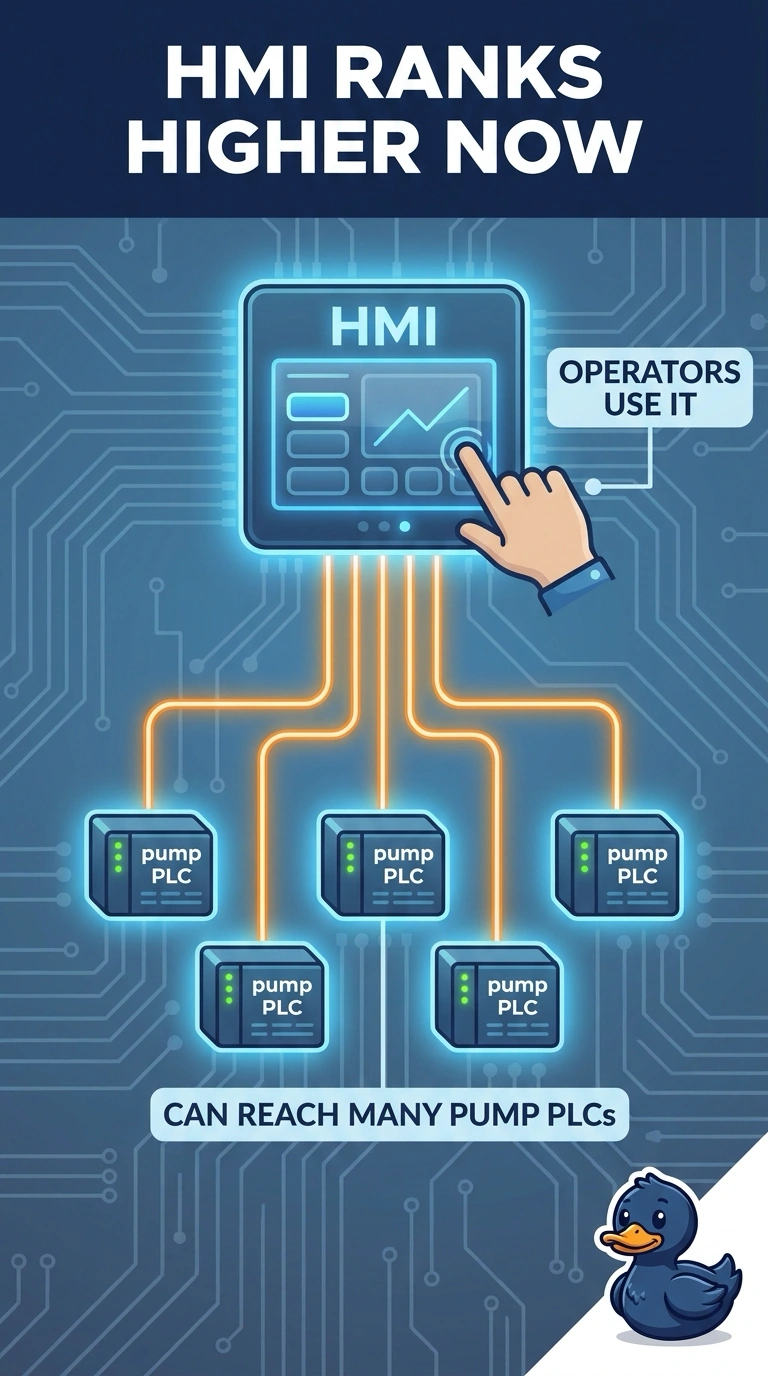
A critical sticker on a disconnected skid is not the same sticker on the desk people use to reach the pumps. You rank the browsed HMI higher because it is in daily use and it can touch many controllers. The skid with no uplink stays the quieter finding until someone connects it.
Full Explanation
Risk ranking uses exposure and what a weakness can reach, not the label text alone. The domain-joined HMI is browsed by operators and has a path to many pump PLCs, so a compromise there is an immediate route into control. The skid runs unauthenticated Modbus, which is a real weakness, but it has no uplink. Nothing on the plant network can use that weakness until someone connects the skid, so it is not the higher immediate risk. Treating the two findings as equal stops at the shared critical label and ignores whether an attacker can touch the asset today. Waiting for a captured exploit packet confuses a vulnerability profile with an incident. The ranking exists so the plant can act before that packet. Exam caveat: the day the skid gains an uplink, its profile changes and the old protocol becomes reachable. Record that. A quiet finding is still on the work list. It does not jump ahead of the HMI people already use. The shared critical label is only a sorting hint. It does not measure who can reach a pump today. Operational check: confirm the HMI's sessions toward the pump PLCs and whether those sessions are limited to the operator role the plant intended.