
Cisco Cyber Vision lists a vulnerability on a cement-kiln feed drive together with that drive's vendor, firmware, and cell. Which reading fits?
Select an answer to reveal the explanation.
Short Explanation
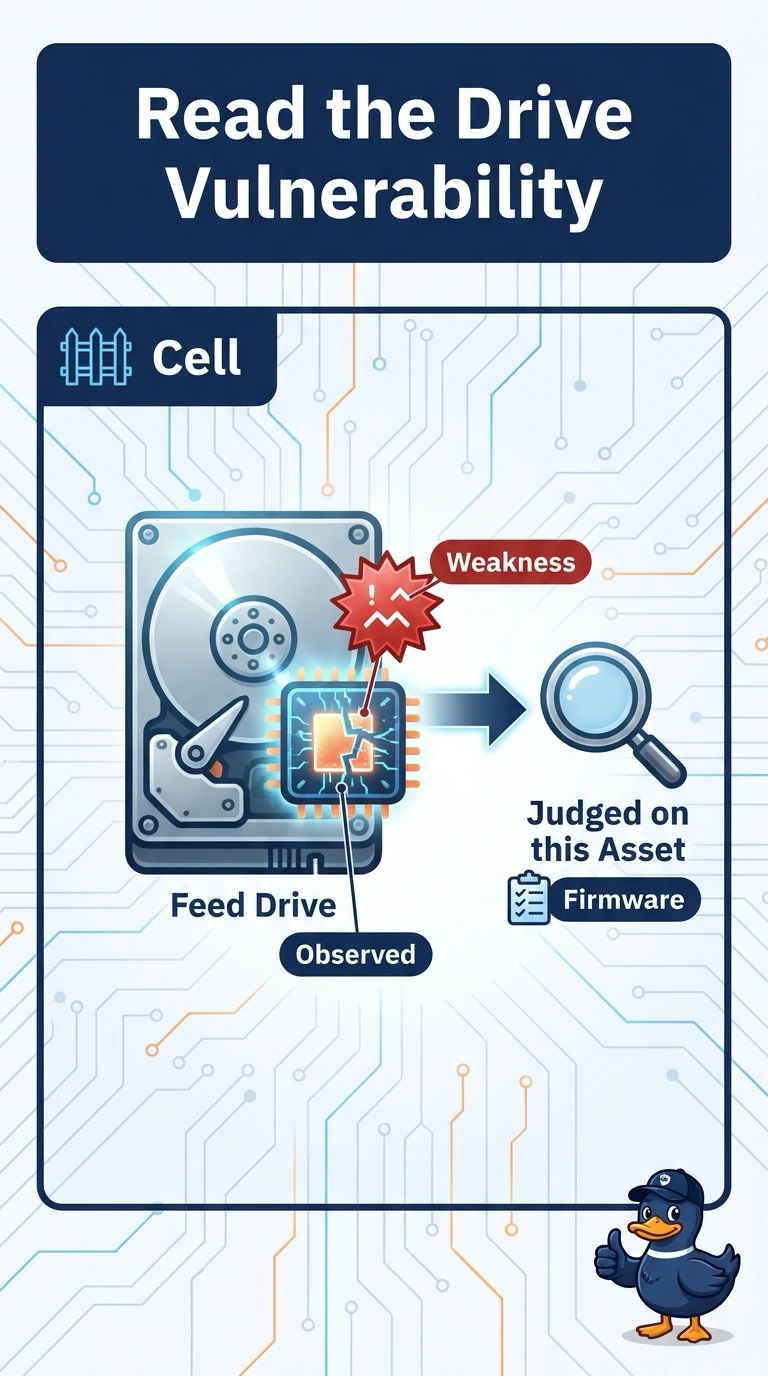
This vulnerability note is pinned to one kiln drive, with that drive's firmware written on the pin. You judge the finding on that asset in that cell. A busy minute of traffic does not copy the same note onto every cabinet in the plant.
Full Explanation
Cisco Cyber Vision keeps vulnerabilities in the context of a component it has observed, including vendor and firmware, rather than as a plant-wide score with no device attached. The finding names the kiln feed drive, the firmware observed on it, and the cell, so the weakness is judged on that asset. One conversation does not copy the vulnerability onto every asset in the cement plant. Another device gets its own finding if it is observed with the same exposure. A burst of cyclic traffic can change volume statistics. It does not rewrite the vulnerability text stored for the drive. An office firewall backup copies a signature file on that firewall. It is not the source of an industrial finding that already names this drive's firmware and cell. Exam caveat: the same weakness can exist on a second device, and that second device is a separate judgment with its own reachability. This report does not become false just because the identifier is known elsewhere. Operational check: open the component the event names, confirm the firmware string matches what the drive reports, and rank that drive rather than a plant total.