
An aeration-blower PLC at a wastewater plant has a known flaw and no patch that keeps the validated application. The blowers are in service. The lead says to virtual-patch the PLC. What does that mean here?
Select an answer to reveal the explanation.
Short Explanation
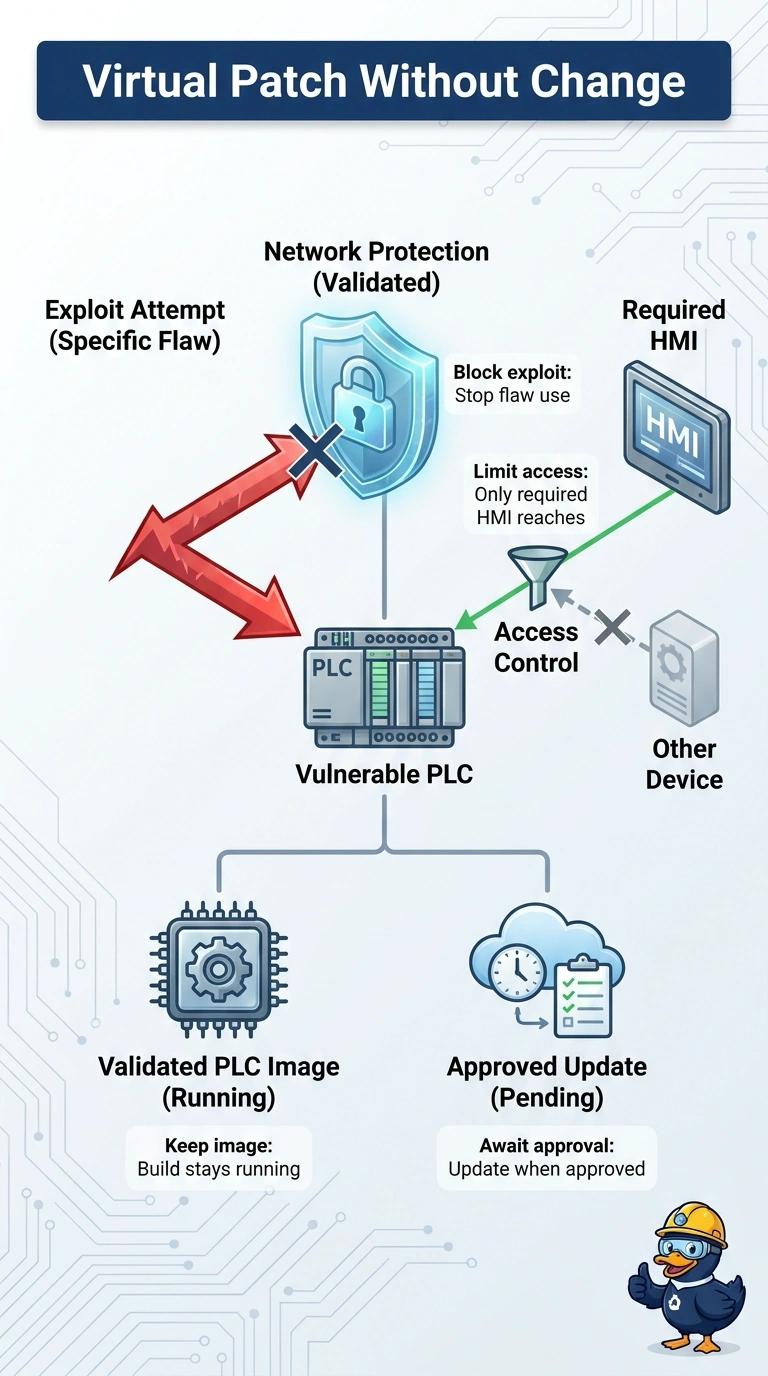
You can keep the blowers in service on the validated PLC image while blocking the specific flaw’s exploit path and limiting access to the required HMI. Virtual patching blocks exploitation without changing vulnerable software, so you preserve the validated image until an approved update is ready.
Full Explanation
Virtual patching blocks exploitation without changing vulnerable software. Here, you apply a validated network protection aimed at exploitation of the specific flaw, limit PLC access to the required HMI, and retain the validated image until an approved update is tested. The blowers remain in service and the firmware stays unchanged while the exploit path is blocked upstream. Leaving all traffic open because the controller is running confuses production with unreachability: network reachability determines whether it can be contacted, and a running controller can still be probed. Moving the PLC onto the enterprise VLAN so a corporate tool treats it as a laptop breaks network segmentation and does not block the specific exploit or preserve validation. Rebooting during the shift and loading firmware copied from an unrelated machine replaces the validated image with an untested one while aeration is in service, risking interruption; that is an unsafe firmware change, not virtual patching. Exam caveat: virtual patching reduces the immediate exploit risk but does not repair the flaw, so the approved update remains necessary. Practical check: confirm the network protection addresses the flaw’s exploit path, permits only the required HMI access, and leaves the validated PLC image unchanged.