
Two network-connected Windows PCs at an oil terminal share one vulnerability identifier. One is the safety engineering station for the loading-arm shutdown, and the other is a lobby weather display. Assume both PCs have comparable exploitability and exposure to the vulnerability. Which risk reading is sound?
Select an answer to reveal the explanation.
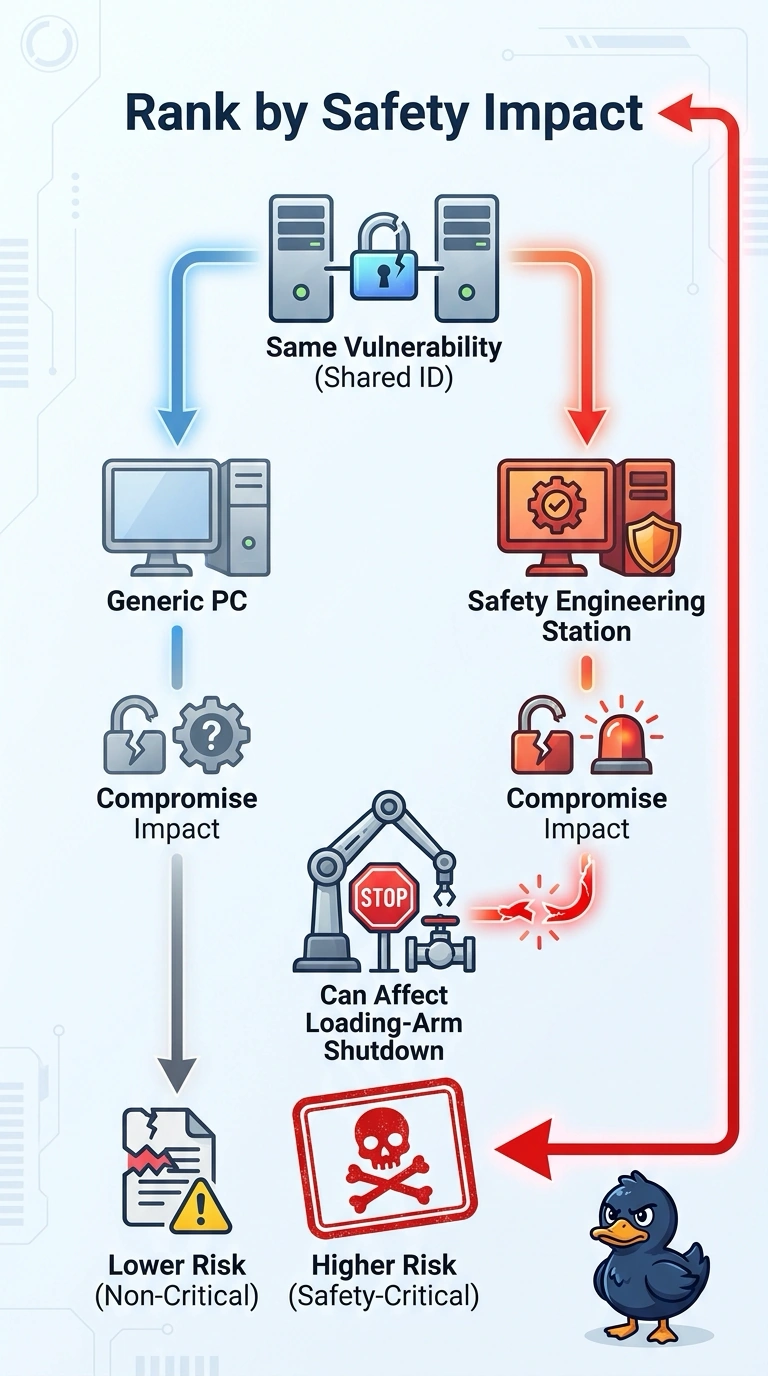
Short Explanation
A crack in the lobby television is not a crack in the panel that can shut the loading arm. You rank the safety engineering station higher because of what a compromise there can do. A shared vulnerability name does not make the weather display an equal operational risk.
Full Explanation
Risk combines the flaw with what the asset can do. Power and network connectivity alone do not establish comparable exposure; this comparison assumes comparable exposure and then evaluates operational consequence. The safety engineering station can be used to change the loading-arm shutdown. A compromise there has a direct path into a safety function. The lobby weather display can be defaced or used as a foothold, and it cannot trip or reprogram the loading arm. The sound reading ranks the safety station higher because of that consequence. Ranking the lobby display higher because visitors can see the screen confuses publicity with process consequence. A staffed room does not remove the safety station's role. Calling the risk equal because the identifier matches stops the analysis at the vulnerability database and ignores what each PC is for. Saying neither PC has risk while both are on the network ignores a flaw that can be reached on a machine that programs safety logic. Exam caveat: consequence decides priority between these two. It does not erase the lobby PC from the work list, and a later finding that the safety station is segmented away from the arm would change this profile. Operational check: confirm whether the safety engineering station can actually reach the loading-arm safety controller, and record that path next to the vulnerability so the ranking stays tied to the shutdown role.