
Two winery findings are both marked critical. One is classic Modbus on a mobile skid with no uplink. The other is a domain-joined bottling HMI that enterprise hosts can reach. Which risk order is sound?
Select an answer to reveal the explanation.
Short Explanation
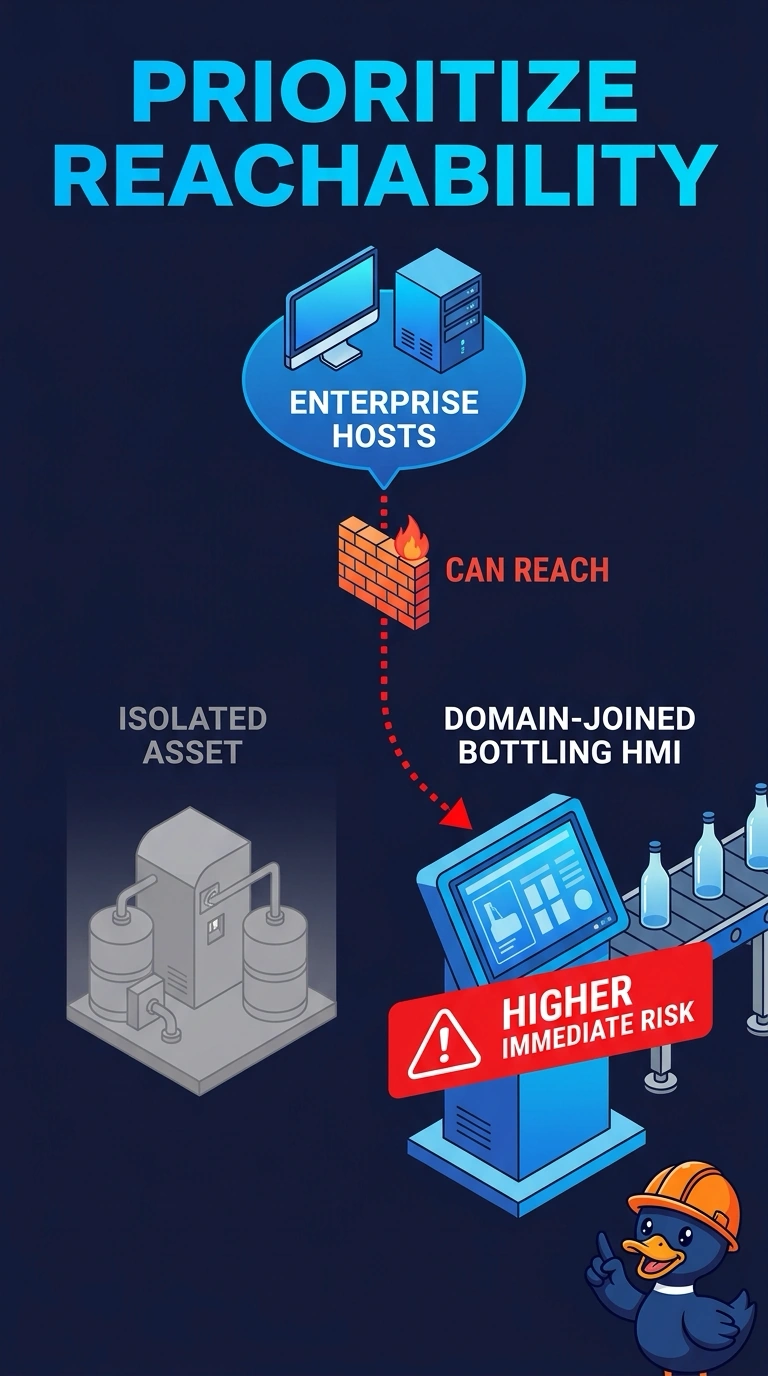
A locked spare in the shed is not the same problem as the register that faces the street, even when both tags say critical. You rank the domain-joined bottling HMI as the higher immediate risk because enterprise hosts can already reach it. The skid with no uplink stays on the work list at a lower immediate risk.
Full Explanation
An asset profile weighs the weakness together with reachability and how the asset is used. Both findings carry a critical label. The bottling HMI is domain-joined and enterprise hosts can reach it, so a flaw there is exposed to the office side of the winery now. The mobile skid speaks classic Modbus and has no uplink, so that weakness cannot be tried from the enterprise until someone connects the skid. The higher immediate risk is the reachable HMI. Matching labels do not create matching priority. The label is a starting point, and exposure is what orders the work this week. An older protocol is a real weakness, and it does not outrank reachability when the skid cannot be addressed. Age of the protocol raises the care you take before the skid is ever uplinked. It does not make the isolated skid the more urgent target today. Waiting for a capture of exploit code confuses a risk ranking with an incident. The profile exists so the winery acts while the HMI is reachable and before that packet shows up. Exam caveat: if the skid is later given an uplink, its profile changes that day and the order can change with it. Operational check: trace which enterprise hosts can reach the bottling HMI and confirm the skid switch has no uplink while it remains in that lower immediate band.