
Cisco Cyber Vision reports a new component on a juice-plant filler VLAN. The vendor string is a small office switch the plant does not use, and no ticket exists. Which reading fits?
Select an answer to reveal the explanation.
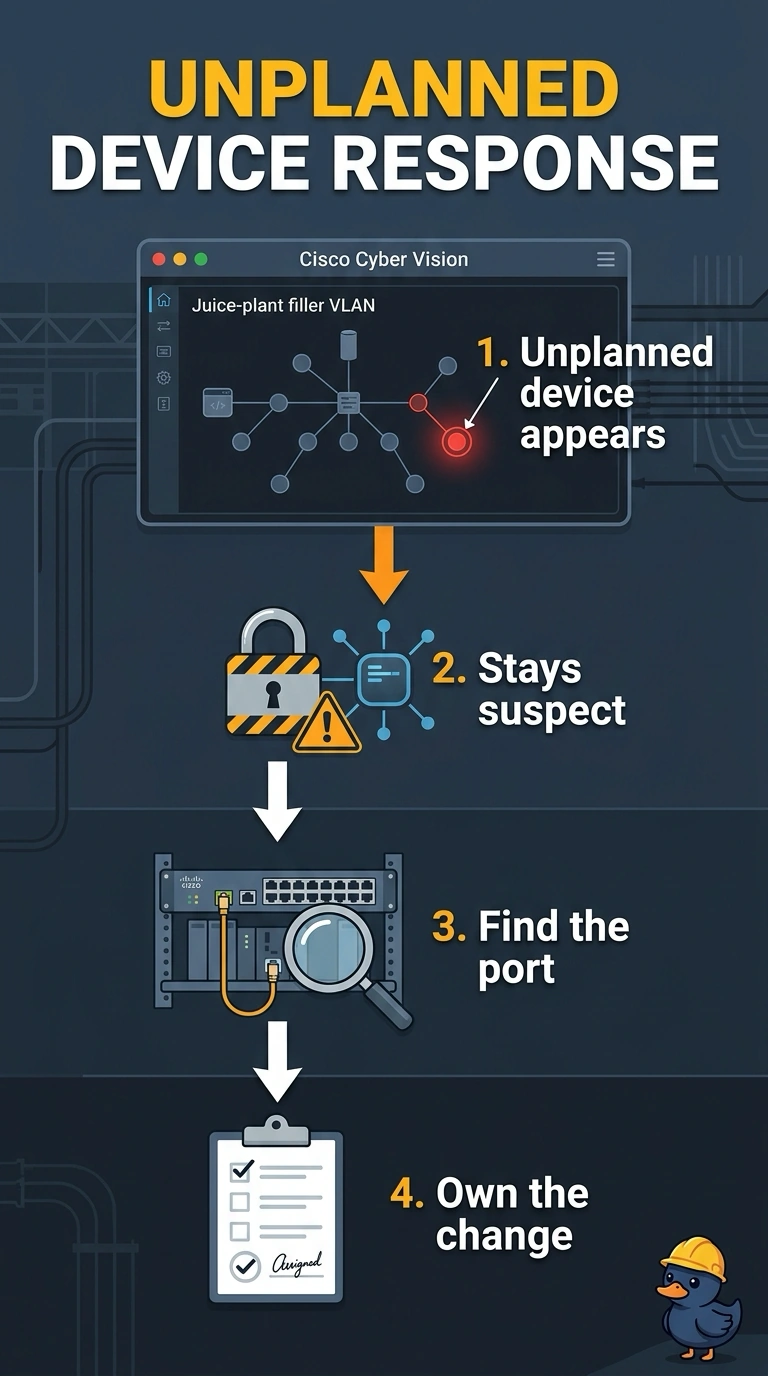
Short Explanation
You’ve found a device on the filler VLAN that does not fit the plant’s known equipment, so find its port and account for the change. Keep it suspect until you identify the device and its owner; unchanged PLC firmware does not explain the new switch vendor, and reporting an unlisted device is what the sensor is meant to do.
Full Explanation
Cisco Cyber Vision reports a new component when it observes an asset that was not in its view. A small-office-switch vendor string on the filler VLAN, with no ticket, fits an unplanned device that should remain suspect until you find the port and someone accounts for the change. It could be a shadow switch under a panel, placing extra MAC addresses behind an access port you expected to serve one PLC. Unchanged filler firmware describes the PLC; it does not explain a new vendor string or make the device safe to ignore. Likewise, a visibility tool is meant to observe devices missing from the asset list, so this observation indicates successful detection, not sensor failure. A normal PLC scan cycle is traffic from a known controller; it does not create a new component with a different vendor. Exam caveat: a newly commissioned instrument can also appear for the first time, but a ticket and an owner distinguish an authorized change; without a ticket, investigate before adding it to the baseline. Practical check: use the switch CAM table to locate the port, inspect what is cabled, remove any unapproved switch, and only then clear the event.