
A distribution relay has a known vulnerability and the vendor has no patch in this year's outage plan. The feeder must stay in service. Which remediation fits?
Select an answer to reveal the explanation.
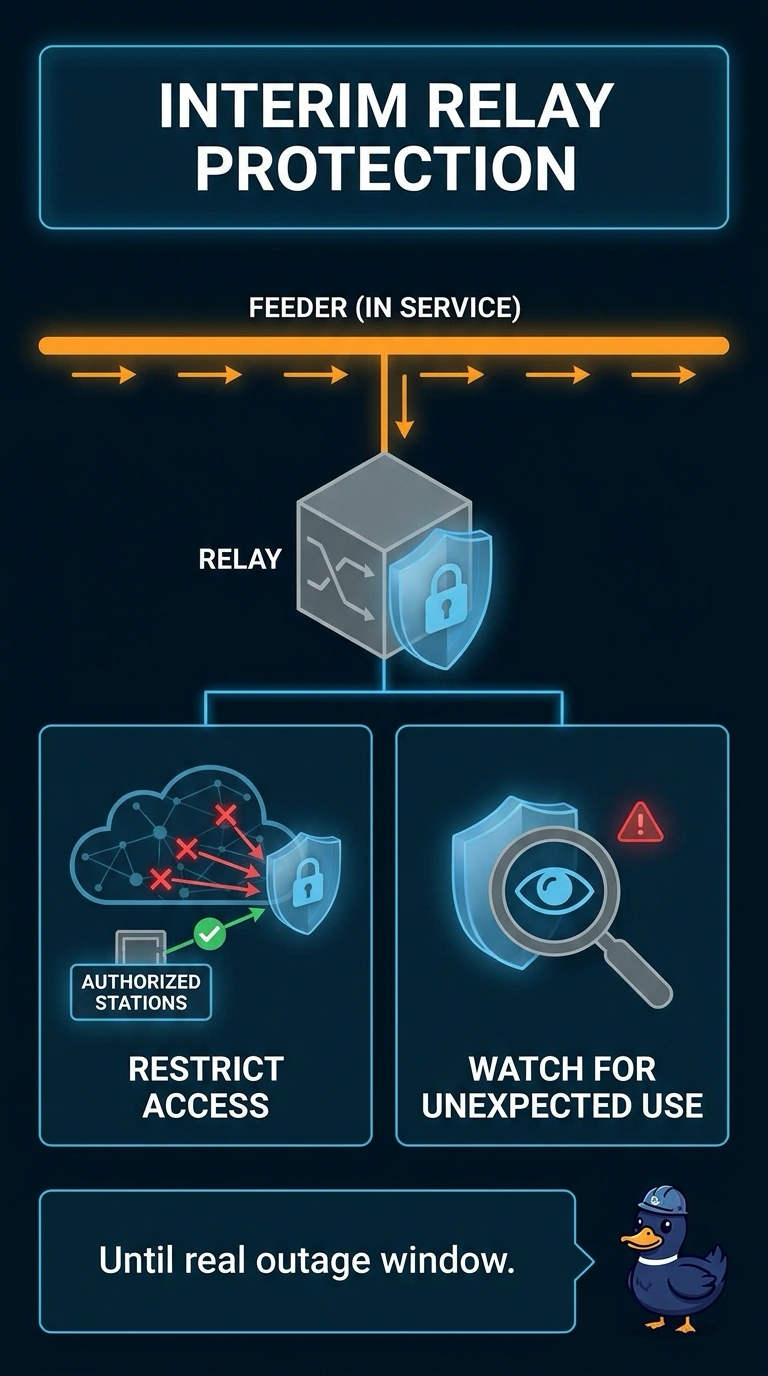
Short Explanation
No patch does not mean no work. You shrink who can talk to the relay and you watch that path, while the feeder keeps serving load. Sitting still, or loading a stranger's firmware on a live feeder, are the two bad extremes.
Full Explanation
When a vendor fix does not exist and the asset must stay in service, remediation is compensating control rather than a pretend patch. Restrict the stations that can reach the relay, keep that list to the SCADA master and the engineering path you actually use, and monitor for protocols or peers outside that list until a planned outage can take a real fix. Doing nothing treats the missing patch as an excuse to leave every path open. Unreachable or tightly reachable is still protection. Loading untested third-party firmware during peak load can brick the relay or change protection behavior, which is a worse operational risk than the vulnerability as it stands. De-energizing the feeder until a patch exists ignores the requirement that the feeder stay in service and may be a larger safety and reliability harm than the cyber weakness. Exam caveat: if the vulnerability is being exploited and protection is no longer trustworthy, operations may take the feeder out. This stem does not say that. It says there is a known flaw, no patch this year, and the feeder must stay up. Operational check: review the access list or firewall rule in front of the relay, confirm only the master hits it in the visibility tool, and put the vendor patch on the next outage scope so the compensating control has an end date.