
A terminal's visibility profile shows an unreachable Level 1 PLC that speaks an unauthenticated protocol, and a vendor jump host with a critical remote flaw and active vendor logins. Which risk reading is sound?
Select an answer to reveal the explanation.
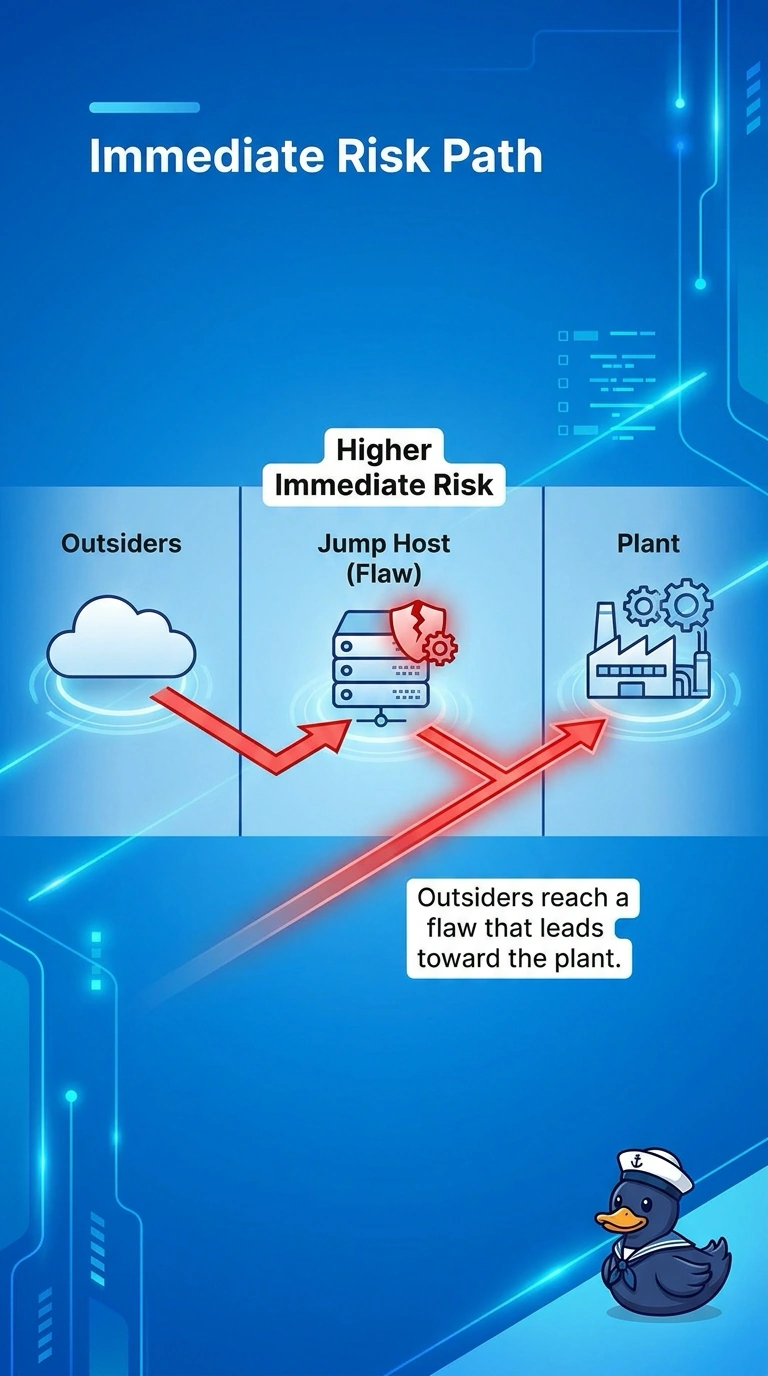
Short Explanation
A locked room with an old lock is not the same problem as the front desk whose door is already cracked. You rank the jump host higher because people outside can actually reach it, and from there the plant is the next hop. Age of a PLC you cannot route to is not the urgent path.
Full Explanation
Risk is reachability and consequence together, not a trophy for the oldest protocol. The jump host has a critical flaw that can be attacked remotely and it has live vendor logins, so it is on the path an outsider already uses. A compromise there is a step into the terminal. The Level 1 PLC speaks an unauthenticated protocol, which would matter if someone could reach it, but the profile says it is unreachable from outside. Its protocol weakness is real and currently unexposed, so it is not the higher immediate risk. Calling the PLC higher because it is older substitutes age for a path. Calling the two equal because both are 'in the program' refuses to prioritize, which is the point of a risk profile. Waiting for a captured exploit packet treats only an active incident as risk and leaves the exposed jump host unranked. Exam caveat: unreachable is a current fact. The day a route or a dual-homed laptop appears, the PLC's profile changes. Record the protocol weakness so that day is not a surprise. Operational check: verify the jump host patch or compensating control, confirm vendor accounts expire, and recheck that no route from that host to the PLC is broader than the access design allows.