
A visibility tool flags a critical vulnerability on a paint-shop PLC that is running production. The vendor patch needs a reboot and has not been tested on this line. Which remediation fits?
Select an answer to reveal the explanation.
Short Explanation
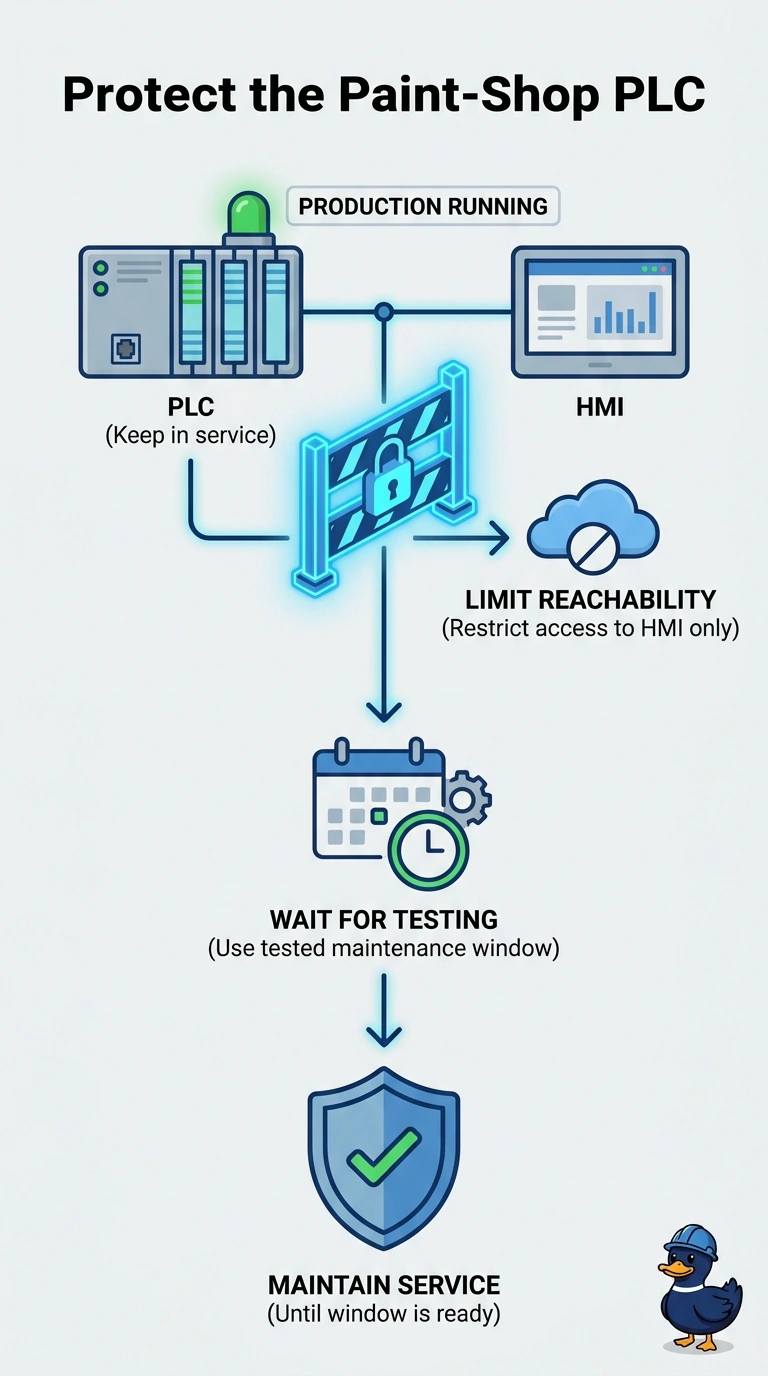
You do not change the tires on a car that is in the middle of the lap because a bulletin looks urgent. Keep the paint line running, shrink who can reach the PLC, and take the vendor patch when you have tested it. Pretending an industrial protocol cannot be abused is how the bulletin wins later.
Full Explanation
Remediation on a running controller weighs process risk beside the vulnerability. The patch requires a reboot and has not been tested on this paint line, so installing it mid-shift can stop production or leave the line on an unfamiliar image. The fitting choice is to leave the tested logic in service and tighten the path so only the HMI can reach the PLC, then patch in a window where the vendor image has been tried and operations can roll back. That compensating control reduces exposure while the weakness still exists. Rebooting now accepts an untested outage in exchange for closing the flaw immediately, which is the wrong trade while the line is in its run and no exploit is forcing an emergency stop. Ignoring the finding because the PLC uses an industrial protocol is false comfort. Those protocols are often the easy path, not a shield. Swapping a different, untested model mid-shift adds a new process risk and does not even apply the vendor's patch. Exam caveat: the stem describes a vulnerability on a line that is still producing, so exposure reduction plus a tested window is the fit. A controller that is already misbehaving would be a different stem, and this one does not say that. Operational check: implement the tighter ACL or firewall rule, confirm the HMI still works, confirm a test laptop cannot reach the programming port, and schedule the patch against a change ticket.