
Cell A and cell B are in different VLANs. Both switched virtual interfaces are up and routing, and no access list is applied. A laptop in cell A opens a session to a PLC in cell B. Which statement fits?
Select an answer to reveal the explanation.
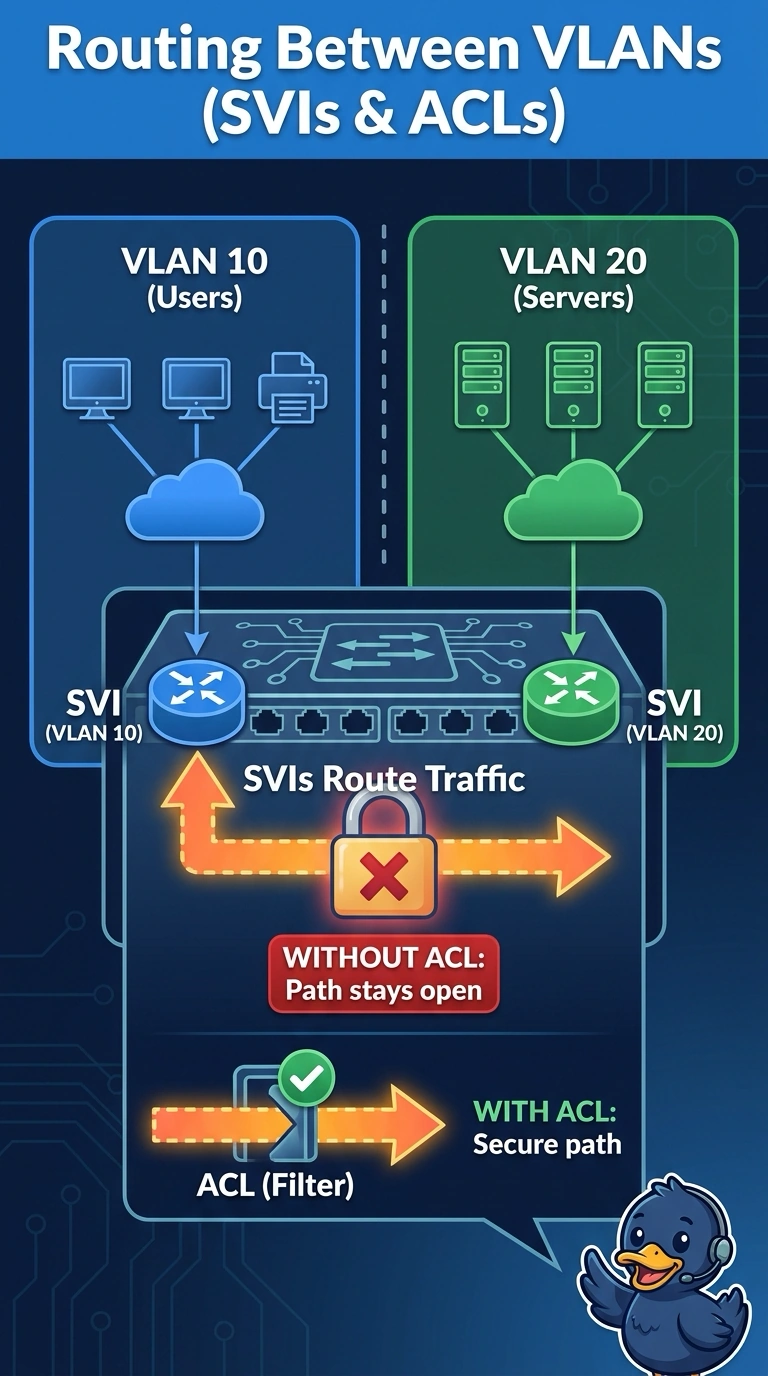
Short Explanation
A VLAN split is a different hallway, not a locked door, once a router joins the hallways. You still need an ACL, because these SVIs are routing and nothing is filtering them. The trap is believing the VLAN number alone stopped the laptop.
Full Explanation
VLANs separate broadcast domains. When each VLAN has an SVI and the switch is routing, a host in one VLAN can reach a host in the other unless a filter says otherwise. No ACL means that routed path is open, which is why the laptop's session succeeds. The VLAN IDs did not fail. They were never a policy by themselves. A native VLAN mismatch is a trunk labeling problem and is not what blocks or allows this routed session. Port security cares about MAC addresses on a port. It does not inspect a routed session whose source MAC, at the PLC's port, is the SVI or the router, not the laptop. The caveat is that an ACL has to name the flows you intend to keep, such as a specific HMI, or the implicit deny at the end will also drop the good ones. The check is the routing table and the ACL list: both SVIs should be up, and a new ACL should show hits when the laptop tries again. After you add the ACL, the laptop's session should fail and the counters should move, while a specifically permitted HMI in the other cell should still read its PLC.