
An engineer applied an outbound ACL on the management SVI of a Cisco IE switch and still sees SSH sessions arrive from hosts that ACL would deny. Which explanation fits?
Select an answer to reveal the explanation.
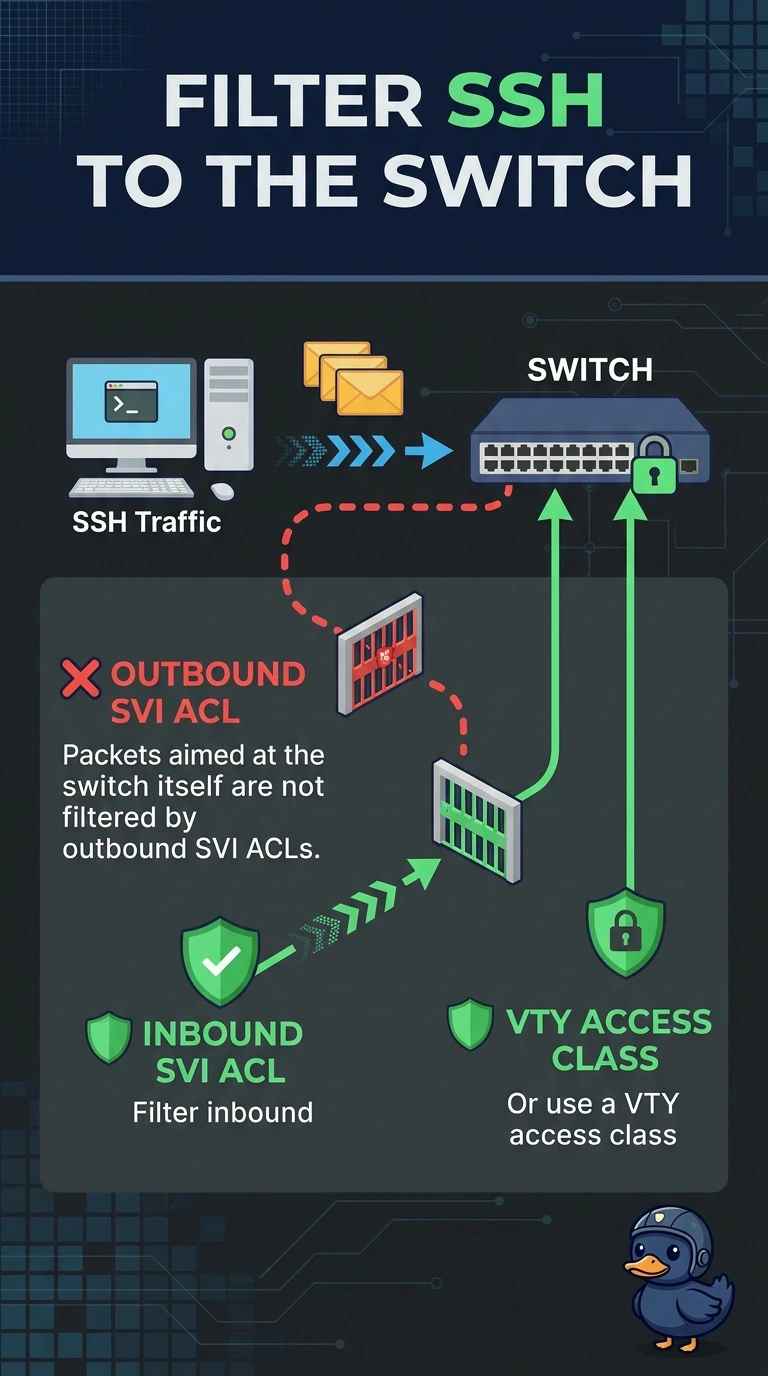
Short Explanation
An outbound filter watches traffic leaving, and a login to the switch is traffic arriving. You filter SSH inbound or on the VTY, not with an outbound list that never sees it. The trap is a counter that stays at zero while the sessions keep landing.
Full Explanation
Traffic destined to the switch, such as SSH to its own address, is not forwarded out the SVI. An outbound ACL examines forwarded traffic leaving that interface, so it does not sit on the path of a session aimed at the switch. An inbound ACL on the interface where the session arrives, or an access class on the VTY lines, is what limits who may manage the box. Treating the outbound list as the only possible control leaves the VTY open and explains the symptom. The PLC access VLAN is not automatically the path of a management session, and hoping it filters SSH confuses two different interfaces. A SPAN session copies frames for monitoring and does not accept or refuse a login. The caveat is to keep the management address on the management VLAN while you fix the filter, so the PLC VLAN is not also a door to the CLI. The check is a test from a denied host: SSH should fail, and the inbound ACL or the VTY access class should show the hit. From a host the policy should refuse, try SSH again and confirm the hit is on the inbound list or the VTY access class, not on the outbound counter that stayed at zero.