
A power plant wants its Level 3 historian to query turbine PLCs through a new static route on the cell switch, with no firewall on that path. Which design fits instead?
Select an answer to reveal the explanation.
Short Explanation
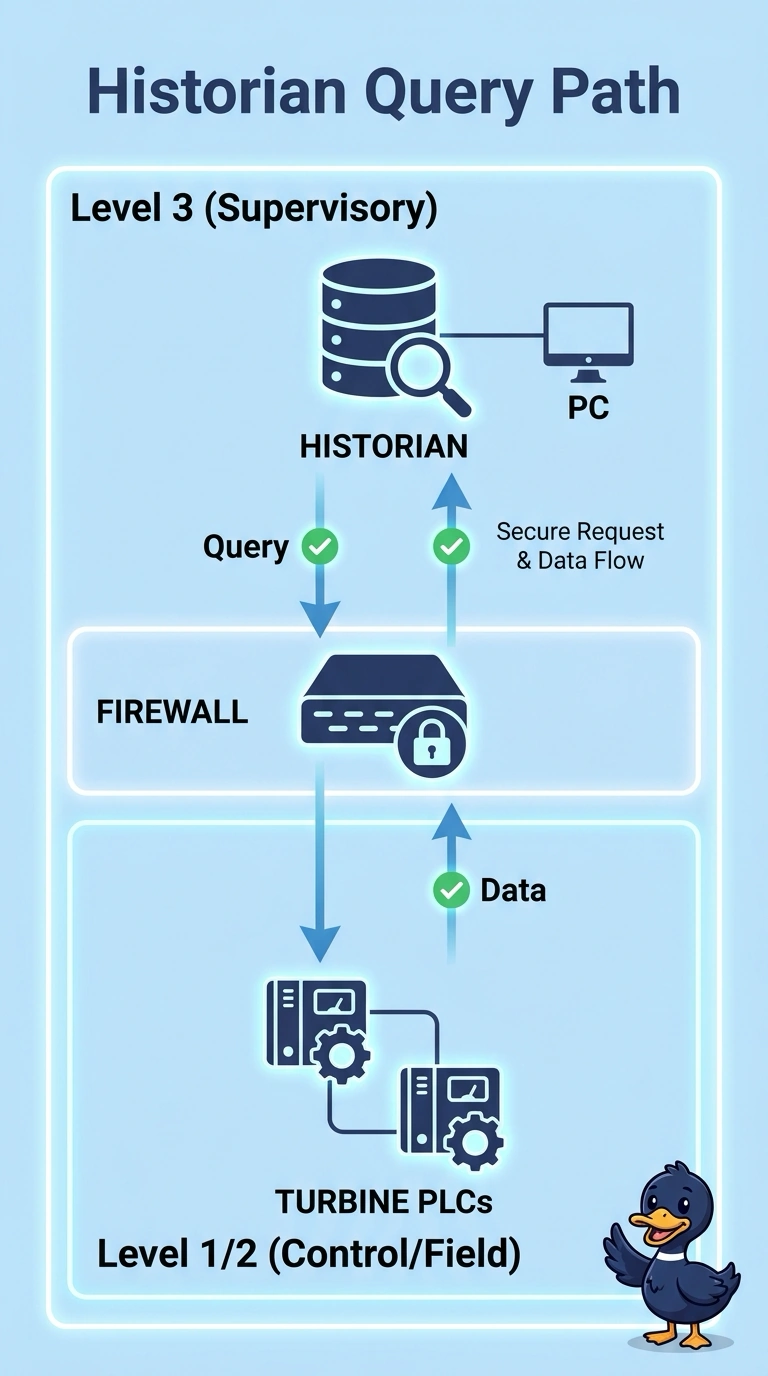
A static route is a hallway cut straight through the wall between floors. You want a staffed door, a firewall, on the path from the historian down to the turbine PLCs. Sharing a VLAN with the enterprise removes the floors entirely.
Full Explanation
Traffic between a Level 3 historian and Level 1 turbine PLCs should cross a firewall so the plant can permit the historian query and refuse everything else. A static route on the cell switch with no firewall gives the historian a path that has no policy point, which is the design to reject. Adding that route is the request itself, not the replacement. Moving the turbine PLCs into the enterprise VLAN deletes the level boundary and puts basic control on the business network so that a route is unnecessary. Placing the historian and the PLCs in one VLAN and removing the gateway does the same kind of damage from the other direction: one broadcast domain and no filter. The fitting design keeps the levels apart and puts the firewall on the path the query must use. Exam caveat: the firewall has to permit the approved historian query or the control room loses history. Filtering means a narrow allow, not a silent drop of the one flow the plant intended. Operational check: from the historian, the approved query should succeed, a second host on that level should fail, and the cell switch should not carry a static route that bypasses the firewall.