
A canning line needs a hard stop for sessions that are not allowed to cross from the enterprise, and a separate copy of that traffic for monitoring. Which design fits?
Select an answer to reveal the explanation.
Short Explanation
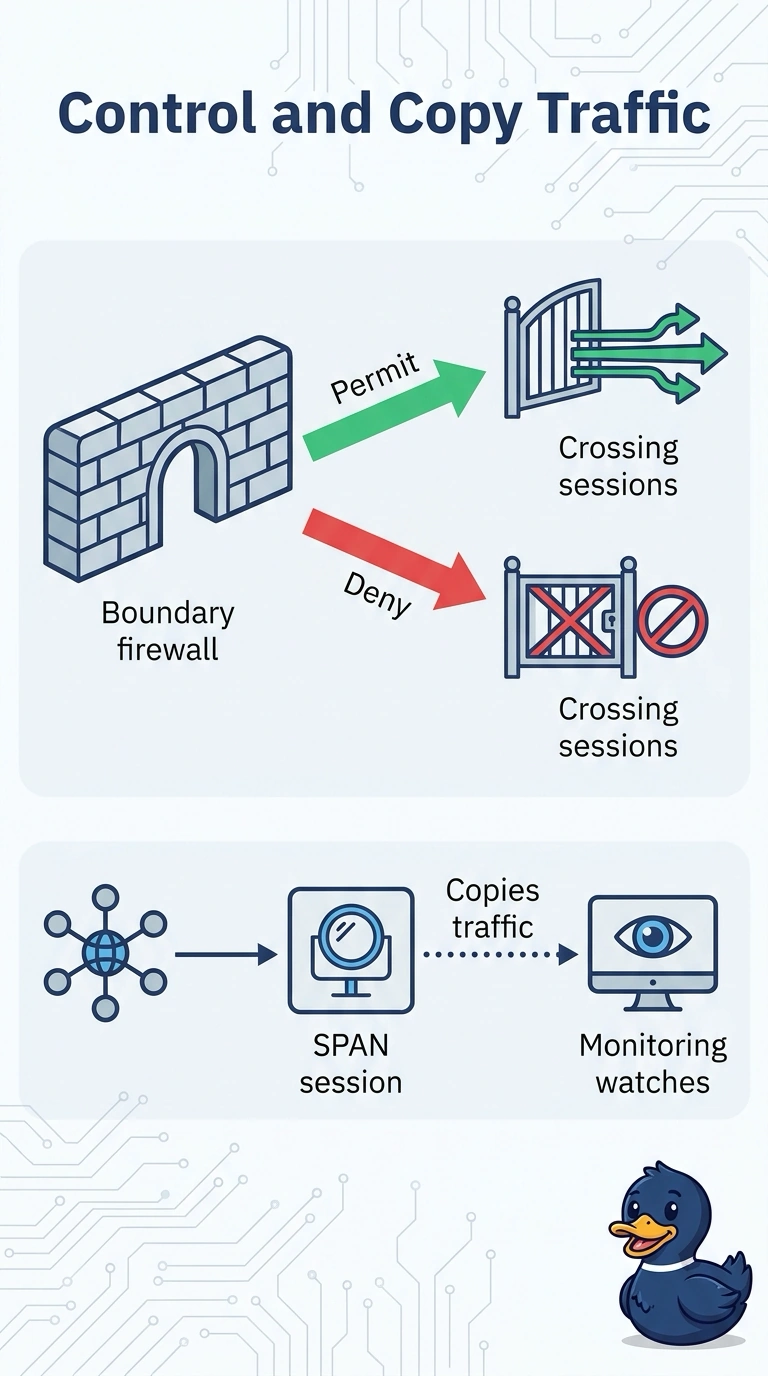
A lock and a camera are not the same tool. You let the firewall allow or deny the crossing, and you let SPAN feed the camera. The trap is asking the mirror port to be the lock.
Full Explanation
A firewall sits in the path and can permit a scoped session or deny the rest, and it can log what it did. A SPAN session copies frames to a monitor. It does not drop the original, so it cannot be the hard stop the line is asking for. Retiring the firewall and hoping the mirror enforces policy leaves every session intact. Turning the firewall into a diode would also remove the two-way flows that a legitimate, scoped query may still need, and it changes the design into a one-way export. Calling a mirrored PLC port the zone boundary confuses a copy with a conduit. The two jobs stay split: the firewall is the control between the enterprise and the cell, and the SPAN session is only the feed for monitoring. The caveat is that the SPAN destination still needs to be a trusted monitoring port, not an open laptop on the cell. The check is a denied test session in the firewall log, and the same session's copy arriving on the monitor, while an allowed historian query still completes. Confirm the denied session appears in the firewall log and that the monitor still receives its copy from the SPAN destination.