
The historian diode at a hydro plant fails during a storm. Operators worry the failure opened a path from the enterprise back into the plant. Which outcome fits a data diode?
Select an answer to reveal the explanation.
Short Explanation
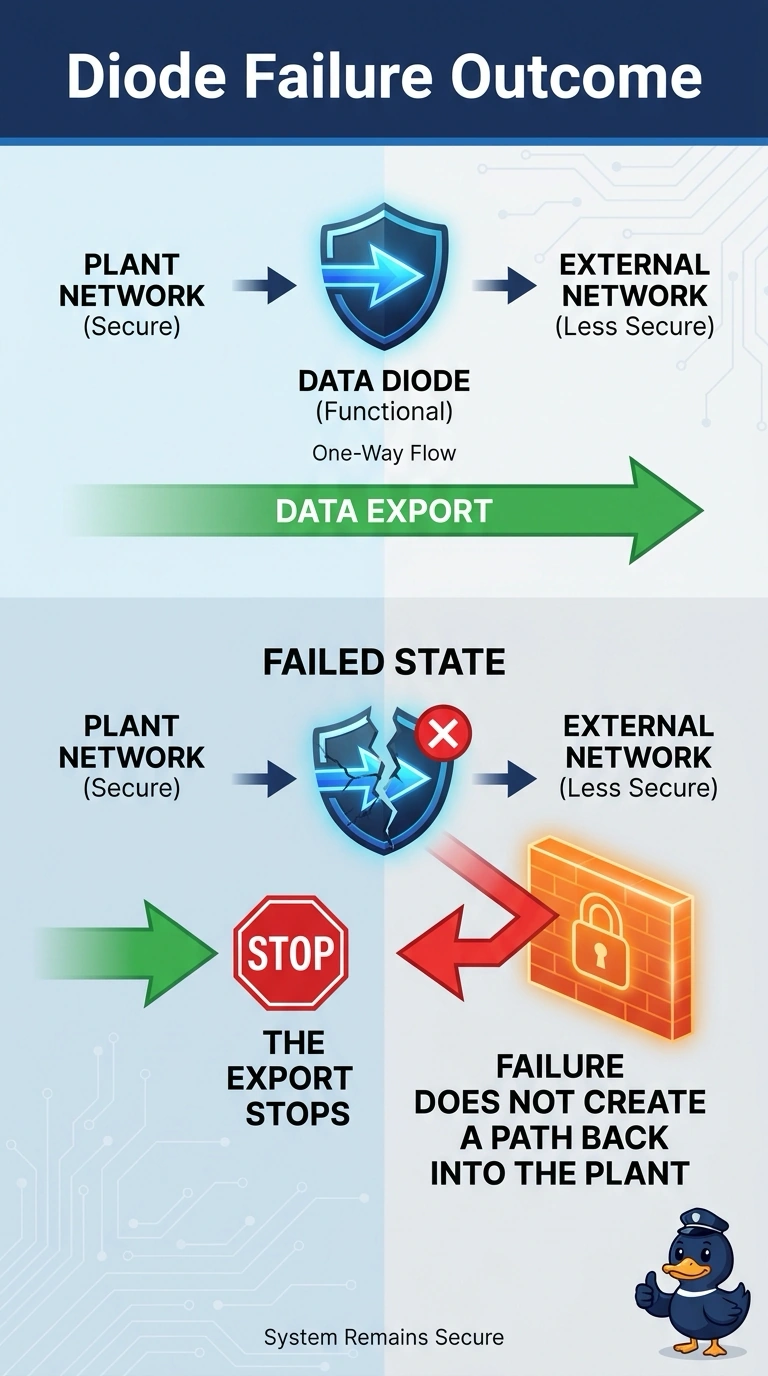
A diode is a one-way pipe, and a broken pipe does not grow a second lane. You lose the historian export, and you do not gain a path from the enterprise back into the plant. The trap is picturing the failure as a cable that suddenly works in both directions.
Full Explanation
A data diode enforces one direction in hardware. When it fails, the historian export stops because there is no working forward path. The failure mode that matters for the security requirement is that a return path into the plant is not created. The enterprise does not suddenly gain a way to query or command the hydro network through the broken diode. Becoming a two-way cable would abandon the property the diode was installed to provide. Failing open as an any-to-any firewall permit describes a ruleset someone left too wide, not a hardware one-way device. Reversing direction and carrying remote desktop would be a new two-way service, which a diode does not start providing because a storm damaged it. Exam caveat: the plant still needs a way to notice that the export stopped, or the lake of historian data goes stale without an alarm. Loss of the feed is an availability problem. It is not a new inbound path. Operational check: from the enterprise side, a test toward a plant address across the diode should still fail, and the receiving historian should show the feed as stopped rather than as a new interactive session.