
When the authentication server is unreachable, every technician at a sawmill falls through to one shared privilege 15 account on the Cisco Industrial Ethernet switch. Which fallback fits?
Select an answer to reveal the explanation.
Short Explanation
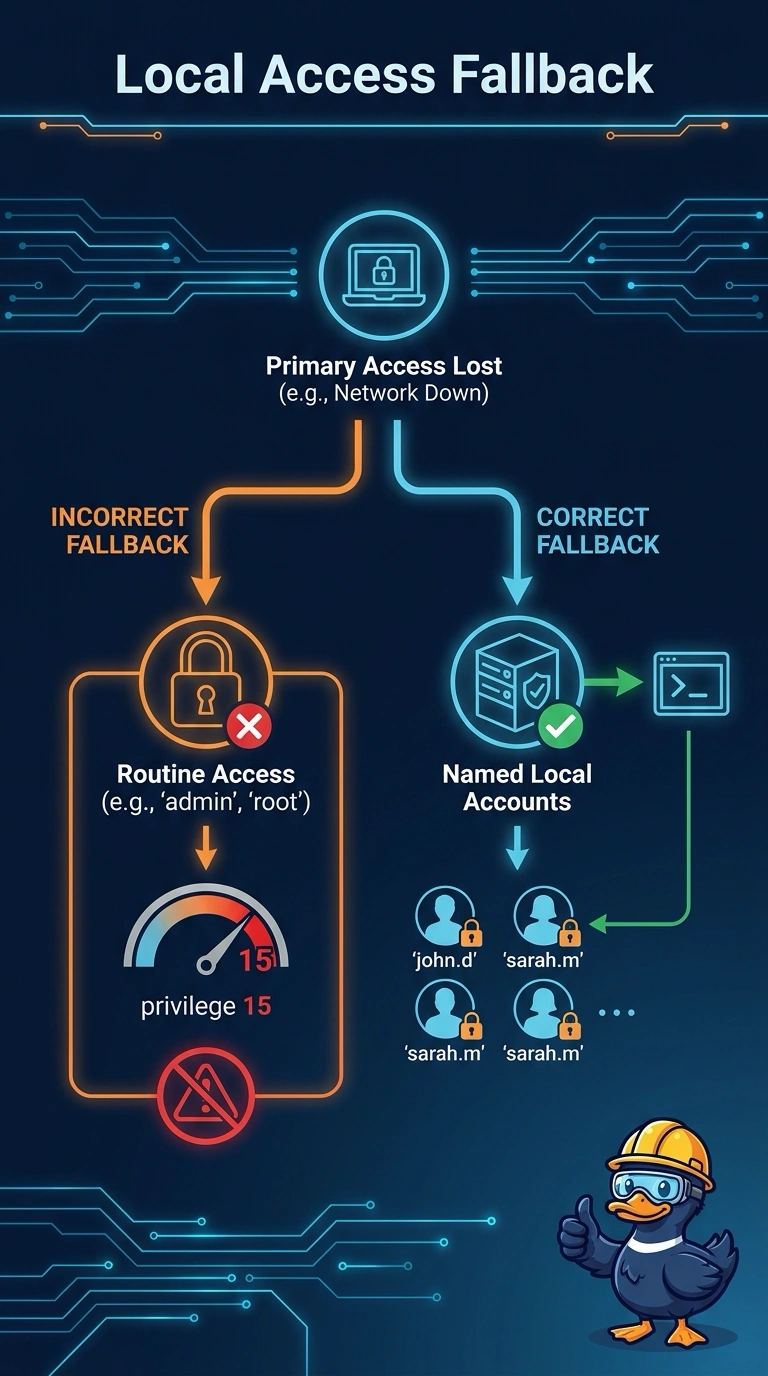
When the authentication server is down, you still need a way to manage the switch without handing everyone the same master key. Use named local accounts for fallback, and keep routine access below privilege 15; deleting every local account would leave you locked out while the server is unavailable.
Full Explanation
Role-based access on a Cisco Industrial Ethernet switch still has to work when the authentication server is unreachable, or an outage can become a lockout. Use named local accounts as the fallback so you can attribute each session to a person, and keep routine fallback access below privilege 15. Keeping one shared privilege 15 account would give every technician full configuration rights and conceal who entered the commands. Deleting every local account would prevent anyone from reaching the switch while the server is down, turning an authentication failure into an unmanageable cell. Posting the shared privilege 15 password on the cabinet would expose the highest credential to anyone who opens it. Exam caveat: local accounts are a fallback, not a second set of daily logins that bypass AAA while the server is healthy; prefer AAA when it responds. Practical check: make the authentication server unreachable and confirm that an operator can reach a limited prompt, that the log identifies the person who signed in, and that the shared privilege 15 account is no longer available.