
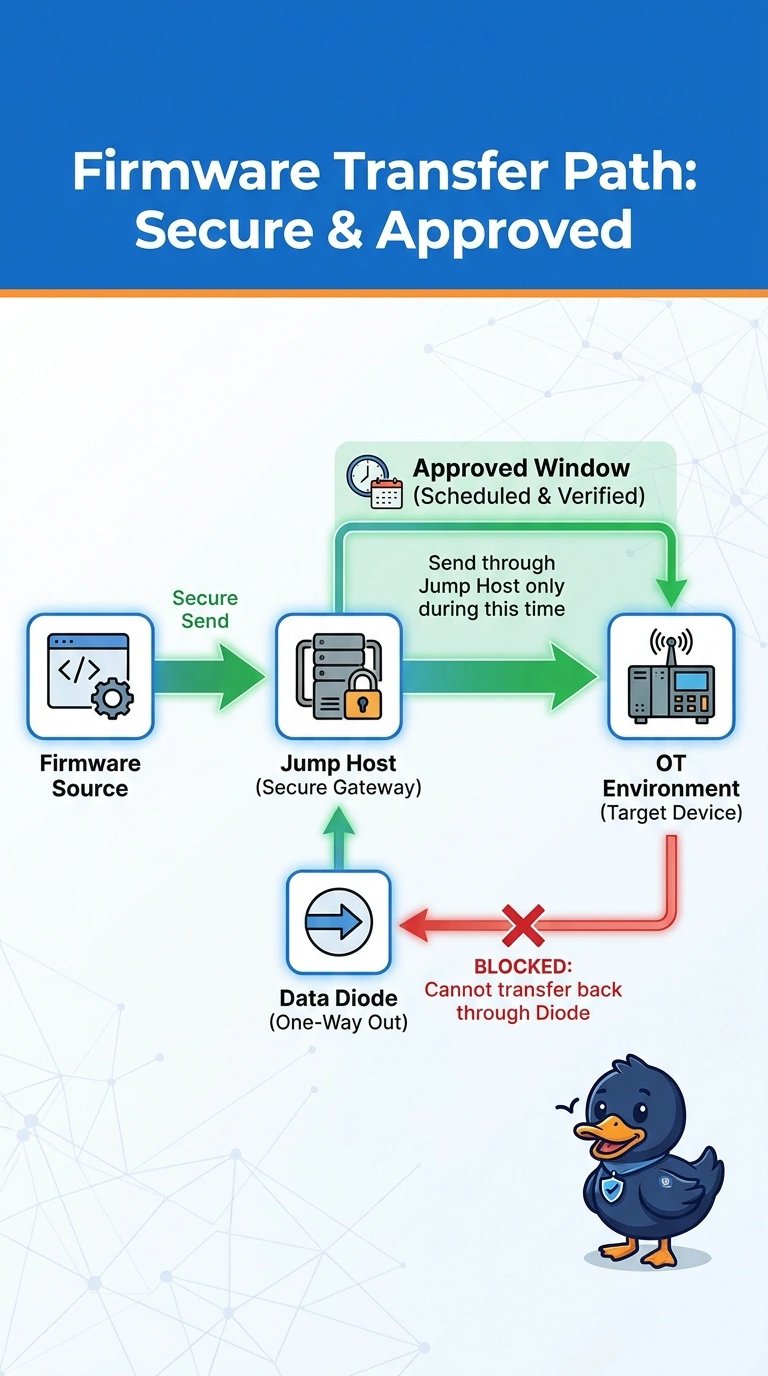
A site exports historian data through a data diode and now wants to push a PLC firmware file back through that same diode. Which approach fits the diode's limits?
Select an answer to reveal the explanation.
Short Explanation
A diode is a one-way street with no lane you can borrow for the trip home. You send firmware through the jump host during a window, not back through the diode. The trap is renaming a file and hoping the hardware forgets its direction.
Full Explanation
A data diode passes traffic in one direction by design. Historian exports can leave the plant. A firmware file would have to enter, and the diode has no path for that. Reversing it for an afternoon would also reverse or break the export and defeat the reason it was installed. A renamed file is still a payload in the forbidden direction. A SPAN session copies frames; it does not create a path through hardware that has no return. The jump host is the brokered, time-boxed place where an approved file can be staged and then applied from inside the plant. The caveat is that the window still needs the process owner's approval, because the controller may need a restart. The check is the diode's direction and the file's location: the firmware should be on the jump host, not on the enterprise side of the diode. Put the before-and-after evidence in the work order, including the interface or account you changed, the time, and the person who approved it. On the next shift, confirm the original symptom is gone and that the change did not open a second path while closing the first. If the process is still inside a live batch, leave the controller running and finish only the part of this work that does not restart it. That sequence keeps a correct fix from turning into an unplanned outage.