
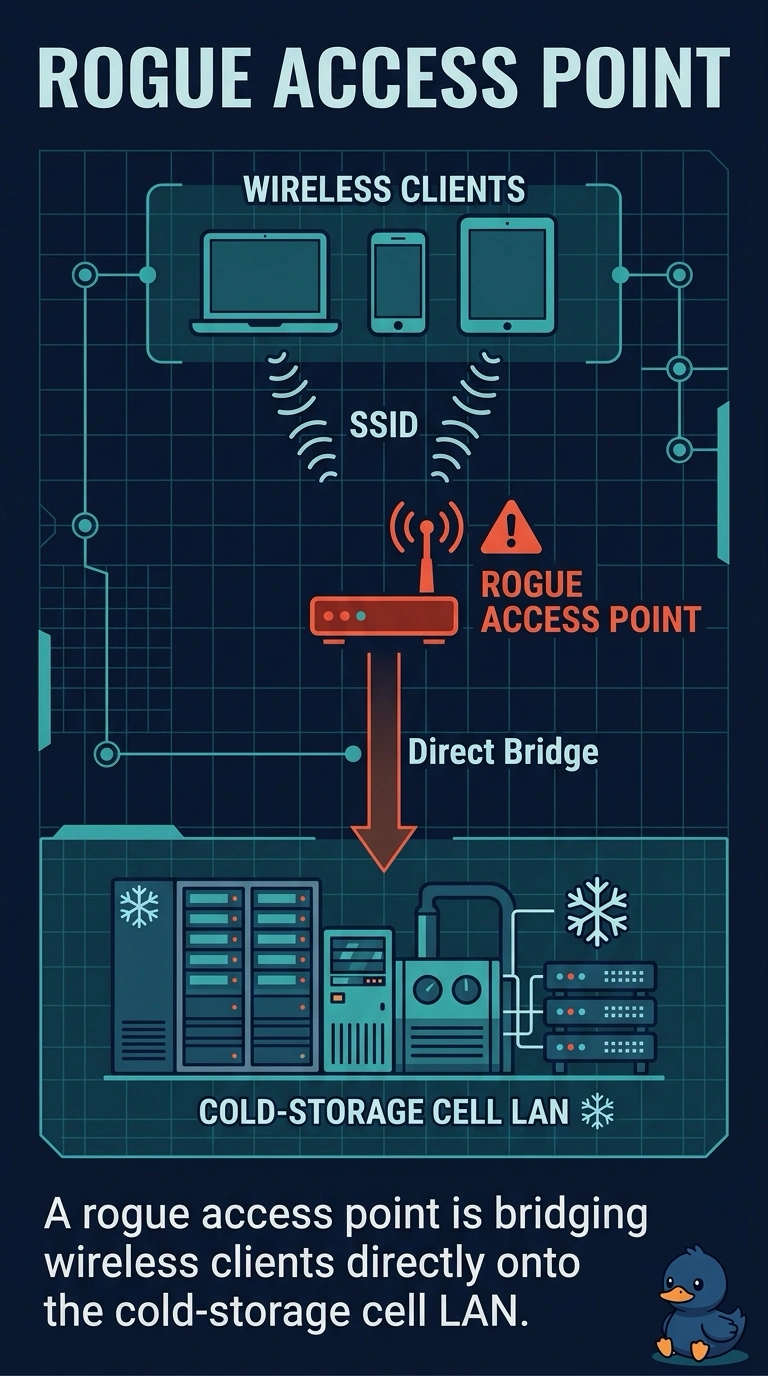
An electrician finds a small wireless router plugged into a live switch port inside a cold-storage cabinet. Contractors have been joining its SSID. Which problem is this?
Select an answer to reveal the explanation.
Short Explanation
You’ve found a radio hidden on a live cabinet port—a side door you didn’t issue. That small router is a rogue access point bridging contractors onto the cold-storage cell LAN. A password on the cabinet door doesn’t make it part of the plant design.
Full Explanation
A small wireless router plugged into a live cabinet port bridges anyone who knows its SSID onto the cold-storage cell LAN; contractors have already joined it, and it is not documented as plant wireless. That makes it a rogue access point: an unauthorized radio with a wired foothold in the cell. Finding a router inside a cabinet does not make it an approved design; approval requires an owned, surveyed access point included in the plant wireless standard, rather than a device discovered by an electrician. WirelessHART is an instrumentation mesh for process measurements, not a consumer-style router connected to Ethernet, and it is not a suitable medium for carrying a safety trip. A pre-shared key written on the cabinet door does not create a safe guest network: it makes access easier for anyone who opens the cabinet, while bridging guests to the cell LAN defeats separation. Exam caveat: a planned industrial access point shown on the wireless drawing and kept off the cell LAN is different from this undocumented router. Practical check: trace the switch port, remove the router, and verify that its SSID no longer appears before returning the port to service under change control.