
Operators can SSH to a port-crane Cisco Industrial Ethernet switch from any VLAN, including the crane PLC subnet. Which change matches a secure management baseline?
Select an answer to reveal the explanation.
Short Explanation
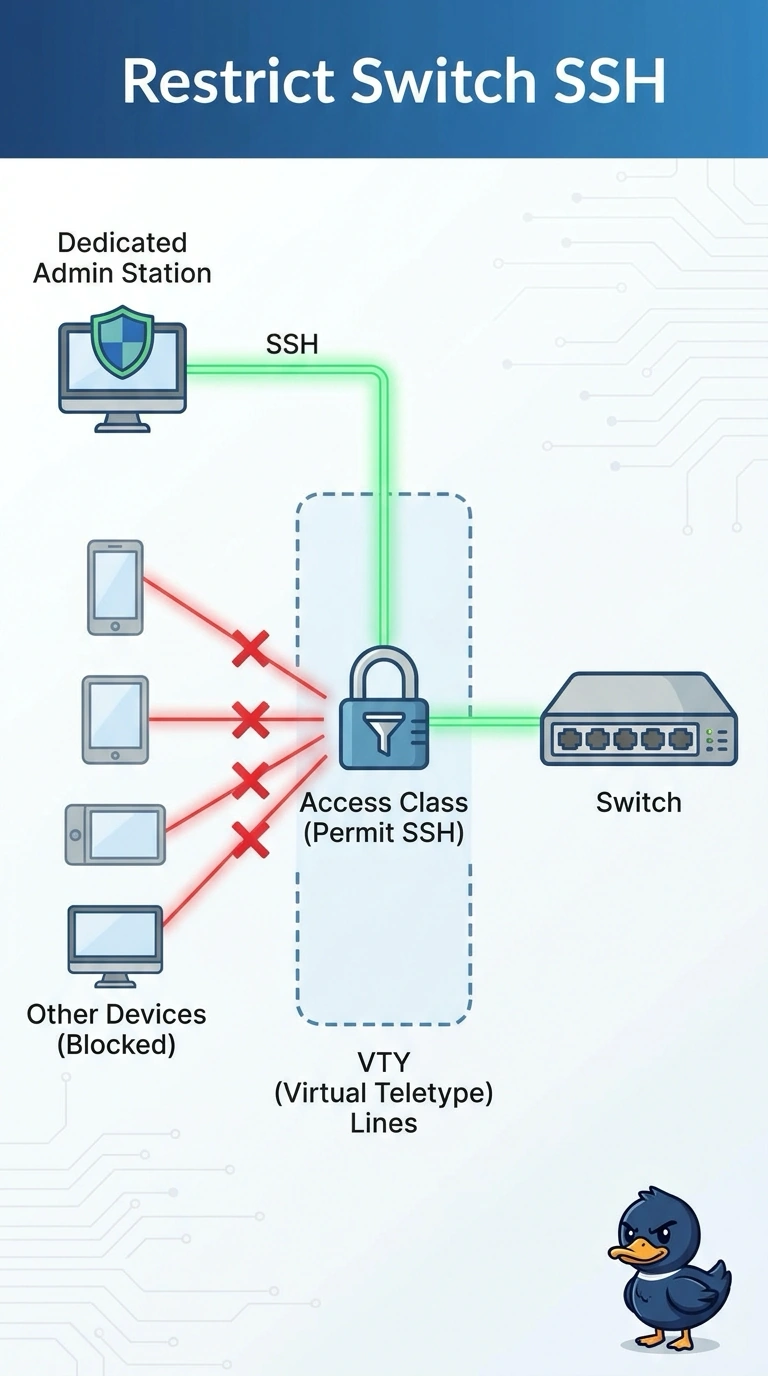
The management login is a key to the crane switch, and right now every hallway has a copy. You want that key to work only from the admin station. A warning banner is a sign on the door, and parking management on the crane VLAN hides the lock in the machinery.
Full Explanation
Switch management should be reachable by the people who run the switch, from a known station, and not from every subnet that can route to the VTY. On Cisco IOS an access class applied to the VTY lines permits SSH only from the addresses in that class, which is how a dedicated admin station becomes the allowed source. A login banner can warn a user. It does not authenticate anyone and it does not stop a host on the crane PLC subnet from opening the session. Moving the management address onto the crane PLC VLAN puts switch administration in the same broadcast domain as the controllers, which is the exposure a management baseline removes. Telnet from every subnet replaces an encrypted shell with a cleartext one and widens the set of sources, the opposite of limiting the VTY. Exam caveat: the access class has to include the real admin station, including the path used during an incident, or the switch becomes unmanageable when that station is down. Locking the VTY is not the same as deleting the only management path. Operational check: from a host on the crane PLC subnet, SSH to the switch should fail, and SSH from the admin station should still succeed.