
A Cisco IE switch in a kiln area still protects privileged mode with a type 7 password. Which change matches Cisco password guidance?
Select an answer to reveal the explanation.
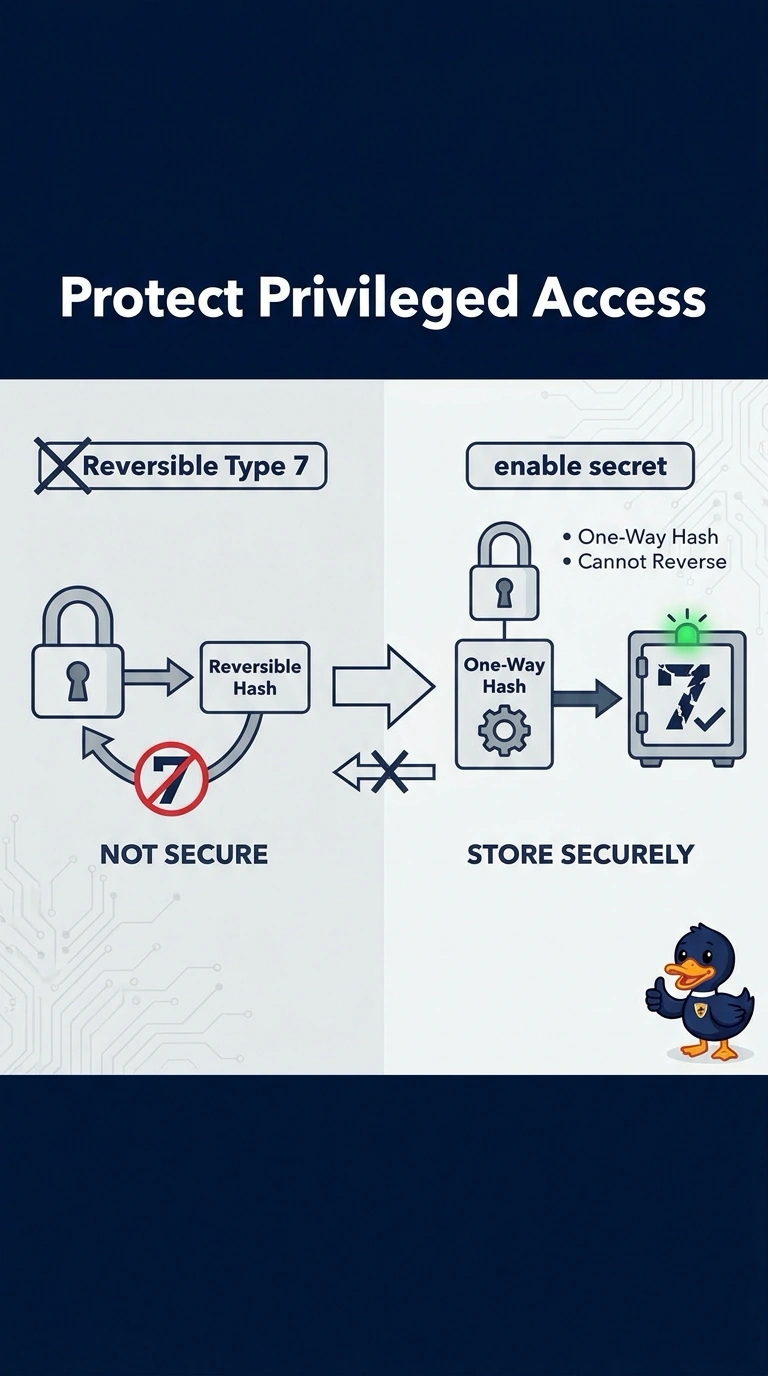
Short Explanation
Type 7 is like a pencil-written diary: someone who copies the configuration can often recover the password. You protect privileged mode with enable secret, which stores a one-way hash; service password-encryption does not turn type 7 into one. Keep the password out of tickets and login banners, where it would be exposed rather than protected.
Full Explanation
Cisco documents type 7 as reversible obfuscation: someone who obtains the configuration text can recover the password. For privileged access, use enable secret, which stores the password with a one-way hash rather than reversible type 7. This is why relying on service password-encryption as though it were a one-way hash is not sufficient; that feature produces type 7 for many other passwords and does not replace enable secret. Publishing the type 7 string in a ticket makes the secret available to ticket readers, and placing it on a VTY banner exposes it to operators at login; neither protects the privileged password. The caveat is that a one-way hash does not remove the need for an approved process to provide the new secret to people who must use it. After configuring enable secret, remove the old type 7 password so the reversible credential is no longer present. As a practical check, inspect show running-config and confirm the privileged line displays a secret hash rather than a type 7 password. This verifies the configuration change, though it does not by itself confirm that authorized users can successfully authenticate with the new secret.