
A wastewater Cisco Industrial Ethernet switch still runs a DHCP pool on the lift-station VLAN. Every PLC uses a static address, and a laptop plugged into the cell receives an address from that pool. Which baseline change fits?
Select an answer to reveal the explanation.
Short Explanation
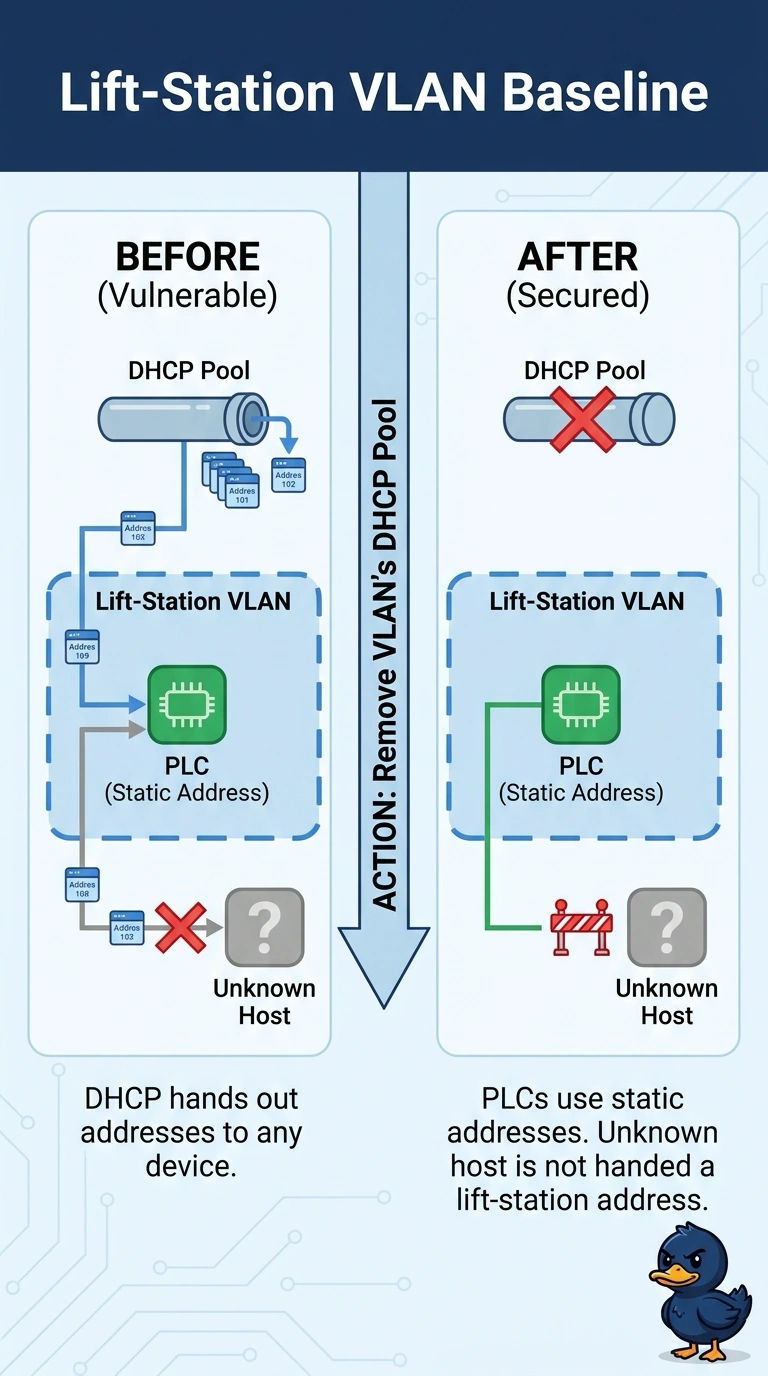
You’ve found a pool that gives a laptop on the lift-station VLAN an address, even though the PLCs use static addresses. Remove that VLAN’s DHCP pool so an unknown host is not handed a lift-station address; enlarging the pool, moving it while leaving it active, or adding a login banner would not fix that exposure.
Full Explanation
The lift-station PLCs use static addresses, so the DHCP pool is not needed to assign addresses to those process devices. A laptop plugged into the cell receives an address from that pool, showing that an unknown host can join the controller VLAN at the network layer without an approved change. Remove the lift-station VLAN’s DHCP pool so the switch no longer offers addresses from that scope. Enlarging the pool would make the unwanted service available to even more contractor laptops, rather than restricting access. Moving the same pool to the enterprise guest VLAN while leaving it active on the lift-station VLAN would preserve the original exposure; adding a guest-VLAN pool does not protect the cell. A login banner only displays text during interactive login and does not stop the switch from answering DHCP requests on the lift-station VLAN. Exam caveat: if the switch also supports DHCP for a legitimate management subnet, do not disable DHCP services globally; remove only the lift-station pool and preserve any required management relay. Practical check: connect a test laptop to the lift-station VLAN and confirm it receives no address from that pool, then verify the static-address PLCs still answer the HMI.