
An engineer at a cement kiln bridges a laptop between a phone hotspot and a live PLC switch so a remote colleague can watch the kiln screen. Which risk does that create?
Select an answer to reveal the explanation.
Short Explanation
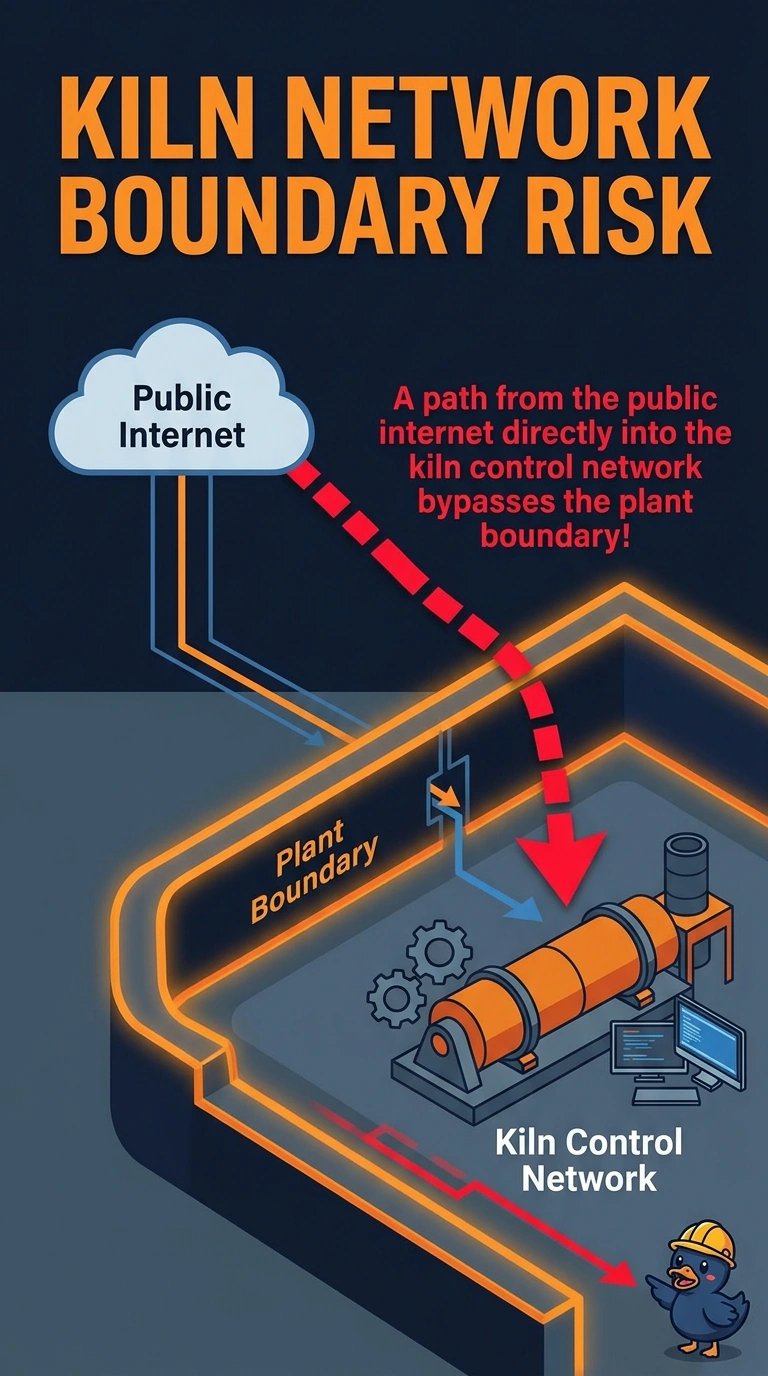
A phone hotspot bridged into the kiln switch is a window propped open onto the sidewalk. You created a path from the public internet into the control network that skips the plant boundary. A carrier login is not plant approval, and a phone is not a WirelessHART instrument network.
Full Explanation
Bridging a laptop between a phone hotspot and a PLC switch places one endpoint in the public internet and in the kiln control network at the same time. Traffic, or malware, can cross that laptop around the firewalls and the remote-access path the plant designed. That bypass is the risk, and it was built so a colleague could watch a screen. WirelessHART is a field-instrument radio. A phone hotspot does not speak it, and WirelessHART is not a transport for safety trips or for sharing a kiln screen. Calling the bridge a site-survey improvement confuses a channel measurement with a new routed path. The phone is not selecting a plant LAN channel. It is providing an outside network. A carrier authentication and hotspot encryption protect the phone's link to the carrier. They do not authorize a connection into the PLC VLAN, and they do not turn the bridge into a controlled conduit. Encryption on the cellular hop does not inspect what the laptop forwards onto the switch. Exam caveat: a remote view can be legitimate when it goes through the plant's approved access path and ends when the work ends. This stem's bridge is not that path. Operational check: remove the bridge, shut or trace the switch port the laptop used, and confirm the kiln VLAN no longer contains the laptop's MAC or a route to the phone.