
A factory MES must query one cell historian and receive the answer back. No other enterprise host may reach the cell. A data diode currently exports copies one way. Which design fits this query?
Select an answer to reveal the explanation.
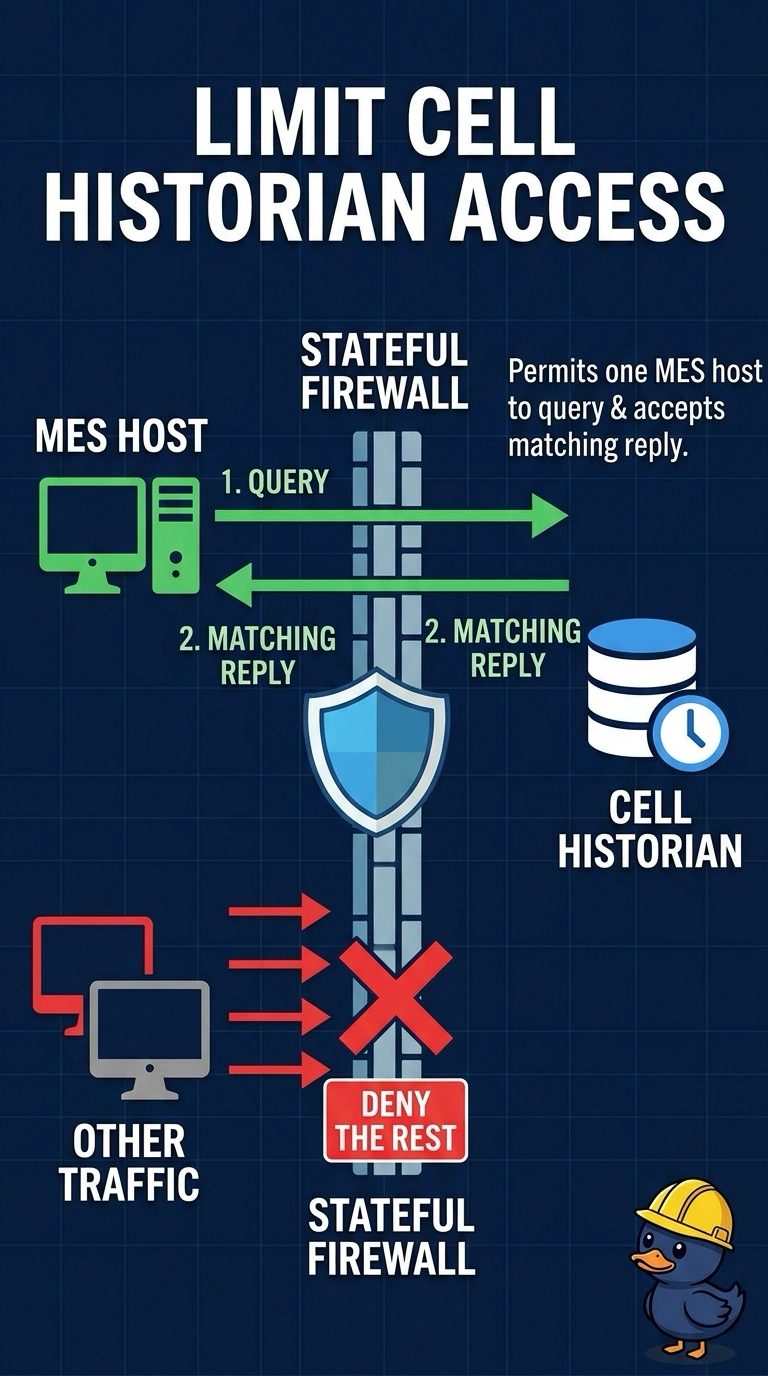
Short Explanation
A diode is a mail slot, and a question that needs an answer cannot come back through a mail slot. You want a guard who lets this one clerk ask one question and hear the reply, and who turns everyone else away. Opening the gate for the whole enterprise is not that guard.
Full Explanation
A data diode enforces one direction in hardware. The factory already uses that to export copies. An MES query is a request that must receive a response, so the packets have to flow both ways for that conversation. A diode cannot carry the reply without ceasing to be a diode. The device that can enforce a narrow two-way exception is a stateful firewall: permit the MES host to the historian on the required ports, allow the matching return traffic, and deny other enterprise hosts. Leaving only the diode preserves the one-way property and breaks the query the stem now requires. A SPAN session copies frames for a sensor. It does not block enterprise hosts and it does not create a controlled request path. An any-to-any permit would let the reply return and would also let every other enterprise host into the cell, which violates the second requirement. Exam caveat: adding this firewall path is a conscious hole beside the diode, not a replacement for every one-way feed. Keep the diode for the export that must never accept a command, and keep the firewall rule as tight as the MES query. Operational check: from the MES host the historian query should succeed, from a second enterprise host it should fail, and the firewall log should show the deny.