
Any host on a cement-plant network can open SSH to the kiln-cell Cisco IE switches, including hosts on the controller VLAN. Which control narrows that management access?
Select an answer to reveal the explanation.
Short Explanation
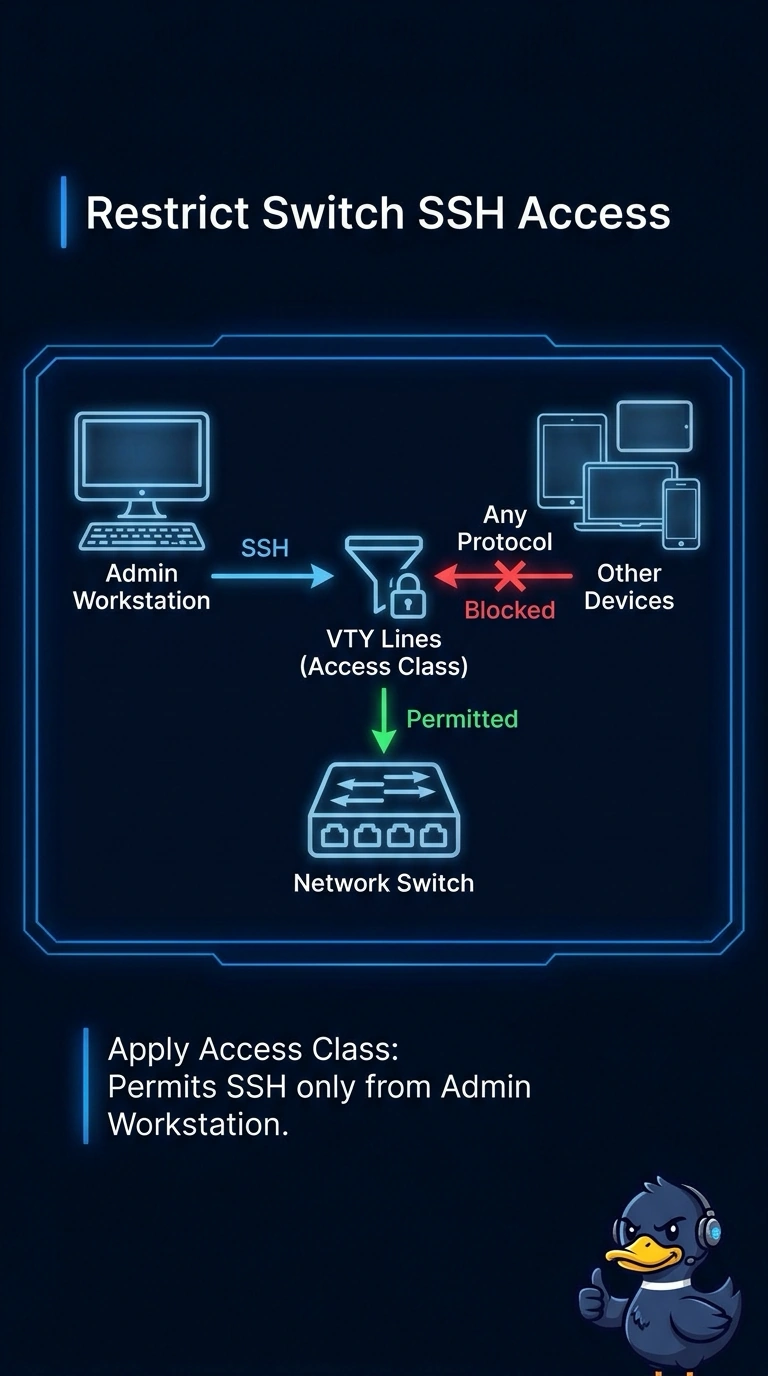
A shop door that every hallway can pull is not a management design. You want the kiln switches to accept SSH only from the admin workstation, which is what an access class on the virtual terminal lines does. A banner can scold a visitor and still let the session start.
Full Explanation
Management access is narrowed by deciding which sources may open a remote session. On Cisco IOS an access class applied inbound on the VTY lines permits SSH only from the addresses in that list, here the admin workstation, and refuses the rest. Hosts on the controller VLAN then fail to log in even though they can route toward the switch. Moving management to VLAN 1 does the opposite of narrowing. It parks the management address on the default VLAN and makes the switches easier to find, including for hosts that should not administer them. Permitting Telnet from any source adds a cleartext path and keeps the wide exposure. SSH as an optional extra does not constrain who may connect. A login banner displays a warning after the TCP session is accepted. It does not filter source addresses, so every host that can reach the VTY can still try a password. Exam caveat: the access class assumes SSH is already the transport. It limits sources. It does not, by itself, choose how strong the accounts are. Operational check: from a controller-VLAN host, SSH to the switch should be refused, and SSH from the admin workstation should still reach a login prompt.