
A well-pad crew wants the PLC programming port forwarded from the public internet so a vendor can connect without calling the control room. Which design should replace that request?
Select an answer to reveal the explanation.
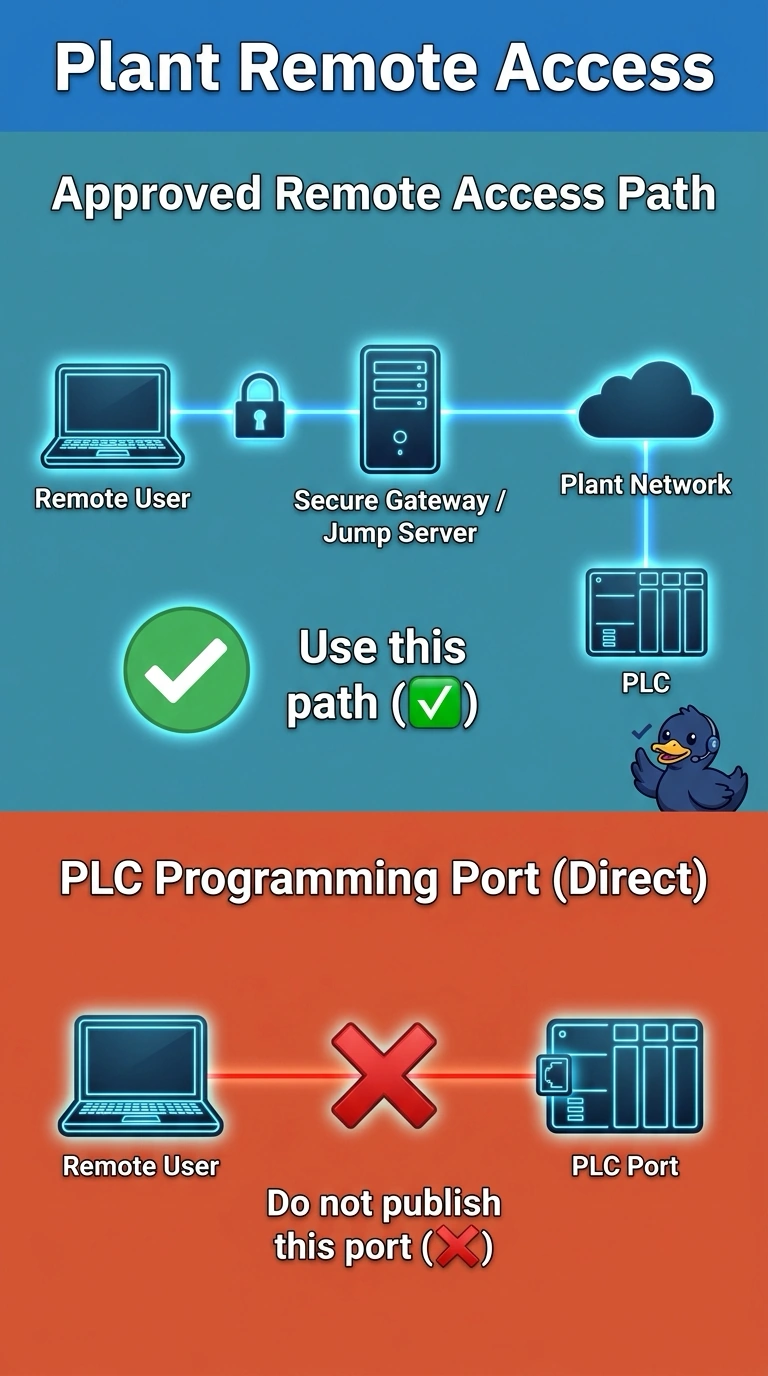
Short Explanation
A programming port on the public internet is a loading dock with the street number painted on it. You keep that well-pad PLC unpublished and you bring the vendor in through the plant's approved remote path. A long password in email does not make the open port acceptable.
Full Explanation
A programming service forwarded from the public internet exposes the well-pad PLC to every scanner that finds the port. The design that replaces that request keeps the PLC unpublished and brings the vendor through the plant's approved remote-access path, where the plant can see the session and can turn it off. Publishing the port and emailing a long password still leaves the service on the internet, and the password is now sitting in mailboxes. A long secret does not fix an open forward. Restricting the forward to after hours while leaving the rule in place all week means the port is still published, including during the day if the rule was never removed. Guest wireless in the office bypasses the intended firewall path and puts a controller on a network built for visitors. Exam caveat: using the approved path does not mean the path stays enabled between jobs. This stem's decision is to refuse the public forward, and the approved path is still a controlled entry rather than a new hole. Operational check: from the internet, the programming port should not answer, and a test vendor should reach the PLC only through the approved path.