
A rail-signaling vendor account on the plant jump host is still enabled three months after the last outage. Which practice closes that gap?
Select an answer to reveal the explanation.
Short Explanation
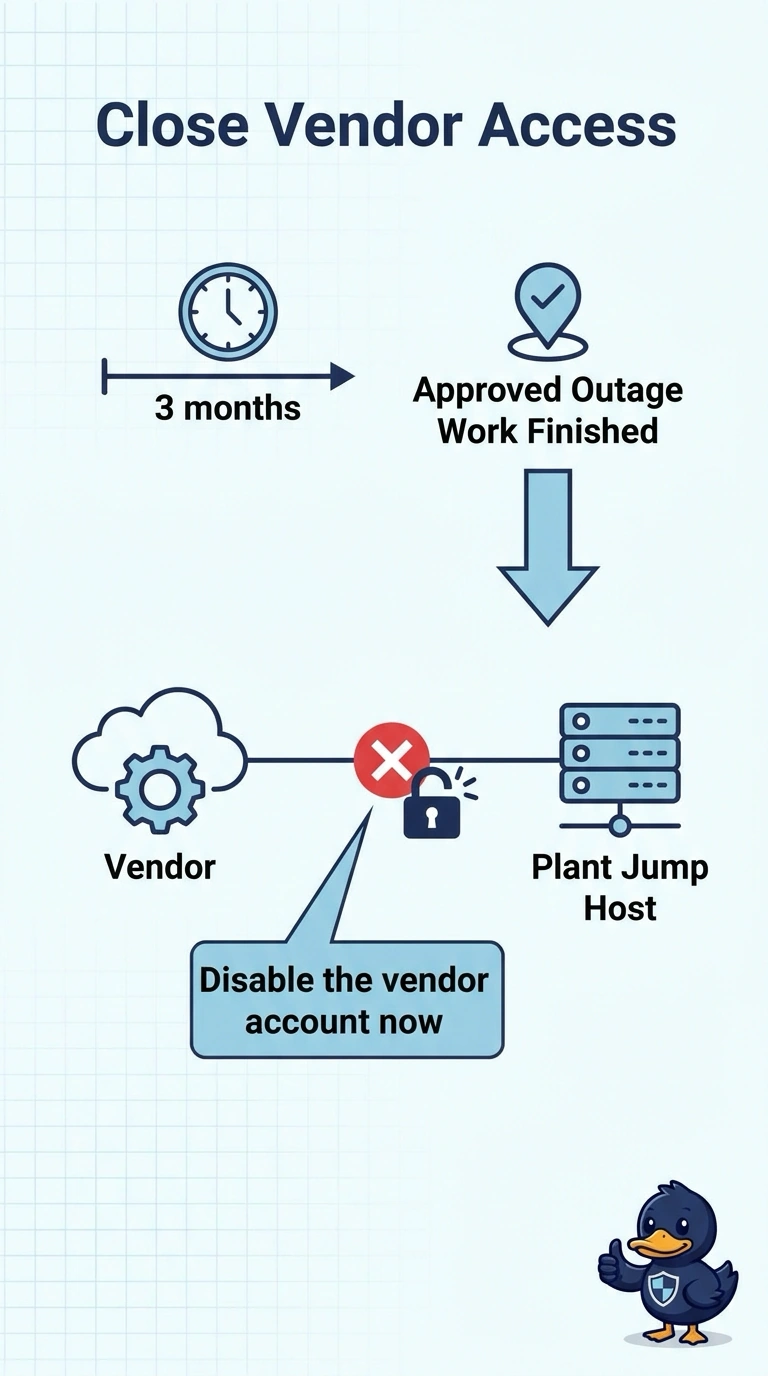
Think of the vendor account as a contractor badge: the approved outage work ended three months ago, so you disable the account. Sharing its password or renaming it as a crew login leaves access active without a clear owner.
Full Explanation
A vendor account should remain active only for its approved work. Three months after the rail outage, the account on the plant jump host is still enabled, so disabling it closes the gap. Keeping the account alive and sharing its password with the night crew turns a named vendor login into a standing shared secret for future work. Renaming it to a shared crew login also leaves access enabled and removes the named owner, rather than tying access to a person and a job. Erasing the jump host logs hides the idle account from review and destroys the history of who used the host; it does not remove the login. Exam caveat: if the vendor returns, create a new time-bound account for the new approved work window instead of leaving the old login enabled for convenience. Practical check: confirm that the account is disabled, a sign-in attempt with it fails, and the jump host audit log still contains the earlier outage sessions.