
A rail signaling engineer left the agency last month, and that account can still log in to the wayside engineering station. Which action fits?
Select an answer to reveal the explanation.
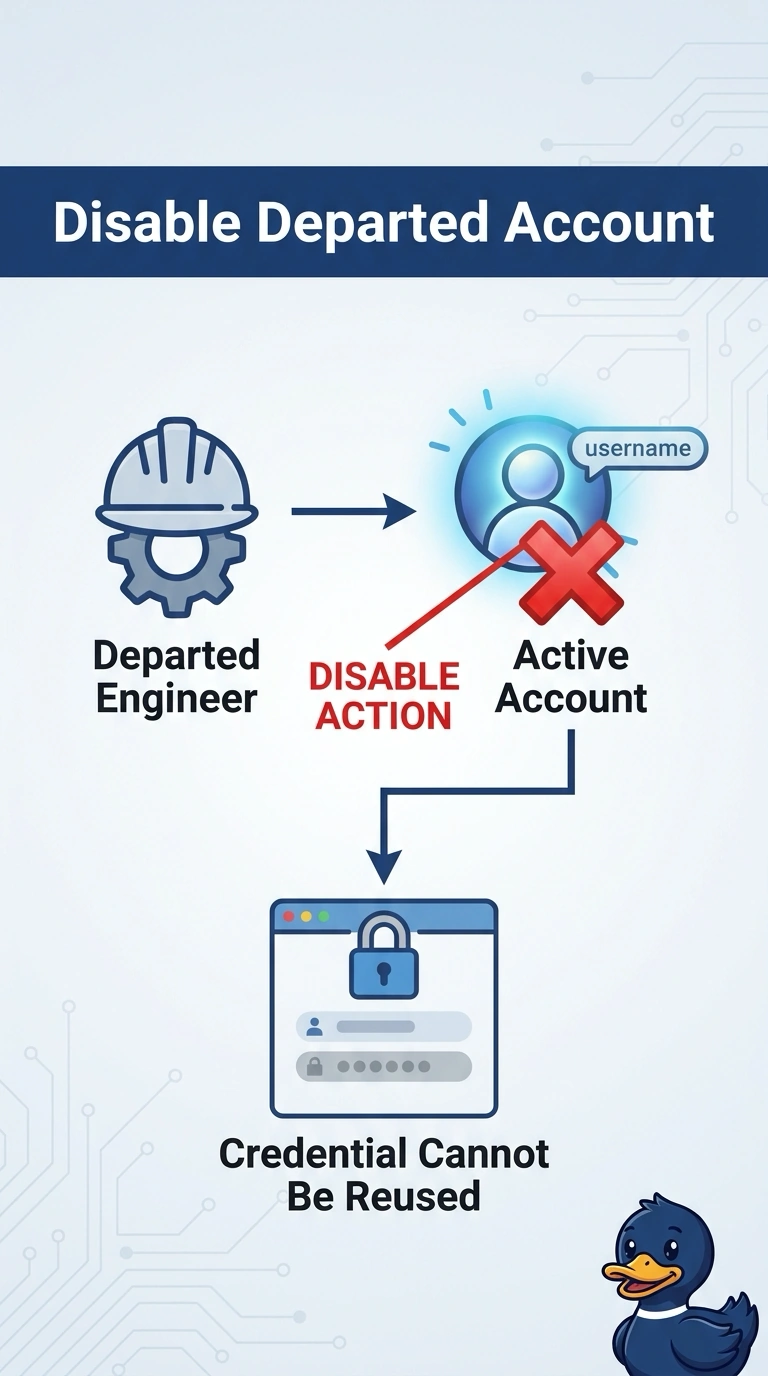
Short Explanation
A key that left with an engineer and still opens the door is a key you have not collected. You disable the departed account so nobody else can use that credential on the wayside station. Handing the same login to the next crew leaves the old key in circulation.
Full Explanation
Access follows the person. When a signaling engineer leaves, that named account has to be disabled so the credential cannot be used by the former employee or by anyone who learned the password. The wayside engineering station should then be opened with a new account that belongs to the replacement, which keeps the audit trail attached to a real person. Keeping the old account active and sharing the password with the night crew preserves a login nobody can attribute and extends the leaver's access indefinitely. Posting the password in the cabinet does the same thing for anyone who opens the door, and it does not retire the departed identity. Giving every operator the engineer's programming rights widens the highest privilege to people whose job is not to change signaling logic. Exam caveat: a monitored break-glass account can exist for a true emergency, and it is not this person's leftover login. The departed account still has to go. Operational check: a login test with the old account should fail, and the replacement engineer should sign in on that station with a new named account that is logged.