
A gas-well integrator asks for a permanent internet port-forward to the pad PLC so support can connect from home at any hour. Which design should the asset owner use instead?
Select an answer to reveal the explanation.
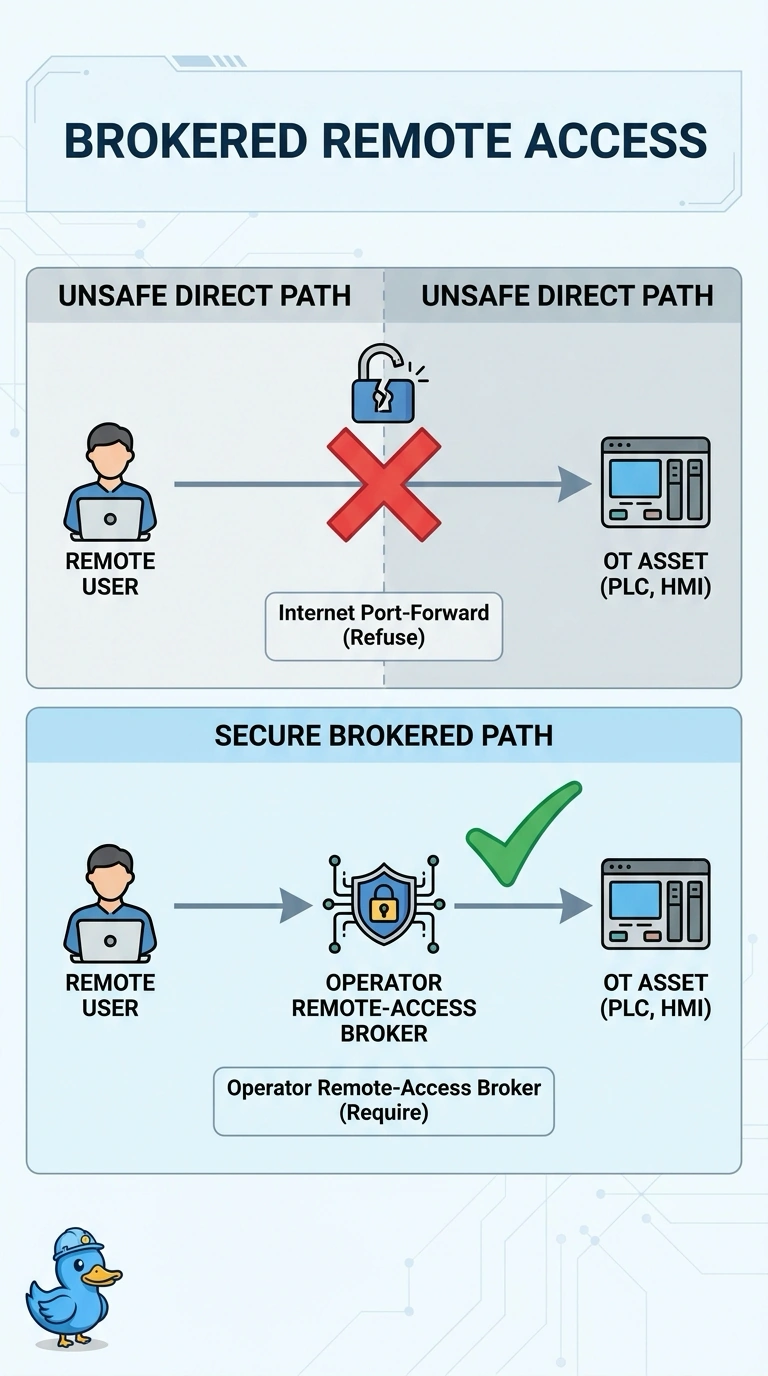
Short Explanation
An internet port-forward to a well-pad PLC is a street address nailed to the front gate. You refuse that publication and bring the integrator through the operator's remote-access broker. A home router plus the programming password is the same open gate in another coat.
Full Explanation
Publishing the pad PLC on the internet, even as a forward of one programming port, lets anyone who finds the port attempt a session. The asset owner should refuse that forward and require the integrator to enter through the operator's remote-access broker, so the PLC address stays unpublished and the session is something the operator can see and end. The integrator authenticates at that broker, and the pad PLC is not given a public address to dial from home. Handing over the PLC password for use from any home router removes control of the client and of the hours. A standing VPN that lands in the well-pad VLAN gives the integrator a persistent route beside every controller on that pad, which is the always-on path this request is trying to obtain under another name. Exam caveat: the broker in the correct design is not itself a tunnel left up at any hour. A broker that never closes recreates standing access. The stem's permanent, any-hour forward is what you refuse. Operational check: from the public internet the PLC programming port should not answer, and a test integrator login should terminate on the broker rather than on the pad VLAN.