
A contractor in a building-automation control room plugs a laptop into the cabinet switch and starts a controller download. Nobody has approved that person, that laptop, or that controller. Which decision fits?
Select an answer to reveal the explanation.
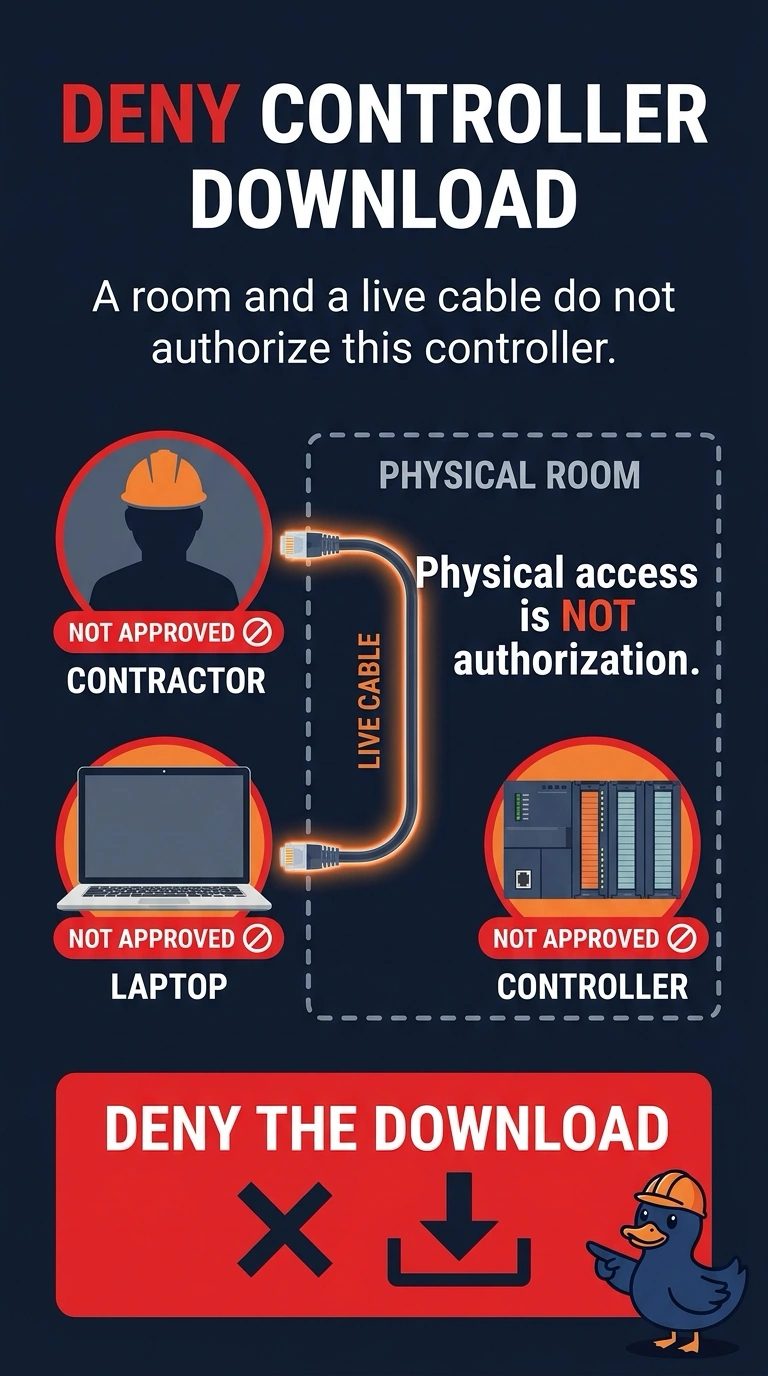
Short Explanation
Standing in the control room is like standing in a lobby with a cable in your hand. You are on site, and you are not yet allowed to change the controller. The trap is treating a link light or a kickoff meeting as the missing approval.
Full Explanation
Zero trust does not treat a place as a permission. The contractor is in the control room and has a link, and nobody has approved that person, that laptop, or that controller. The download should be denied until those approvals exist. Standing in the room shows presence. It does not identify an authorized user or name the controller that may be changed. A link light means the switch port came up. It is an electrical and Layer 2 fact, not an authorization decision, and an unexpected laptop will light the same lamp. A kickoff meeting weeks ago is not an approval for every controller on the floor. One conversation does not grant a standing right to program the building. The room, the lit port, and the old meeting are three excuses for the same skip, and none of them names an approved user on an approved laptop for this controller. Exam caveat: the denial covers this unapproved download. It does not invent a broader outage, and it does not say a later, explicit approval for this person, this laptop, and this controller would also be refused. Operational check: the programming session should be denied and logged, and a review of the cabinet port should show that a link alone did not open a download.