
An engineer at a building-automation campus was approved to download logic to one air-handler controller, then asks the broker to open programming on every controller because that approval exists. Which decision fits?
Select an answer to reveal the explanation.
Short Explanation
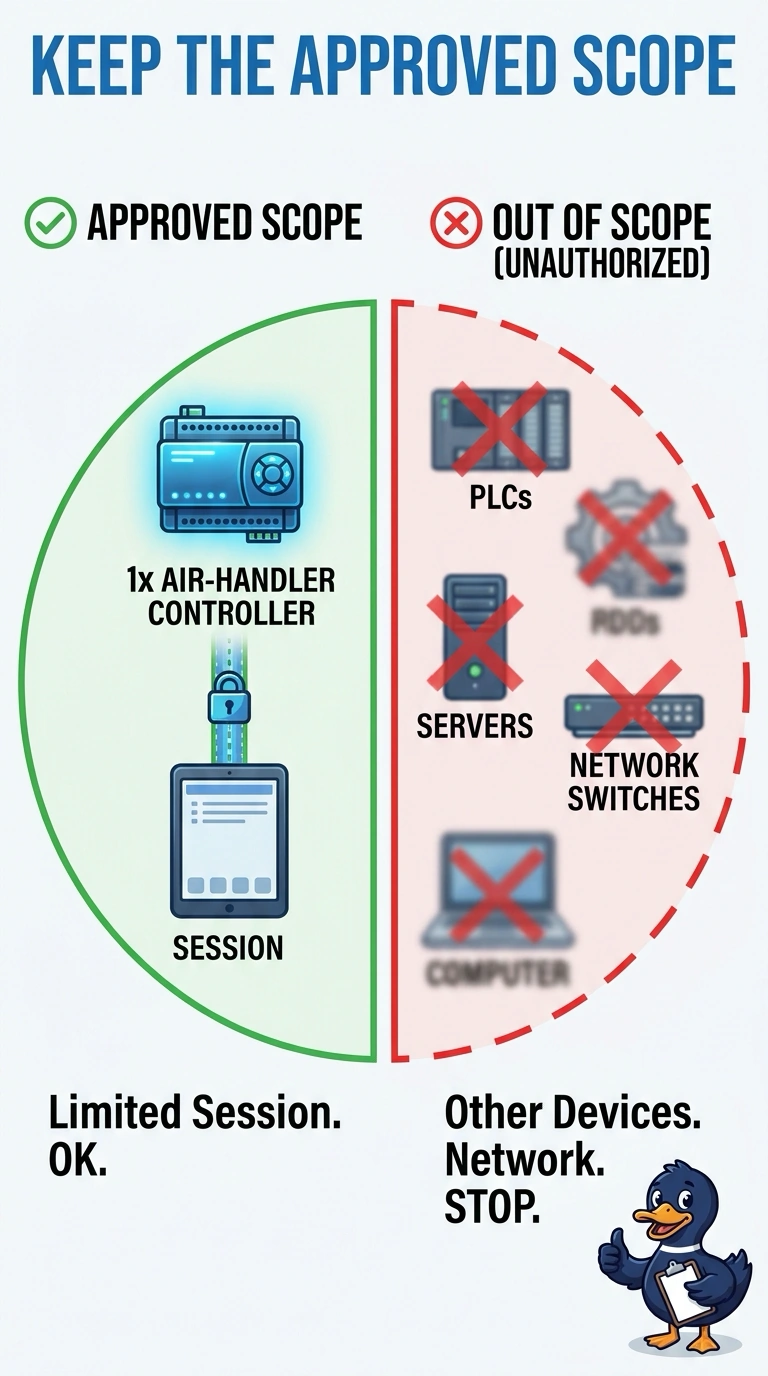
One hall pass for a single air handler does not unlock every mechanical room on the campus. You keep the session on the controller that was actually approved. Standing in the control room, or a laptop check from last month, is not a fresh yes for the rest.
Full Explanation
Explicit authorization names the asset. The engineer was approved to download logic to one air-handler controller, so the broker should open that controller and refuse the request to program every other controller on the campus. Trust does not spread sideways because one approval exists. A valid engineer identity and a managed laptop still leave each additional controller without its own yes. Opening the rest of the campus for the shift treats a network login as permission for every controller, which drops the per-asset decision. Standing in the control room is location. Location is not an authorization to change logic. A posture check that passed last month speaks to the laptop's condition at that time. It is not a fresh approval for additional controllers, and it does not widen the one asset that was named. Exam caveat: a second air handler can be opened later under its own approval. The decision here refuses the blanket request, not every future scoped request. Operational check: the broker log should show a permit for the approved air handler and a deny when the same engineer attempts a second controller without a new approval.