
A vendor session to a port-crane HMI was approved for one hour on the jump host. The hour ended, the session is still open, and nothing recorded it. Which control should that jump host enforce?
Select an answer to reveal the explanation.
Short Explanation
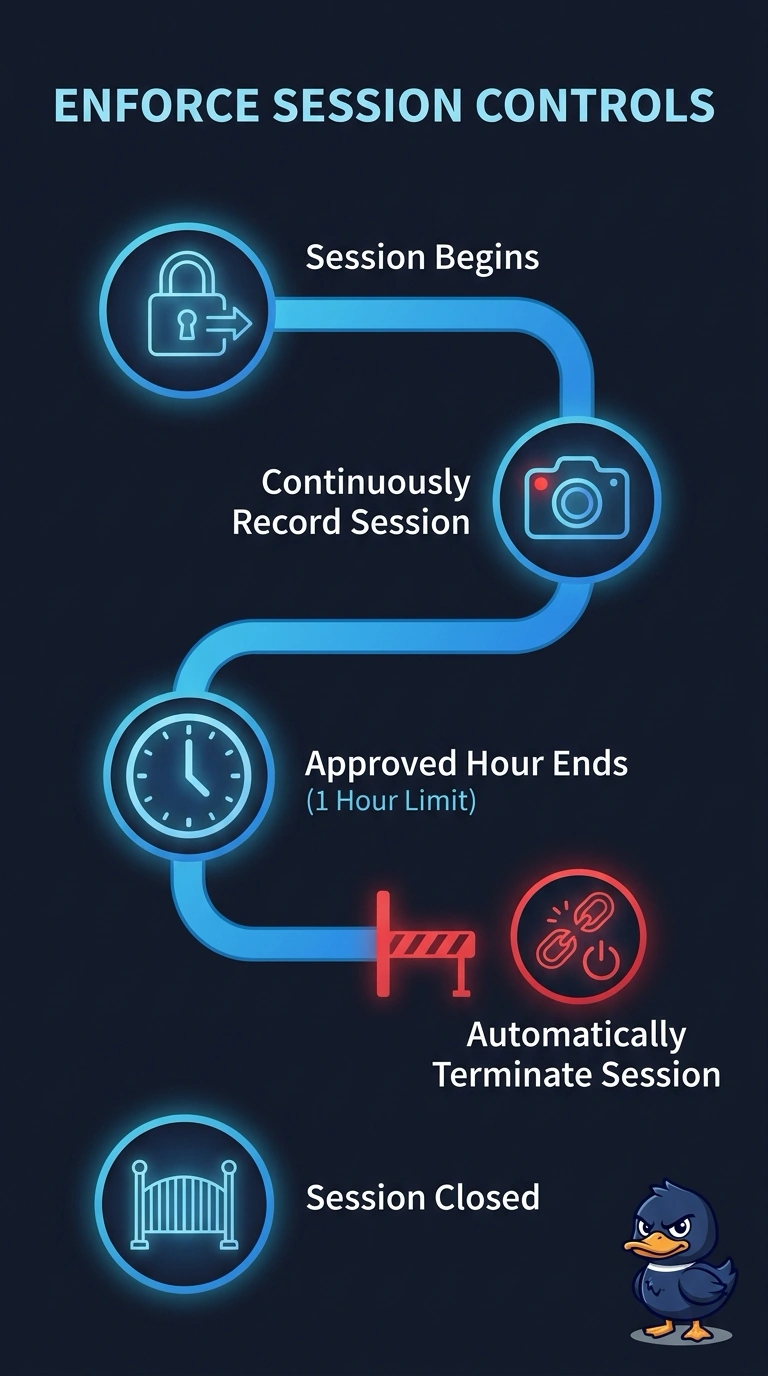
A one-hour pass is not a key the vendor keeps. You record who was on the crane HMI, and you close the session when the hour is gone. Leaving it up for a possible callback, or moving the HMI onto the internet, throws away the control the jump host was built to provide.
Full Explanation
Controlled remote access to an HMI is a brokered session with a clock and a record. This approval was one hour on the jump host. When that hour ends, the session should terminate, and the jump host should have recorded it so the port can see who viewed the crane. An open, unrecorded session fails both parts. Leaving it up in case the vendor calls back converts a window into standing access and skips the next approval. Skipping the recording because the company is on a supplier list trusts the contract instead of the session. The list may justify letting them ask for access. It does not justify an invisible session. Moving the crane HMI onto the public internet removes the jump host entirely and publishes the operator view, which is the failure mode the broker exists to prevent. Exam caveat: recording a session does not by itself make the HMI read-only. The role on the session still has to match view versus program. This stem's gap is the missing record and the missing end time. Operational check: start a one-hour test session, confirm it appears in the recorder, and confirm the same account is disconnected and denied when the clock expires.