
A vendor laptop holds a VPN into a port crane network and at the same time split-tunnels general browsing to the public internet. Which concern does that raise?
Select an answer to reveal the explanation.
Short Explanation
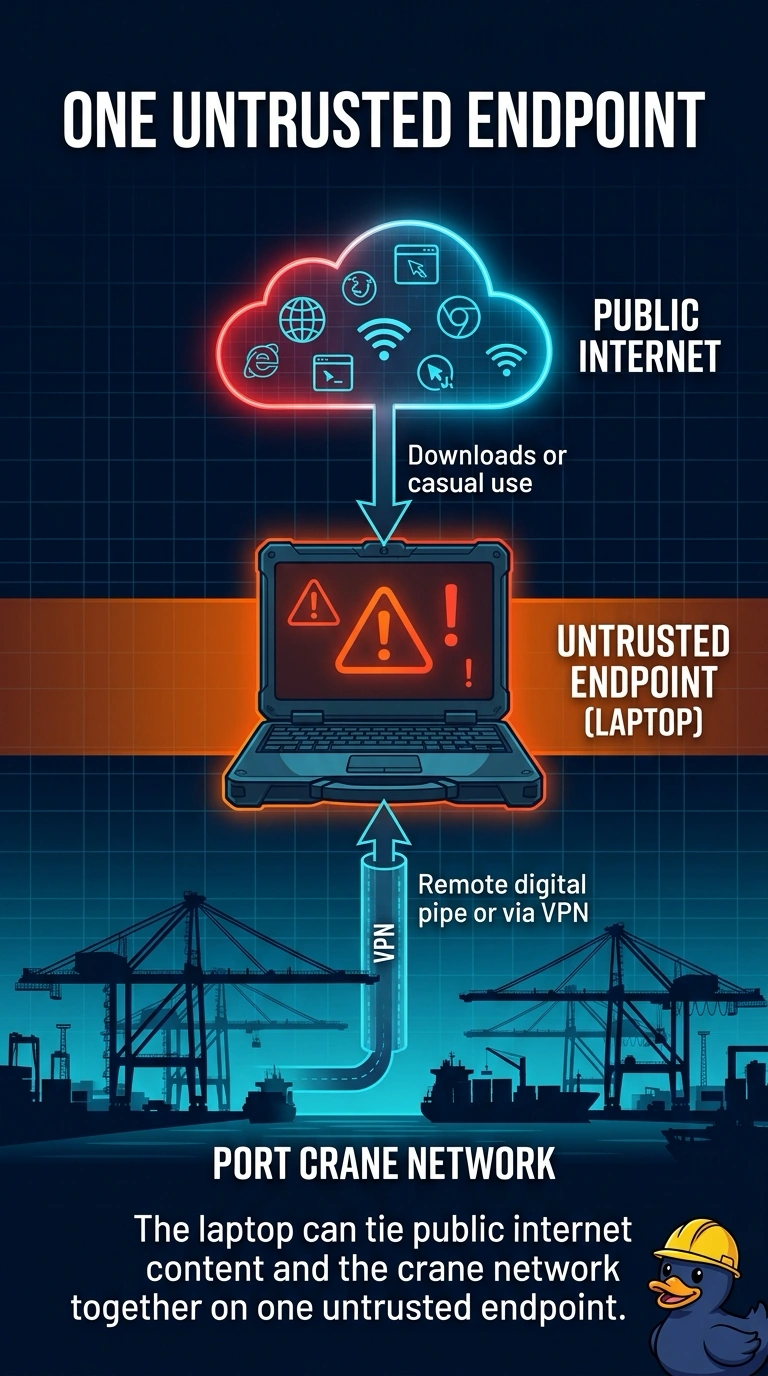
Your vendor laptop connects to the crane network and the public internet at the same time. You should treat that split path as a bridge on an untrusted endpoint: VPN encryption protects the tunneled traffic, but it does not make public content fetched on the other route harmless.
Full Explanation
Split tunneling sends some of the laptop’s traffic through the VPN and some directly to the public internet. The vendor laptop is therefore an endpoint in the crane network and on the internet at the same time, so content or malware from browsing can reach a machine that also has a route into the crane network. That is the concern: the two paths meet on one untrusted endpoint. VPN encryption protects the tunneled leg from eavesdropping; it does not inspect what the browser fetched directly or stop the laptop’s operating system from moving data between the two environments. A recorded session is a separate control for documenting a person’s actions. Split tunneling does not make recording unnecessary, and the tunnel does not account for local browsing that never entered it. Nor does public browsing from this laptop prove that the crane network is isolated; it shows that the same endpoint has internet access alongside its VPN connection. Exam caveat: the concern remains whenever both routes meet on the laptop, even if a specific operational need motivates split tunneling. Practical check: inspect the laptop’s routing table during a test session and confirm whether an internet default route remains alongside the crane VPN, then decide whether that session is acceptable.