
A desalination plant commissioned a new intake PLC and left the vendor default password active. That password is printed in the public manual. Which practice closes the exposure?
Select an answer to reveal the explanation.
Short Explanation
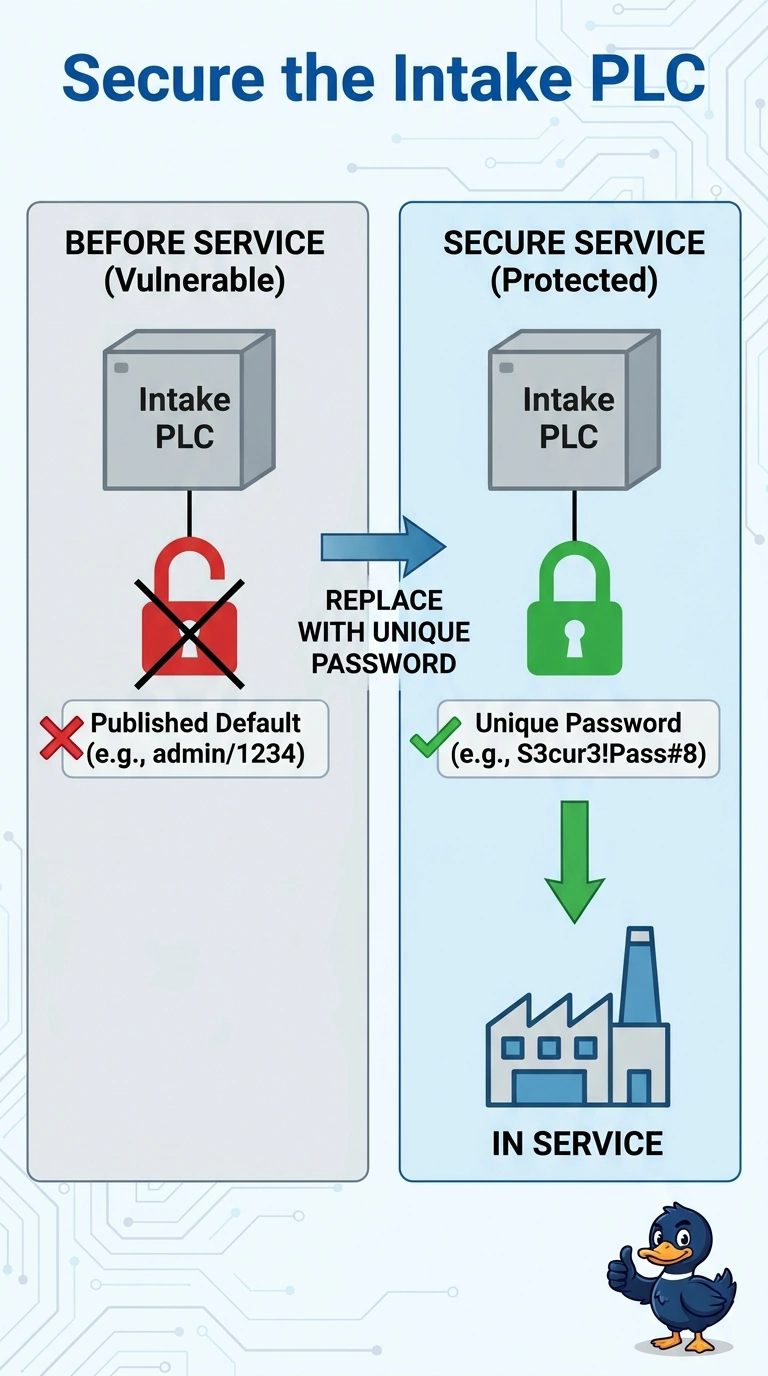
You can’t treat a password printed in a public manual as a secret. Replace it with a unique password before the intake PLC remains in service. Anyone who can read the manual currently meets the only check the PLC is asking for.
Full Explanation
A vendor default password printed in a public manual is already known to anyone who can read that manual, so leaving it active means the intake PLC’s check is not secret. Replace the published default with a unique password before the PLC remains in service; keeping a second copy of the manual password on the cabinet preserves the exposed credential and adds another copy. Removing the password prompt deletes the check rather than fixing the default, leaving the PLC accessible without a credential. Filing the manual and accepting the public password because a VLAN appears on a drawing also leaves the password unchanged: a VLAN label is not an authenticator. Exam caveat: changing the password addresses the published default, but does not by itself record which person used the PLC; the question is about retiring the default before the controller remains in service. Practical check: confirm the manual password fails, the unique password works for an authorized technician, and the manual page is not posted on the cabinet.