
A change ticket at a glass plant approves a logic download to one lehr PLC. The engineer asks to reuse that approval on every PLC in the forming area. Under a zero-trust standard, what should access control do?
Select an answer to reveal the explanation.
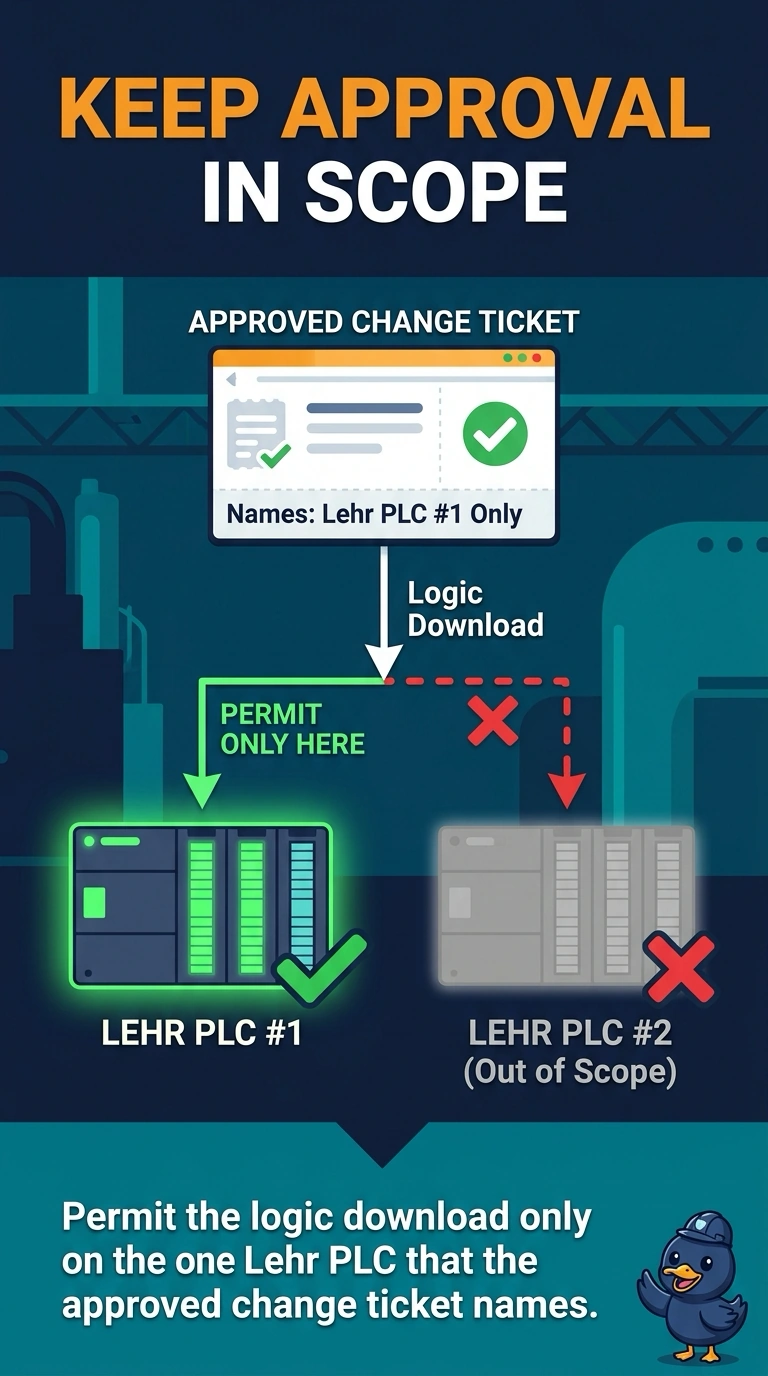
Short Explanation
You can treat a work permit for one machine as approval for that machine alone, not a hall pass for the shop. Least privilege means allowing the download only on the lehr PLC named in the ticket. Sharing a VLAN does not extend that approval to the forming area.
Full Explanation
Zero-trust access authorizes a specific subject for a specific asset. The ticket names one lehr PLC, so the download is permitted on that PLC and not on the rest of the forming area; another controller needs its own authorization, even during the same visit. Extending the ticket to every forming-area PLC because they share a VLAN mistakes a network fact for approval and rebuilds trust in location. Approving every PLC for the rest of the shift turns one signature into a zone-wide grant: the change window says when work may happen, not which assets the engineer may change. Allowing downloads from any host on the engineering VLAN because workstation posture was checked earlier this year also fails: that check is a snapshot, not current authorization for every host to program every PLC. Least privilege keeps access on the named asset. Exam caveat: a monitored break-glass path for a named engineer when the identity service is down can still be limited to the PLC named in the ticket; an open engineering VLAN is not that path. Practical check: with the ticket active, a download to the named lehr PLC succeeds and is logged, while a download to a neighboring forming PLC is denied.